President Donald Trump is to be congratulated on extending the waiver of the century-old Jones Act, which enables more oil to be shipped from the Gulf Coast to California and to the Northeast, reducing prices to American families.
The first waiver was granted for 60 days on March 17, then extended an additional 90 days from May 18 through Aug. 16. The second extension of the original waiver is narrower in scope but will nevertheless allow the shipment of critical materials when no alternative ship is available.
Recommended Stories
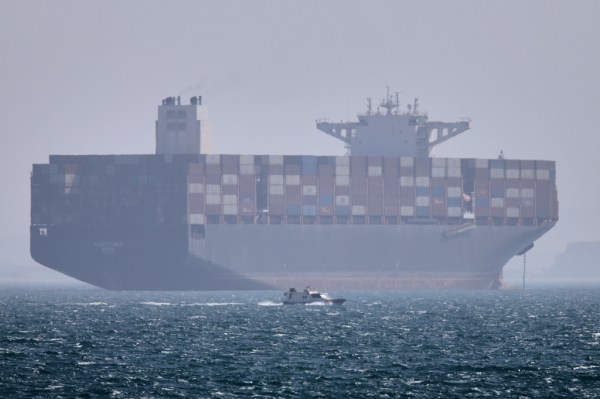
The Jones Act, signed into law in 1920, limits shipping within U.S. ports to ships that are U.S.-built, U.S.-owned, U.S.-flagged, and U.S.-crewed. The law prohibits foreign vessels from transporting goods between U.S. ports.
The act was designed to encourage the construction of U.S. ships. But it has done the opposite. Since 2000, American shipbuilding has steadily weakened, and employment in the shipbuilding industry has declined.
The act raises the costs of all American goods and is a major cause of the exorbitantly high cost of living in Hawaii, Alaska, and Puerto Rico. Shippers need to rely more on costlier trucks, trains, and planes, and Americans face greater highway congestion and accidents.
The Iran war has exacerbated the effects of the act, which led Trump to temporarily suspend it in March.
The temporary waiver of the Jones Act has caused a sea change in maritime movements of crude oil and fuel between U.S. producing and consuming regions.
After Trump initially waived the Jones Act in March, shippers sent 377,000 barrels per day of petroleum products from the Gulf Coast to the West Coast, primarily California, almost six times the January and February average. And between March and May, oil was shipped to northeast refineries at twice the rate of the prior three years, according to calculations from the Energy Policy Research Foundation.
Due to Trump’s waiver, the West Coast received a historic surge of fuel it couldn’t access before. East Coast refineries received crude oil traveling shorter distances from Gulf Coast ports rather than foreign destinations further away. New Englanders would gain if U.S. LNG could be shipped to them from the Gulf.
To understand the costs of the Jones Act, imagine the increase in fares if planes flown between U.S. cities or taxis in U.S. cities had to be constructed in the United States, owned by U.S. citizens, and crewed by U.S. citizens or permanent residents. Everyone can see these costs, but since most Americans do not ride on industrial cargo ships, they don’t see the effects of the Jones Act.
But the Act hasn’t been repealed due to union pressure. Unions think that if foreign ships are allowed to operate within the United States, American workers would be worse off.
The waivers have been opposed by a union coalition including the American Maritime Officers, the Maritime Trades Department AFL-CIO, the Sailors’ Union of the Pacific, and the Seafarers International Union, which declared, “America’s maritime labor unions are deeply concerned about the administration’s broad Jones Act waiver, which undermines our national security, weakens military readiness, and hands critical maritime work to foreign vessel operators.”
August’s waiver was narrowed in scope, given on a case-by-case basis after the U.S. Maritime Administration has certified that no U.S.-flagged, -owned, and -operated vessels are available. It wasn’t announced by Trump, nor was it on a White House statement or on the weekly White House email.
Rather, Trump and the White House press office highlighted a presidential memorandum, a notice of planned rebuilding of America’s navy and maritime on Aug. 13, following a similar announcement in April 2025. The memo did not mention an extension of the Jones Act, but promised a fifth maritime shipyard on the West Coast. A fifth shipyard, sized like the existing four, would add over 9,000 workers.
TRUMP WANTS ANOTHER TARIFF. CONGRESS ALREADY GAVE HIM A STRONGER WEAPON
Congress appropriated more than $58 billion for ship construction and repair in the fiscal 2026 budget, and Trump asked for another $65 billion for 2027.
The administration’s silence on the waiver, paired with a loud announcement about shipyards, speaks to the politics of the Jones Act more than any press release could. Protecting a century-old law that raises prices for American families is easier to defend with a ribbon-cutting than with an honest accounting of its costs. Congress should do the math and repeal the Jones Act altogether.
Diana Furchtgott-Roth, Distinguished Fellow at the Energy Policy Research Foundation, was Deputy Assistant Secretary for Research and Development at the U.S. Department of Transportation (2019-2021).