
California’s wealth tax is already failing

Published August 20, 2026 5:00am ET


California Democrats have not even successfully passed their wealth tax ballot proposition, and they are already admitting it will fail to work as advertised. That is just one of the takeaways from a revealing social media exchange between wealth tax backer Rep. Ro Khanna (D-CA) and billionaire entrepreneur Mark Cuban.

Responding to a video posted by Khanna celebrating the California Democratic Party’s official endorsement of Proposition 40, a ballot initiative that would impose a one-time tax equal to 5% of billionaires’ net worth in the state, Cuban noted that many founders of successful technology startups become billionaires on paper long before they have anything approaching the tens of millions they would need to pay the wealth tax. Taxing that wealth would therefore force them to sell stock, borrow against it, or somehow extract cash from a growing company.
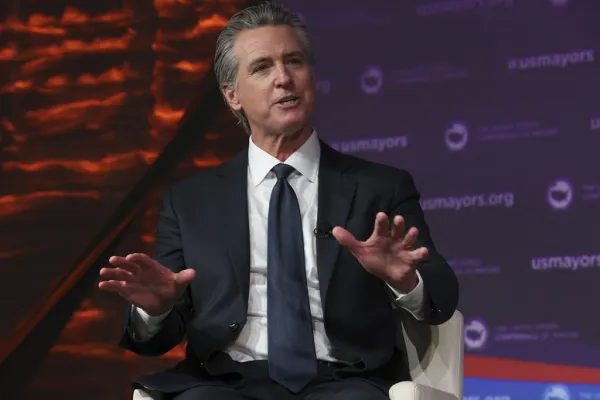
“If this passes,” Cuban went on, “you can bet if I’m investing in a multi-billion dollar startup, I’m asking them to move from California first… If this passes, only idiot startup founders stay in Cali.”

Khanna’s answer was a government loan. Illiquid founders, he suggested, could pledge their shares to California, borrow the money needed to pay the tax, and then repay the state over perhaps 10 years. If they could not repay, California would take the shares.

“Ro, that’s insane,” Cuban responded. “You want the state to loan money to the founder, who will then immediately give it back to the state as a wealth tax? Meaning the state has not received any incremental receipts? What’s the point of that? Unless of course you want the government to own shares.”

Cuban may be onto something. Not only has Khanna himself said he has “no problem” with the federal government owning shares of Intel, but Sens. Bernie Sanders (I-VT) and Elizabeth Warren (D-MA) have both explicitly supported federal ownership of technology-company stock.

Even if Proposition 40 never results in California owning a single share of a technology company, it would still be terrible economic policy.

The most obvious problem is that billionaires can move. UC Berkeley economist Enrico Moretti, who supports higher federal taxes on the ultra-wealthy, studied billionaire migration with Federal Reserve economist Daniel Wilson and found that when states impose estate taxes — the closest real-world analog to a wealth tax — roughly one in five billionaires leaves. California already has a 13.3% top income-tax rate, compared with zero individual income tax in Texas and Florida. Proposition 40 would make that competitive disadvantage even worse.

That would hurt taxpayers who are not billionaires. California’s Legislative Analyst estimates that Proposition 40 would raise only “tens of billions of dollars,” far below supporters’ $100 billion claim, while eventually costing the state hundreds of millions of dollars or more every year as wealthy residents leave and stop paying California income taxes.

But today’s billionaires are not even the biggest concern. Tomorrow’s entrepreneurs are.

As Moretti notes, California’s prosperity depends heavily on founders choosing to start and grow companies there. Google alone employs roughly 85,000 Californians, pays them $32 billion annually in wages, benefits, and stock compensation, and generates billions more in employee and corporate tax revenue. Losing only a handful of future Googles because founders choose Austin or Miami instead of Silicon Valley could swamp whatever temporary revenue Proposition 40 produces.

DEMOCRATS EMBRACE SOCIALIST CALL TO ABOLISH ICE

Nor should voters put much faith in the word “temporary.” California voters approved a supposedly temporary tax increase on high earners in 2012. It was subsequently extended for another 16 years. Entrepreneurs making investment decisions over decades will reasonably assume that Sacramento could extend a wealth tax as well.

California has already taxed and regulated its entertainment, manufacturing, and energy sectors into mere shadows of what they once were. If California Democrats want to do to Silicon Valley what they did to the rest of the state’s productive economy, then by all means they should listen to Khanna and pass Proposition 40.