RFK Jr. unlocks federal funds to help parents battling addiction keep children out of foster care

Published August 18, 2026 1:00pm ET | Updated August 18, 2026 5:31pm ET


EXCLUSIVE — Health and Human Services Secretary Robert F. Kennedy Jr. unveiled a new effort Tuesday to help parents battling addiction stay with their children and receive community support, making family reunification a central piece of the Trump administration’s broader push to combat the nation’s addiction crisis.

The initiative will make two peer-support addiction recovery programs available to states nationwide and, crucially, allow states to receive full federal reimbursement for providing the services through the Title IV-E Prevention Services Clearinghouse.

Parental addiction is the leading reason children enter foster care, making early intervention and treatment among the most effective ways to keep families together.

Senior administration officials told the Washington Examiner that the goal is to intervene before parental addiction breaks apart families, giving states more resources to help parents recover while reducing the number of children who enter foster care.

“Too often, government intervenes after addiction has already pushed a family into crisis, and a child is at risk of entering foster care,” Kennedy said at an event in Iowa announcing the policy. “We want to intervene before that happens.”

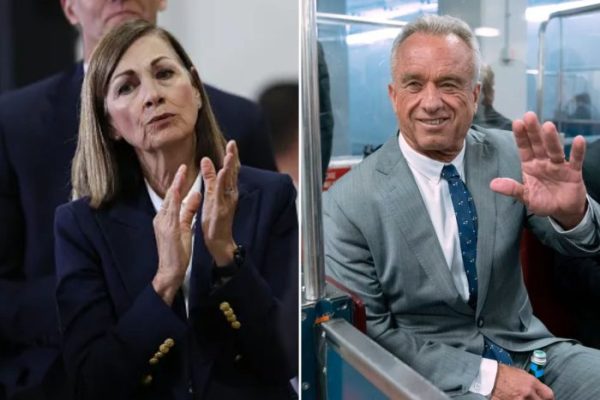
Kennedy announced the changes at the MercyOne House of Mercy in Des Moines, Iowa, alongside White House senior adviser for addiction recovery Kathryn Burgum. Also in attendance were HHS assistant secretary for the Administration for Children and Families Alex Adams and Gov. Kim Reynolds (R-IA), whose state is the first in the nation to adopt the new programs.

The new policy announcement is the latest development in the Trump administration’s Great American Recovery initiative, led by Kennedy and Burgum, both of whom have been open about their personal struggles with drug and alcohol addiction, respectively.

The new programs also expand the A Home for Every Child initiative by attempting to keep children out of foster care and reunify children with their parents while they are in active recovery.

Adams quoted Trump multiple times during the press conference, saying “the best foster care system is one that is not needed in the first place.”

“If we can support families, if we can wrap around families and prevent entry into foster care in the first place, you save the trauma from both the child as well as the biological parents,” Adams said. 

Fast-tracking evidence-based strategies

Adams told the Washington Examiner in an exclusive interview following the press conference the new initiatives build on the Family First Prevention Services Act, which Trump signed into law in 2018. 

Federal administrators were slow to review evidence needed to approve new programs, but Adams said “under Secretary Kennedy’s leadership and President Trump’s leadership, we’ve really put the foot on the gas.”

The Administration for Children and Families, a subagency of HHS, has determined that two new peer-support interventions meet the evidence-based standards for addiction treatment that states can provide, which will be eligible for federal matching funds. Peer-support programs pair people battling addiction with individuals who have firsthand experience navigating addiction and recovery.

The first program, focusing on family-based recovery, delivers “intensive in-home clinical treatment to support parents of children ages 0-5” by providing a weekly peer support meeting. The goal is “ensuring children develop in a safe, substance-free, and stable home with their parents.”

The second program, the Wellness Recovery Action Plan, connects people in recovery with “trained peer facilitators” to help “coach” enrollees “through recovery concepts and helps participants respond to and recover from crises.”

Adams told the Washington Examiner his agency will cover 50% of services that a state provides under the new initiatives. The Administration for Children and Families also created template language for states to use “so that there’s no friction at the state level to introduce their prevention plans.” 

HHS is also making available a grant program so states can train workers to provide this specialized type of care.

Kennedy said in Iowa that states will be able to immediately claim federal reimbursements for implementing the new programs “to address addiction and strengthen families.”

Next step in the Great American Recovery

Since its launch in January, the Great American Recovery initiative has emerged as a central piece of Kennedy’s broader Make America Healthy Again agenda.

In June, Kennedy and Burgum announced a $700 million investment to combat addiction and mental illness. That’s on top of a $100 million project to combat opioid addiction that was announced in early February. Last week, Kennedy and Housing and Urban Development Secretary Scott Turner also unveiled a new policy favoring the “treatment first” model for helping homeless people with addiction.

Burgum said peer support is a high priority for the Trump administration’s national anti-addiction initiative because it “remains one of the biggest gaps in our recovery system.”

“Peer support specialists are living proof that recovery is possible,” Burgum said. “Their lived experience is a powerful source of hope, connection and guidance for families working to overcome the chronic disease of addiction.”

Iowa makes the first step towards recovery

Federal HHS officers lauded Reynolds for spearheading Iowa’s adoption of the new programs. Reynolds, herself, has been open about her past struggles with alcohol addiction. 

Iowa has one of the highest rates of alcohol abuse in the country, according to the state’s health department. As of 2022, roughly 22% of Iowans reported binge drinking, defined as five or more drinks within two hours for men, within the past 30 days, compared to the national average of 16% of U.S. adults. There were 836 alcohol-related deaths in Iowa in 2020.

In addition to strengthening peer-to-peer recovery coaching programs, the initiative will also help reunite the 3,058 children in Iowa’s foster care system with their families as long as the adult parent remains in active recovery without jeopardizing the child’s welfare.

Nationally, about 35% of children are placed in foster care due to parental drug abuse, and another 5% are removed from the home due to parental alcohol abuse.

Kennedy praised Reynolds during the event as “probably the strongest partner in the country to make America healthy again.”

The HHS secretary also said, through other reforms to the state’s child welfare system, the Reynolds’s administration has cut by half the number of children in foster care and reduced the number in group homes by 60%.

Reynolds said in a press release that she is proud Iowa is the “first in the nation to adopt new peer-support interventions” for addiction recovery.

“By responding to addiction and supporting struggling families, we’re building a stronger America: one where recovery is real, every child has a home, and hope is never out of reach for anyone,” Reynolds said.

‘TREATMENT FIRST’ IS THE TRUMP ADMINISTRATION’S SOLUTION TO ADDICTION AND HOMELESSNESS

Adams praised Reynolds saying she “has been a tremendous partner.”

“And for the 49 states to go, and you can rest assured, we’re going to do everything we can to work with other states to incorporate these meaningful, evidence-based prevention services,” Adams said.