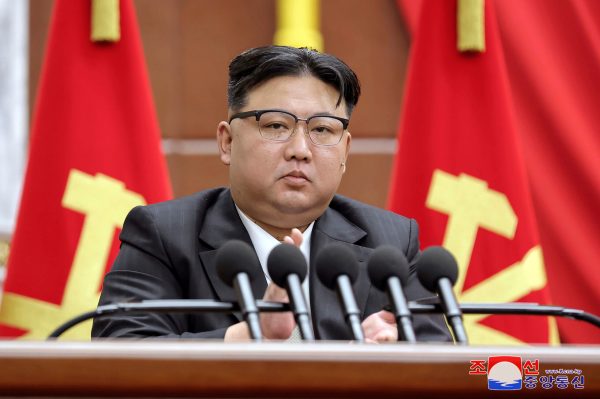
President Donald Trump sent a dangerous message by scaling down U.S. military exercises with South Korea. Trump observed on Wednesday, “I felt — we are doing a massive war exercise — and I thought that was very insulting to [North Korean dictator Kim Jong Un] [who,] frankly, during my term at least, has been very well behaved.”
Trump almost certainly made this decision following intelligence briefings on a North Korean missile test last week in response to the exercises. But Trump also made clear that he believes he has a solution to this challenge (I’ve highlighted the key words in bold):
Recommended Stories
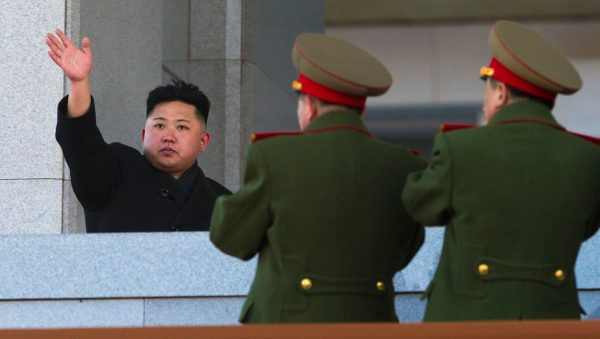
“I get along with [Kim] great. And you know what, the fact that I get along with him? That’s a good thing, not a bad thing. He has 57 very powerful nuclear weapons, should have never allowed it to happen. They should have never allowed it. If I were president, I wouldn’t have allowed it. But he’s got them. I get along with him very well. We can’t let Iran have a nuclear weapon. And I know Kim Jong Un very well, and he’s going to be fine. As long as we have a smart president, he’s going to be fine. If we have a dumb president, then he’s probably not going to be so fine.” Trump then confirmed he will meet with Kim later this year.
The problem should be clear. Trump is grossly overestimating the utility of his personal relationship with Kim. And in believing this relationship to be the master key to closing the door on North Korea’s growing nuclear threat, Trump risks undermining America’s security and its credibility with Pacific allies. That credibility point bears particular relevance regarding managing the grave threat posed by China.
This is not to say that Trump’s North Korea strategy lacks any merit.
On the contrary, Trump deserves praise for his bold first-term willingness to throw out the diplomatic rule book and engage in personal diplomacy with Kim. That gamble reduced Kim’s paranoia, convinced the dictator that diplomacy would offer greater rewards than the risks of war, and led to a cessation in North Korean intercontinental ballistic missile tests. It thus averted U.S. military action that was far closer in 2017/2018 than is commonly understood. As Winston Churchill observed, “meeting jaw to jaw is better than war.” In addition, Trump was — and remains — right to push South Korea to increase defense spending and its outlays in support of the vast U.S. military force defending it.
Still, it is foolish to obsess over personal diplomacy at the expense of military deterrence.
Military exercises broadcast both the will and the ability of the South Korean and U.S. militaries to fight and win defensive wars. Restraining these exercises only signals to Kim and any other adversary with whom Trump believes he has a good personal relationship to believe that they can corral the president. They need only remain personally pleasant toward Trump while escalating against U.S. or allied interests.
Crucially, it’s also not as if Kim is sitting idle in the absence of new missile tests. In return for deploying thousands of troops to help Russia fight its war with Ukraine, Russia has provided highly advanced technical support to North Korea’s nuclear ballistic missile program. This has enabled Kim to boost his means of successfully launching missiles armed with multiple reentry warheads against the continental United States. America is less safe today as a result.
There’s a trend here that deserves added attention. Namely, Trump’s concerning tendency to put his personal relationships with adversary leaders before America’s alliances. Trump did so when he rebuked America’s stalwart ally, Japanese Prime Minister Sanae Takaichi, following pressure from Chinese President Xi Jinping last December.
TOM ROGAN: CHINA WILL MAKE US ALLIES FEEL PACIFIC AIRCRAFT CARRIER’S ABSENCE
Now showing disinterest in the foundation of the U.S.-South Korea alliance, Trump risks encouraging South Korea, Japan, the Philippines, and Taiwan that they cannot rely on America. Not if Trump must choose between their security and his own ego. This directly affects American influence and, more critically, the willingness of allies to take risks for the U.S. It also encourages allies to make problematic concessions in the face of escalating Chinese brinkmanship. Put simply, it makes China stronger and America weaker.
By all means, Trump should meet with Kim. But he should not delude himself that personal diplomacy with vicious dictators can trump the value of their well-understood fear of U.S.-allied military power and resolve. Inviting that understanding, Trump only risks being made a fool, as these adversaries fan the president’s ego in return for seeing him suffocate America’s alliances.