Trump’s bombs weakened Iran’s regime. Its own people can take it down

Published August 21, 2026 7:00am ET


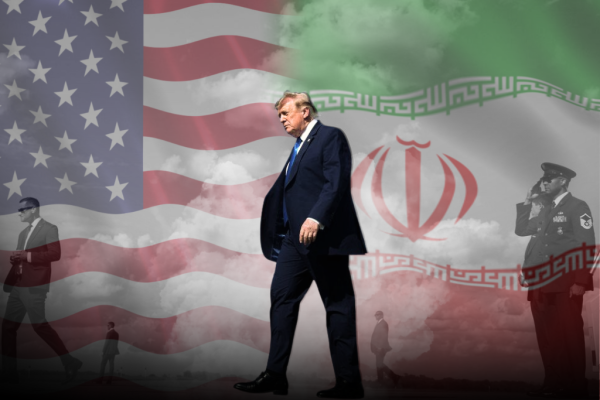
As the war with Iran approaches its seventh month, the Trump administration should resist a dangerous conclusion: Because the Islamic Republic has survived, it must therefore be stronger than many believed.

Survival is not strength. The regime has been severely weakened militarily, but the deeper evidence of its vulnerability is inside Iran itself: an economy under extraordinary pressure, renewed social unrest, growing tensions within the ruling establishment, and an organized resistance that continues to challenge the regime despite intense repression.

Iran’s economic crisis is no longer simply a background problem. Reuters reported this week that annual inflation reached 66% in July, while food prices were 128% higher than a year earlier. The rial continues to depreciate, while sanctions, war damage, disrupted trade, and declining purchasing power are placing additional pressure on households. Iranian officials themselves have warned that further currency depreciation could trigger another inflationary wave.

IRAN’S 1988 MASSACRE NEVER REALLY ENDED

The fuel crisis is another indication of the regime’s predicament. Reports of severe gasoline shortages and growing pressure on the government to raise prices highlight a difficult choice: Tehran needs revenue, but price increases risk reigniting public anger. The regime is increasingly caught between an economy it cannot easily sustain and a population it fears provoking.

The pressure is also reaching the ruling establishment. Disputes over economic policy, oil revenues, and the cost of the conflict have exposed tensions among officials and factions. These problems do not prove that the regime is about to collapse. They do show, however, that its ability to absorb pressure should not be confused with political strength.

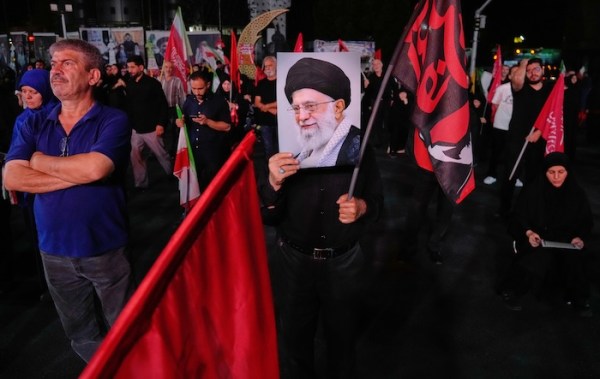
The social crisis is equally important. Iran entered 2026 after extensive protests driven by economic hardship, with demonstrations spreading across the country before the regime responded with a severe crackdown. The fact that the government relied on repression rather than resolving the grievances did not make those grievances disappear. Economic hardship and political opposition remain closely connected.

Nor is opposition inside Iran merely spontaneous or leaderless. An organized resistance continues to operate under extraordinary security pressure. The National Council of Resistance of Iran has reported coordinated activities by People’s Mojahedin Organization of Iran resistance units in Tehran and other cities. Such claims should be independently assessed, but they point to an important reality: the Islamic Republic faces not only external military pressure but also organized domestic opposition challenging its authority.

This is why the fact that the regime has survived nearly six months of war should not be mistaken for victory. A regime can survive while becoming progressively weaker. The relevant question is whether it can restore the political, economic, and military position it held before the conflict. The evidence suggests that this will be increasingly difficult.

Military force can accelerate that weakening, but it cannot by itself produce the political outcome the Trump administration ultimately wants. Bombing can destroy facilities and degrade military capabilities. It cannot create legitimacy, organize a political transition, or determine who governs Iran afterward.

Washington should therefore reject two equally mistaken conclusions. One is that more war will inevitably produce regime change. The other is that because the regime has survived, the United States must eventually return to the old cycle of negotiation and accommodation.

Neither is a strategy for lasting change.

Iran’s political future must ultimately be decided by Iranians. America should neither occupy Iran nor impose a government on its people. But there is a profound difference between imposing regime change and supporting the Iranian people’s right to achieve it themselves.

That means recognizing that Iran has an organized democratic opposition capable of helping translate popular resistance into political change. The National Council of Resistance of Iran and its constituent organizations represent one such organized resistance, politically led by Maryam Rajavi, whose Ten-Point Plan calls for a democratic republic, separation of religion and state, gender equality, individual freedoms, and a non-nuclear Iran.

The Trump administration does not need to predetermine Iran’s political future or endorse every opposition group. But neither should it pretend that the only alternative to the Islamic Republic is chaos.

Diplomacy can help end a war, protect American forces, secure the release of hostages, and prevent unnecessary escalation. But diplomacy should not become an excuse for restoring the status quo that produced the crisis. Nor should Washington fight indefinitely in the hope that military pressure will somehow create a government to replace the one it weakens.

The objective should be to maintain pressure on the regime while creating political space for the Iranian people and their organized democratic resistance to determine what comes next.

THE MULLAHS’ WORST NIGHTMARE ISN’T STREET PROTESTERS. IT’S THE UNDERGROUND NETWORK WASHINGTON IGNORES

Six months of war have shown that the Islamic Republic can be weakened by military force. Iran’s economic crisis, recurring protests, internal tensions, and organized resistance show why its survival should not be confused with strength.

The regime is down, but it is not out. The answer is not endless war or renewed appeasement. It is to ensure that the Iranian people can finish what foreign military power cannot: bring about political change and build a democratic Iran.

Nasser Razii is an Iranian-born independent analyst and writer based in London. Over the years, he has worked extensively with British and European parliamentarians on issues relating to Iran, human rights, and democratic governance. He is also associated with the democratic Iranian opposition and has been actively engaged in advocating a democratic, secular, and non-nuclear future for Iran.