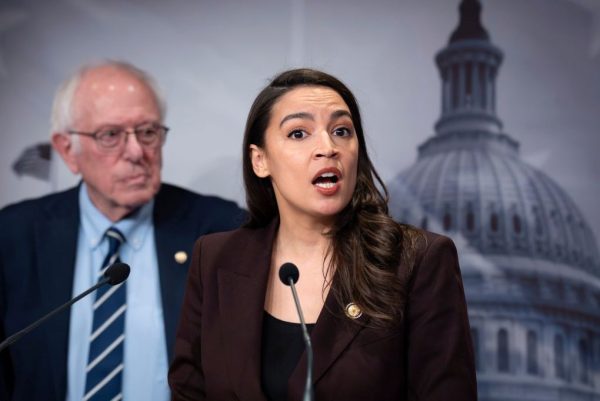
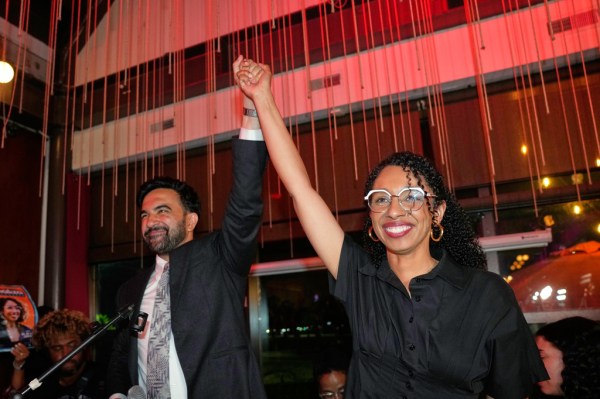
Watching Mayor Zohran Mamdani carry on in New York, I am reminded of Lord Percy of Newcastle’s ominous definition 75 years ago of “social democracy”: “The phrase,” he wrote, “does not imply that economic activity should not continue to be based on private property; it implies only that, as a matter of legal rights, such property should be perpetually insecure.”
One would be hard-pressed to find a more apt descriptor of the current situation in New York, three-quarters of a century after Lord Percy wrote those words intended as a warning to anyone who found themselves tempted by the intoxicating effects of socialism. Indeed, the rhetoric of Mamdani and his acolytes, who are now in the process of gobbling up Democratic primary nominations around the country, suggests their intentions for private property go further than that.
Recommended Stories
One can hope that it is merely hyperbolic license on their part, but such is the bombast emanating from the faction that is ascendant within the ranks of the Democratic Party. Conventional wisdom holds that this is a political anomaly, representing an extremist fringe that is too publicly unappetizing to warrant serious consideration. And yet they are winning primary elections in the middle of the country, Rep. Alexandria Ocasio-Cortez’s (D-NY) name is being invoked unironically as a possible presidential candidate, and Mamdani is the mayor of America’s largest city. So, it’s probably best not to ignore the threat.
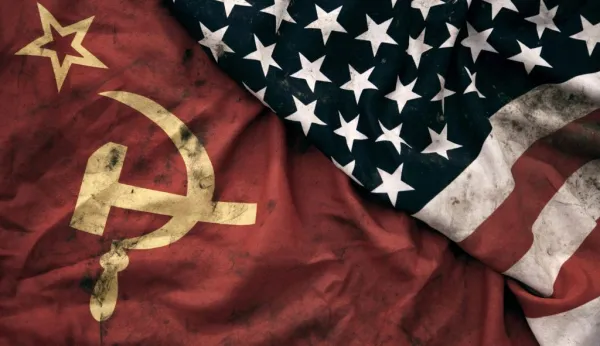
And if we are to take it seriously, we ought to determine its provenance. Many people, not only conservatives, are astonished at the historical and cultural illiteracy needed to embrace such a corrupt worldview. How, after the horrors of the 20th century — the “workers” revolutions left and right that tore apart Europe, and later much of the rest of the world; the Holodomor; Mao Zedong’s blood-soaked Cultural Revolution; the revelations of the Gulag after the fall of the Berlin Wall — could anyone still cling to the vicious ideology that birthed such desolation? The uneasy answer is, in part, that the appeal of socialism never quite went away. After the collapse of the Soviet Union, it went largely dormant for a while, the idea of classical communism, the end of human conflict and the advent of a stateless society, dead, at least in its more extreme forms.
But the infrastructure of socialism was still there, even if its edges were softened somewhat by Western liberalism. Consider the growth of the welfare state, not since its inception in the 1960’s, but since the end of the Cold War, in what is supposed to be the bastion of capitalism in the world: The federal debt now exceeds $40 trillion, Medicaid eats up the bulk of the federal and most state budgets, federal government-run childcare and health insurance are serious policy considerations, and a Republican administration is advocating the federal government to have a controlling interest in private businesses. The classical Western concept of subsidiary, that the public sector should not undertake any activity which can be performed by the private sector, and that no higher public sector echelon should take on anything that a lower can do, is at least as dead as Vladimir Lenin’s dream of an eschatological Soviet utopia.
So yes, the seed has always been there — how else do you explain a George McGovern or a Ted Kennedy? — but what has watered it so aggressively of late? There are some good theories out there. The ever-insightful Peggy Noonan observed in her Wall Street Journal column a couple of weeks ago that today’s socialists are not only more robotically ideological, or in her piquant words, “colder, less human, fiercer and occasionally sociopathic,” than the Woody Guthrie socialists of a few generations ago, but that the current crop of ideological young college graduates grew up during the 2008 economic crash, and are entering real life amid a scary AI boom, catalyzing an uninformed but real contempt for the way the Founding Fathers set up the republic.
Kimberlee Josephson wrote a week later with a compelling argument that the fault lies with the colleges, not merely that professors are indoctrinating students with leftist beliefs — true, but too jejune and reductionist as an argument — but that they are locked in a race to provide the most comfortable experience possible for students. If you spend four-plus years in an encapsulated environment where every conceivable need and most creature comforts are provided for you, essentially most college campuses today, the shock upon entering the real world is jarring, attracting one to an ideology that promises a continuation of that utopic alternate reality.
IN COMMON SENSE VS. CRAZY, DEMOCRATS LOSE EVERY TIME
All the above rings true, and I offer another element: the systematic dilution of education itself. With the rejection of classical education, there is no longer a common base of accumulated knowledge from which to draw to seek answers to common problems. Instead, today’s students are forced to build from scratch, from a place not of enlightenment but of ignorance. Pop culture and pop journalism are substitutes for the canon of great books. The “educated” are left only with a desire to tear down a wall, without ever having acquired the understanding of why it may have been erected in the first place.
The supremacy of the rule of law and the existence of a written constitution in the United States have served to keep the monster at bay, but the systemic resurgence of true education, the passing along of the repository of human knowledge and the canon of Western thought, is the ultimate defense against radical impulses, left or right. Whether or not that happens, the current experiment in socialism will end in failure, as all previous experiments have, the only variable being how much damage will be done in the interim.
Kelly Sloan (@KVSloan25) is a Denver-based public affairs consultant and columnist.