The real reason the Democrats’ articles of impeachment are so weak

What exactly are the House Democrats doing with their articles of impeachment? It appears they may be trying to give the 31 crucial members of their caucus facing reelection in districts President Trump won in 2016 an easy way to vote “no” and still look principled.

Given the outlandish, and at times ridiculous, rhetoric from the likes of Adam Schiff, Jerry Nadler, and Nancy Pelosi, a final vote on impeachment has always been inevitable. There is simply no way that they could ever have afforded to walk back their stance after taking such an extreme stand.

Once you’ve rushed to claim, as Schiff did, that the president has committed “bribery,” you can’t exactly turn around and say “no big deal.” Once you’ve said, as Nadler did, that the impeachment of Trump is necessary to “save the nation,” you can’t easily just call the whole thing off and say, oops, our bad.

But whether or not the Democrat-controlled House of Representatives will ultimately vote to impeach Trump is actually less clear now than at the start of the whole controversy over the president’s relationship with Ukraine. This uncertainty stems from the fact that the final two articles of impeachment Democrats decided upon — articles accusing Trump of “abuse of power” and “obstruction of Congress” — are an admission of how poorly the interminable impeachment hearings have gone.

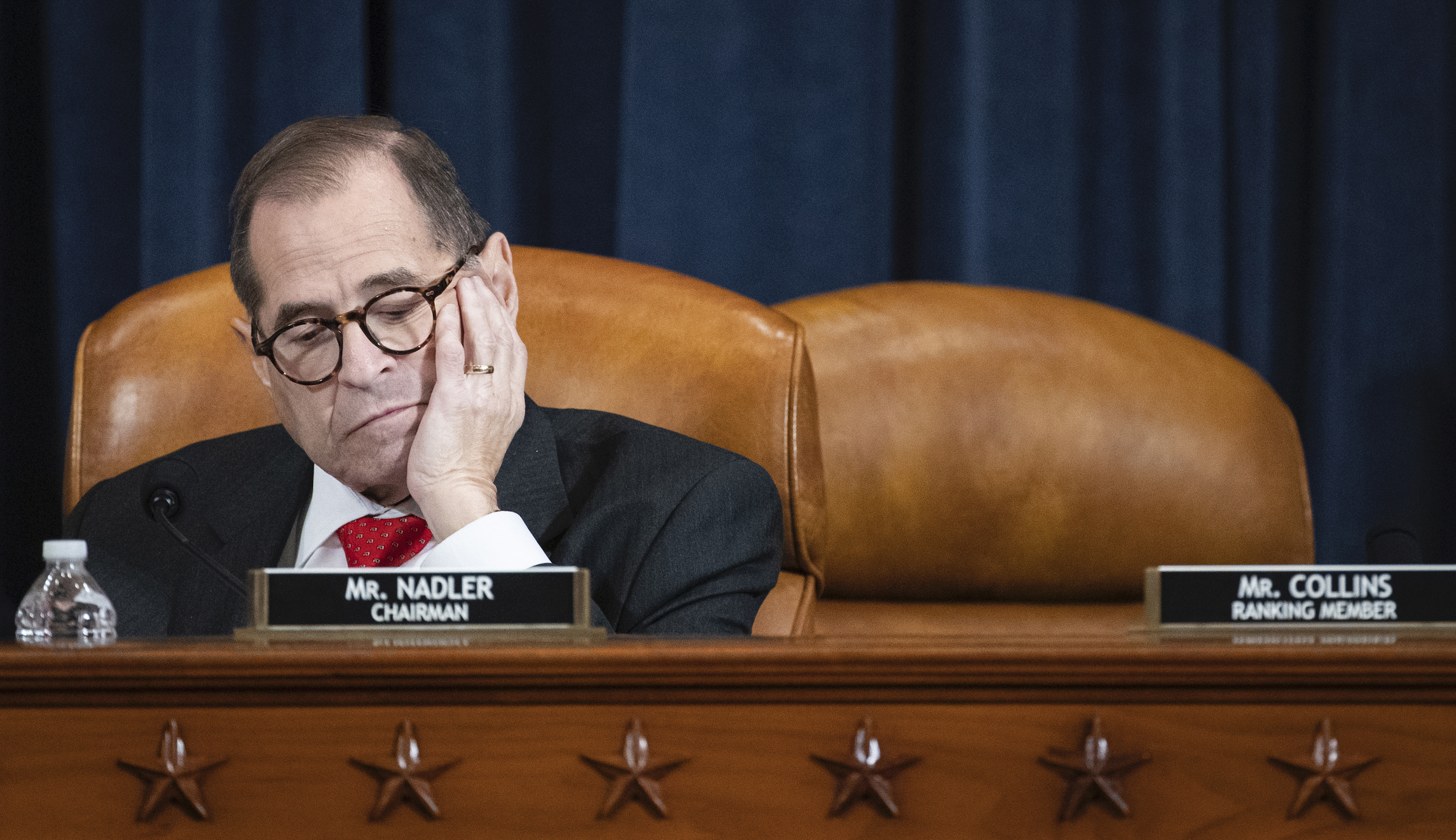
Rather than charge the president with anything that could remotely be construed as an actual crime, such as “bribery,” Nadler’s House Judiciary Committee has, with Pelosi’s blessing, effectively accused the president of doing something they don’t like, aka “abusing his power,” and then refusing to make it easy for them to impeach him over it, which they call “obstruction of Congress.”

So what is the Democrats’ gameplan? Is it to set a bar so low and a standard so vague that everyone in their caucus will have a hard time saying they don’t agree?

Or perhaps the opposite is their real plan. Maybe they invented these frivolous charges in the hope that it will help swing-district Democrats. This way, they can vote against the articles and claim they just didn’t think they rose to the level of an impeachable offense. It could allow those vulnerable representatives to split the baby: to not “sell out to Republicans” but also to not formally sign on to an impeachment that increasing majorities of Americans in swing states appear to see as a political stunt.

There is evidence for this explanation. According to a Reuters report, more than 10 Democrats in crucial swing districts are still undecided on impeachment. This includes freshman representatives such as Rep. Elissa Slotkin of Michigan, momentarily the darlings of the resistance for abandoning moderate campaign rhetoric to join the push for an “impeachment inquiry.”

It’s impossible to predict how the final impeachment vote will turn out, but it seems to me that Democrats may be trying to create a space for some of their caucus to safely vote “no” and save their seats next November.

Either way, it’s already going very poorly for the Democrats, who just lost Rep. Jeff Van Drew, who flipped to the GOP over this impeachment scam. Now they risk losing moderate voters en masse as well. As embarrassing as it might be for them, Schiff and his Democratic cohorts would be wise to give this sham up before their party completely implodes.

Jenna Ellis (@JennaEllisEsq) is a constitutional law attorney and the senior legal adviser for the Trump 2020 campaign. She is the author of The Legal Basis for a Moral Constitution.

Related Content
