

WHAT’S HAPPENING TODAY: Good morning and happy Monday, readers! We hope you all had a great weekend. If you were in the D.C. area over the weekend, there was plenty to see, including catching the nation’s capital’s first-ever Indy 500 race, with Kyle Kirkwood securing the win.
Here’s what we have for you today:
Recommended Stories

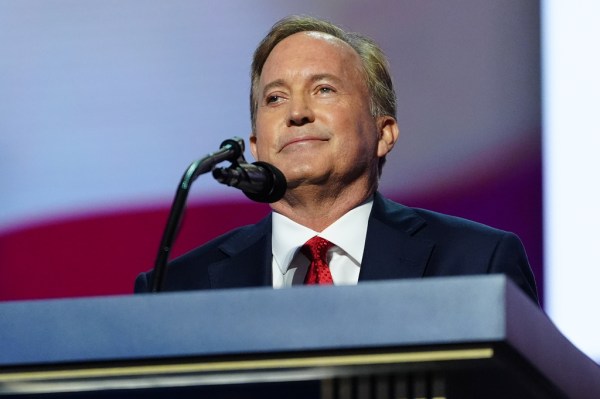
- 🐄🤖 Texas Republican Senate candidate and attorney general Ken Paxton has come out with a plan to regulate the development of data centers.
- 🛢️📉 Plus, we’re continuing to track how much oil the Trump administration is releasing from the emergency reserves. Those inventories have hit a low not seen since 1982.
Welcome to Daily on Energy, written by Washington Examiner energy and environment writers Callie Patteson (@CalliePatteson) and Maydeen Merino (@MaydeenMerino). Email cpatteson@washingtonexaminer dot com or mmerino@washingtonexaminer dot com for tips, suggestions, calendar items, and anything else. If a friend sent this to you and you’d like to sign up, click here. If signing up doesn’t work, shoot us an email, and we’ll add you to our list.
TEXAS GOP RETHINKS AI BOOM AHEAD OF MIDTERMS
Republicans in the Lone Star State who once championed the data center expansion are now voicing skepticism about the pace of AI growth ahead of November elections.
GOP Senate candidate and Texas attorney general Ken Paxton, who has been relatively quiet on the data center issue, released a four-point plan today to address Texans’ concerns on AI.
What’s in the plan? Paxton’s plan would support legislation to prohibit Chinese technology in data centers and hold data centers liable if their technology undermines children’s safety. Paxton also joined as a cosponser on Republican Sen. Tom Cotton’s DATA Act, which would allow for large loads to build independent and off-grid power systems.
As part of the plan, Paxton is also backing proposed state-level regulations, including banning data center development in rural areas, requiring best practices to limit local impacts, repealing sales tax exemptions, requiring centers to fund their own energy, and mandating closed-loop water systems.
His Democratic opponent James Talarico has criticized Paxton as failing to act on data centers and for reportedly receiving thousands in campaign contributions from data center developers and operators. Talarico has also proposed data center requirements aimed at protecting the state’s electric grid and environment.
From supporters to opponents: As a freshman senator in the Texas legislature in 2013, Paxton voted to support a 100% sales tax exemption for data centers. The tax exemptions passed nearly unanimously out of the state Senate, and have helped fuel the state’s data center growth.
Despite his supporting vote, Paxton has been a fairly aggressive state litigator against Big Tech. He has brought lawsuits against Netflix, WhatsApp, Discord, and launched an investigation into Meta.
“They basically dug their own grave”: Paxton’s pivot on data centers reflects the growing opposition to the industry in Texas, including from Gov. Greg Abbott.
Just last November, Abbott touted Texas as the “epicenter of AI development.” Now, however, the governor is blaming public backlash against data centers on the industry itself.
Abbott said in an interview with ABC’s “This Week” yesterday that developers “had not been working in collaboration with the state, they’d not been in collaboration with local governments, and so they basically dug their own grave for the problem that’s been caused for them and that’s why they got the backlash they deserve.”
Abbott earlier this month issued a temporary data center ban to allow for the state to complete an audit on all Al facilities wanting to connect to the grid. The governor said there’s more than 474 gigawatts’ worth of data centers that have requested to connect to the Texas grid.
President Donald Trump, who has continuously supported efforts to speed up the data center development, said in an interview yesterday that it is a mistake for communities to oppose AI facilities, arguing that data centers will bring in jobs and money.
SPR FALLS TO LOWEST LEVEL SINCE 1982
Data released by the Department of Energy this morning shows that the government released 3.7 million barrels of oil last week, leaving the Strategic Petroleum Reserve with 289.7 million barrels of crude.
The last time the inventories were this low was in early December 1982, when the SPR was first being filled.
If you forgot: This latest drawdown is part of the Trump administration’s plan to release 172 million barrels from its inventories to support global oil markets experiencing monthslong supply disruptions caused by the war in Iran. It is also key to the administration’s strategy for keeping gasoline prices down ahead of the midterm elections.
If all 172 million barrels are released, it could send the SPR to the lowest level since the reserves were created, leaving the SPR with around 243 million barrels.
As we previously reported: The Trump administration is going to face an uphill battle to refill the reserves. Energy Secretary Chris Wright has said the government plans to replace all the released crude from this year and then some, adding back around 200 million barrels.
However, this would leave the inventories with around 443 million barrels of oil, far below their total capacity of around 714 million barrels.
Refilling the SPR is a costly endeavor, and in recent years has not been a top priority for Congress.
Last year, the One Big Beautiful Bill Act provided an additional $389 million for the SPR, $171 million of which was intended to be used to refill the inventories. The other $218 million was intended to address key repairs.
Energy analysts have estimated that, if domestic oil prices were to fall to around $60 a barrel, it could take up to $18 billion to fill the SPR. Plus, the Government Accountability Office has estimated that it will cost the Department of Energy $650 million to make all repairs and upgrades that are necessary to refill the inventories to their maximum capacity.
“The political will has to be there, and then you need the secretaries and the administration to help direct that traffic,” Texas Republican Rep. August Pfluger told Callie earlier this summer. “But you know, the power of the purse comes from Congress. … We definitely want to make sure that they have the right resources and that the timing is also correct, so you don’t get too low.”
All the rest
TRUMP TARIFF THREATS AGAINST CANADA: Trump threatened to increase tariffs on all Canadian cars, auto parts, steel, and other items to 50% starting in January after trade talks failed last week.
One of the unresolved issues in the talks was whether there will be a reduction in tariffs covering medium- and heavy-duty vehicles.
The trade deal on the table last week would have reduced tariffs on aluminum and steel, key materials for building energy infrastructure, including solar power, energy grids, and electric vehicles.
A BIT OF NUCLEAR NEWS…STARTING WITH A NEW ENGLAND SUMMIT: All six states in New England are teaming up for a summit next month to examine whether advanced nuclear energy and fusion can play a role in the region’s energy future.
The summit is a major signal that the nuclear energy revival in the U.S. is hurtling forward. New England is historically one of the most anti-nuclear energy regions across the country, with there only being two active nuclear reactors in all six states.
Massachusetts Gov. Maura Healey first announced the summit last week, saying the states would be gathering at the University of Massachusetts Lowell’s Rist Institute for Sustainability and Energy on Sept. 30. As experts and state leaders discuss new nuclear and fusion technologies, the governors said the summit will also focus on safety, regulatory oversight, community engagement, and public trust.
The announcement of the summit comes five months after the six states announced joint support for ensuring the continued operation of the two existing nuclear plants as well as exploring advanced nuclear generation.
A nuclear-powered merchant fleet: U.S. Maritime Administration administrator Stephen Carmel has confirmed that the U.S. is moving to build a fleet of merchant vessels powered by nuclear energy to directly challenge China’s commercial shipbuilding dominance.
“The way we win in all this is to change the terms of the competition to something that is more favourable to us,” Carmel told the Financial Times. “So, we don’t compete on trying to be cheap. We compete on technology . . . and nuclear technology is something we are really good at.”
The U.S. is reportedly partnering with British-based Core Power to build these nuclear-powered vessels, with the first expected to be under construction in 2028. These ships are expected to use nuclear propulsion, which sends heat generated from a nuclear fission reaction through a series of turbines and generators to power the vessel.
Core Power has said that vessels using this technology can move between 50%-75% faster than those powered by traditional fossil fuels, can carry more cargo, and are more environmentally friendly.
And Ireland’s bid for nuclear: Ireland experiences some of the highest costs for electricity in the entire European Union. Energy demand from data centers is putting pressure on electricity markets for the country, as these AI facilities take up nearly a quarter of all electricity used in Ireland, and, according to the Financial Times, that share could jump by at least 30% in the next four years.
Ireland has banned nuclear energy since 1999, but Taoiseach Micheál Martin recently said that the government is open to exploring the technology to meet surging demand, the Financial Times reported. At least one politician within Martin’s Fianna Fáil party has introduced a bill to lift the veto.
EXXON TURNING TO AUTOMATION IN THE PERMIAN: Exxon Mobil is reportedly planning to dramatically increase its use of automation for its operations in the Permian Basin, in order to significantly grow its production capacity.
Reuters reported that the company currently has two automated rigs in the region, out of its more than 30 active drilling rigs. By 2028, Exxon plans to transition at least half its fleet to automated rigs. This is intended to help Exxon increase its production out of the Permian by 40% by 2030, according to the outlet.
Automated rigs reduce the need for workers to stand directly on the rig floor, where most accidents can occur. Rather than having human employees move drilling pipes into position, robotic arms can then position the pipes via controls located in a small office on site.
Similar technologies and techniques are being used by rival companies such as Chevron, which has increased its use of automation to allow workers to remotely open and close wells. Not only does this reduce the risk of human injury, but it also cuts the amount of time it takes to open a well, allowing crews to increase the number of wells fracked each year.
Curious about what a typical drilling process looks like? Check out photos from the Examiner’s trip to a drilling rig in the DJ Basin this past spring here.
BOILING POINT: Scientists have recorded the highest temperature ever recorded in the world’s oceans.
The European Union observation agency Copernicus revealed this morning that the global average sea-surface temperature hit a record 21.1 degrees Celsius last Saturday, breaking the last record set in March 2024. This is roughly equivalent to 70 degrees Fahrenheit.
This is in large part due to the current powerful El Niño weather pattern occurring in the tropical Pacific, though researchers have said the current warming is only exacerbating decades of human-driven climate change.
“This record is another clear signal of an ocean under growing stress,” Samantha Burgess, strategic lead for climate at Copernicus’ European Center for Medium-Range Weather Forecasts, said in a statement.
ICYMI – TESLA RECALLS VEHICLES OVER HIDDEN DOOR HANDLES: Tesla recalled about 3 million vehicles in China on Friday over concerns that the doors may not open in an emergency event, CNBC reports.
Tesla said that severe collisions can cause the “vehicle low-voltage system to fail” which could result in making it difficult to open the door as the handles are electronically operated. The company said it also plans to upgrade its software to allow windows to automatically lower after an accident.
Tesla has also recalled vehicles to address its driver monitoring system, which ensures that drivers stay attentive and ready to take the steering wheel when using automated features.
A LOOK AHEAD:
Aug. 24 – 27 The ONS global energy forum is taking place in Stavanger, Norway.
Aug. 24 Energy Secretary Chris Wright is visiting a coal mine and power station in Frackville, Pennsylvania, as part of the administration’s Great American Energy Comeback Tour.
Aug. 25 – 27 The DTECH Reliability and Resiliency Conference is taking place in Chicago, Illinois.
Aug. 25 The First Los Alamos Nuclear Forum is taking place in Los Alamos, New Mexico
Aug. 26 – 27 The International Atomic Energy Agency is unveiling its Atomic Technologies Licensed for Applications At Sea initiative in Washington, D.C., featuring keynote remarks from Secretary Wright and IAEA Director General Rafael Grossi.
Aug. 27 The 2026 Ohio Manufacturers’ Energy Conference is being held in Columbus, Ohio.
RUNDOWN
Canary Media PJM has finally greenlit a lot of new clean power. Can it get built?
Washington Examiner Xavier Becerra avoids backing nuclear energy in bid to govern power-starved California
Heatmap News Maybe Don’t Rent an EV in Europe