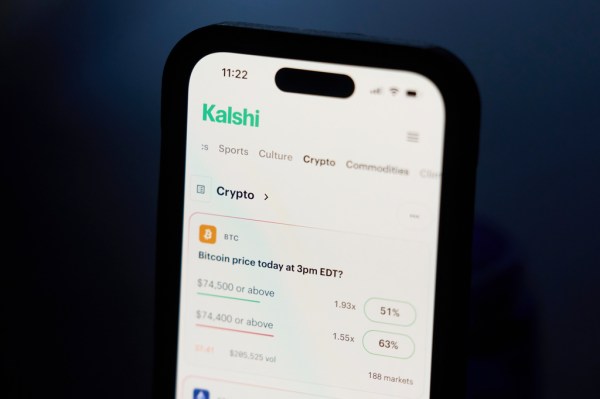
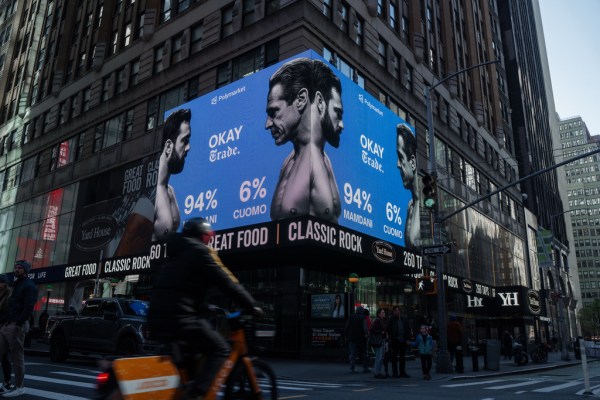
Connecticut sued prediction market company Kalshi on Thursday, seeking to block the platform from offering sports-based wagers in the state and accusing the company of illegally operating an unlicensed sports betting business.
The lawsuit, filed by Attorney General William Tong, a Democrat, argues that Kalshi’s sports event contracts are no different from traditional sports wagers and therefore must comply with Connecticut laws requiring sports betting operators to obtain a state license and follow regulations designed to protect consumers.
Recommended Stories
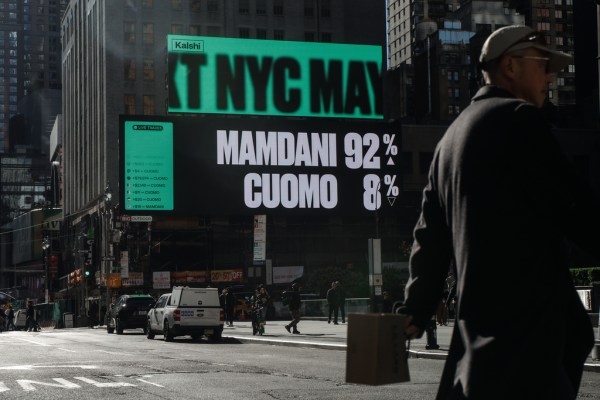
“Sports event contracts are no different than sports betting and are not magically shielded by federal law from Connecticut’s commonsense consumer protection laws,” Tong said in a press release. “These laws exist for a reason—to protect minors, to prevent problem gambling, to ensure your money is safe and your personal information is protected.”
Kalshi offers contracts based on the outcomes of live sporting events, portions of games, future events during sporting contests, and individual athlete performance statistics. The company has also offered contracts covering team wins, league rankings, point totals, point spreads, and so-called “combos,” which Connecticut officials characterized as essentially parlays.
The state alleged that Kalshi has marketed its sports contracts as legal alternatives to regulated sportsbooks, such as DraftKings, including by advertising itself as “The First Nationwide Legal Sports Betting Platform.” Kalshi has also promoted its products as “investments” and claimed its platform is “legal in all 50 states,” according to the lawsuit.
Between 80% and 90% of Kalshi’s offerings were sports event contracts as of February 2026, according to a report the company submitted to the U.S. District Court for the District of Connecticut, according to the lawsuit.

The company has argued that its sports contracts are financial derivatives subject to federal oversight under federal law rather than state gambling laws. Certain event contracts can qualify as “swaps,” a category of derivative regulated by the federal government.
Connecticut officials, however, argue that Kalshi’s sports contracts do not serve the legitimate financial or informational purposes associated with derivatives. Instead, the state said, they are simply bets on sporting outcomes that have no economic significance beyond the fact that people wager on them.
The state’s lawsuit points to an Aug. 7 ruling by U.S. District Judge Kari Dooley, who rejected Kalshi’s request for a preliminary injunction against Connecticut’s enforcement of its sports wagering laws. The court concluded that Kalshi’s sports contracts are, “at bottom … sports wagers,” according to the lawsuit.
Connecticut also accused Kalshi of targeting young people. The lawsuit alleged that minors have been paid to create promotional content for the company, including on TikTok, and that Kalshi briefly enlisted a 15-year-old video game streamer as an affiliate. The company also promoted an ambassador program at Yale University, encouraging students to use the platform for sports wagering, according to the state.
Gov. Ned Lamont (D-CT) said the state legalized sports wagering in 2021 to establish a regulated market, not to create an unrestricted sports betting industry.
“These prediction markets put Connecticut consumers, young people, our student athletes, and those suffering from gambling addiction at serious risk,” Lamont said.
Connecticut is not the only state challenging Kalshi’s sports contracts. Washington Attorney General Nick Brown sued the company in March, alleging that it operated as an illegal gambling business and used deceptive advertising. New York officials have also challenged Kalshi, arguing that its sports and event contracts constitute illegal gambling because users risk money on uncertain outcomes outside their control.
Prediction market lawsuits set stage for major court battles
Kalshi responded to the lawsuit, questioning why the Constitution State was not targeting other prediction markets.
“This is the latest in a line of arbitrary and inconsistent enforcement by the states, which shows this has nothing to do with consumer protection,” Kalshi spokesman Jovy Dedaj said. “If it did, the states would be seeking the same relief across the board. This unequal treatment is exactly why federal oversight is necessary.”