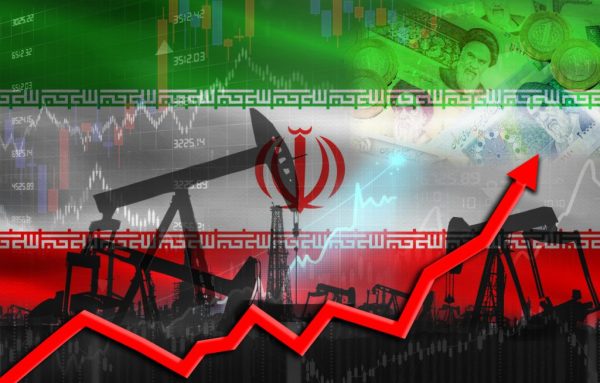
Exactly six months after President Donald Trump launched Operation Epic Fury, gas prices remain relatively high, with the national average just above $4 per gallon.
Shortly after the United States and Israel launched their blistering air and missile strikes to decapitate and debilitate the Iranian government, the Revolutionary Guard launched its own blockade of the Strait of Hormuz, through which nearly a quarter of the world’s oil was shipped. The fight over the strait would soon become the central battleground of the war, as the U.S. sought to limit Iran’s damage against the global economy. The blockade was soon felt in the U.S. itself, as gas prices skyrocketed to cope with the sudden increase in demand from Europe and Asia, which were reliant on oil and gas from the Gulf states.
Recommended Stories
The day before the beginning of the war with Iran, the national average for gas at the pump stood at $2.98. The price of gas peaked on May 21 at an average of $4.56 per gallon, and while it has since decreased substantially, it remains above $4.
This month is set to hit a new record as the most expensive August on record — the first when the average gas price has been over $4 per gallon all month.
On Friday, the half-year mark past the war, the average price was $4.09.
The milestone is bad news for the Trump administration, with the midterm elections just over two months out. Trump has repeatedly insisted that the disruptions to oil markets are momentary, but the continued volatility in the strait has prevented them from halting.
As Republicans control all three branches of government, the backlash against the cost-of-living increases is set to translate into electoral problems.
Of the battleground states, Nevada has the highest gas prices, with an average of $4.81 per gallon. Michigan and Arizona have seen the steepest increases over the past six months, with Michigan going from $3.13 last year to $4.22 as of Friday, and Arizona shooting from $3.20 last year to $4.54 on Friday.
The diversity of gas prices brings some good news for Republicans — prices and North Carolina are below average at $3.75 per gallon, and in Georgia, they sit at $3.79 per gallon.
Pennsylvania is slightly above average at $4.21 per gallon, and Maine is at $4.11 per gallon.
In better news for Republicans, the U.S. has made some progress in getting increasing amounts of oil through the strait in recent weeks.
Last week, a report from Axios citing two U.S. officials revealed the most positive development, claiming that the U.S. was getting 15-20 tankers carrying roughly 10 million barrels of oil through the Strait of Hormuz per day, amounting to half the prewar total of 20 million barrels per day. According to the officials, the vessels traveled via the southern U.S.-backed channel along the coast of Oman at night, avoiding Iranian detection.
The operation was possible due to the two straight weeks of U.S. strikes on Iran carried out beginning in mid-July, which targeted radar and maritime surveillance systems.
“We have been controlling the southern lane of the Strait of Hormuz for two months now,” one of the U.S. officials with direct knowledge of the matter told the outlet. “The Islamic Revolutionary Guard Corps can be a nuisance, but they don’t control the strait. We do.”
The report was controversial, and many analysts brought forward conflicting data contradicting the assertions of the officials. The consensus soon concluded that the true amount of oil sneaked through the strait was significantly less, but still amounted to millions of barrels daily.
OIL FLOWS AND IRANIAN ECONOMIC WOES GIVE WHITE HOUSE MUCH-NEEDED PR REPRIEVE AROUND WAR
A Thursday report from Bloomberg claimed the total going through the Strait of Hormuz was increasing, and now stands at 6 million to 8 million barrels per day, a total that, when including overland routes, nears the prewar flow.
If the claims of the U.S. officials are true or contain a grain of truth, oil prices should begin falling before long. With just over two months to go, however, time is running out for Trump and the Republicans.