Pentagon announces long-term deal to expand Patriot and THAAD missile production significantly

Published August 31, 2026 11:42am ET | Updated August 31, 2026 11:42am ET


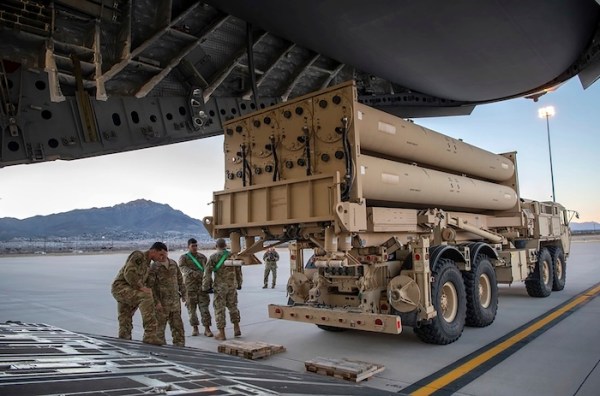
The Department of War announced on Monday seven-year “framework agreements” with General Dynamics Ordnance and Tactical Systems and Lockheed Martin that would allow for the significant increase in production of critical interceptors for the Patriot missile defense system and the Terminal High Altitude Area Defense system.

The contracts are designed to “increase production quantities and accelerate delivery schedules for critical missile subcomponents,” a press release from the department said, noting that the ultimate goal is to triple the production capacity of the PAC-3 Missile Segment Enhancement interceptors and quadruple that of THAAD interceptors.

GDOTS manufactures key components for each of the interceptors.

“Today’s announcement represents an example of the evolution of how we partner with industry to expand the Arsenal of Freedom, outpace emerging threats, and ensure the Warfighter never faces a fair fight,” said Undersecretary of War for Acquisition and Sustainment Michael Duffey.

The agreement is part of the department’s broader effort to expand the production of key systems, with an emphasis on air defense systems, from the defense industrial base. As part of the push, the department has sought to slash traditional hurdles that made entering the DIB space very challenging for new and small companies.

Pentagon officials under President Donald Trump have instead emphasized the inclusion of new and emerging nondefense companies with this effort.

“General Dynamics and Lockheed Martin have answered the call. We are cutting red tape, shortening timelines, and rapidly scaling our domestic manufacturing capacity to deliver the advanced air and missile defense capabilities,” Duffey added.

IN FOCUS: SIX-MONTH IRAN WAR PUTS PRESSURE ON THE PENTAGON’S PROCUREMENT TRANSFORMATION TO MEET THE ‘1939 MOMENT’

The U.S. military has rapidly expended critical munitions over the course of the Iran war, the latest in a series of military missions that required the use of such air defense systems. Pentagon officials acknowledge the need to replenish and expand production capacity, but have denied that the military is facing a shortage that is impacting readiness.

Both the Patriot and THAAD air defense systems have protected U.S. troops during the war from Iranian ballistic missile attacks. Each interceptor missile for the Patriot and THAAD systems costs seven figures, let alone for the whole system, which is why the department is also looking for evolving technology and updated variants that will lower the manufacturing costs.