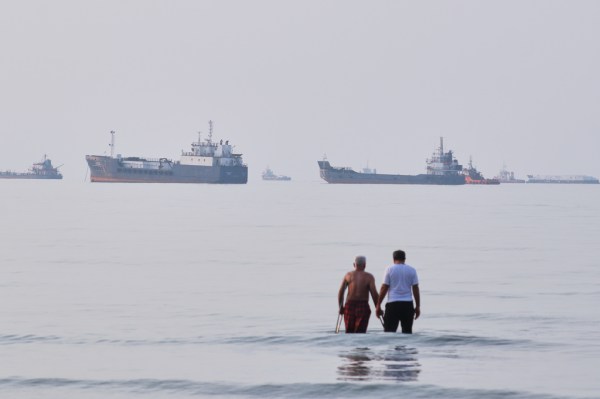
Oman turned the closure of the Strait of Hormuz into a strategic commercial victory. Ports at Duqm, Salalah, and Sohar now absorb the cargo that once moved through the Iranian-blackmailed choke point, transforming the sultanate into the Gulf’s primary logistics alternative. This expansion outgrows simple economic diversification and offers Tehran a sophisticated, quiet pathway to blunt the pressure Washington just unleashed.
A $300 million upgrade boosted Salalah Port’s capacity to 6.5M TEUs, driving early 2026 revenues up 20% to $132 million. Sohar expanded handling capacity by 55%, feeding the Hafeet railway into Saudi Arabia. Meanwhile, Duqm secured more than $7.5 billion in fresh investment commitments for industrial, logistics, and energy projects. These three ports sit entirely outside both Hormuz and Bab el-Mandeb, offering lower insurance costs and more reliable transit than inner-strait hubs can match.
Recommended Stories
History supplies the overlooked parallel. Portuguese captains in the early 16th century imposed the cartaz system — mandatory passports and tolls enforced by naval power — to monopolize traffic through Hormuz. Arab rulers of the Kingdom of Hormuz and Omani forces responded by building alternative entrepôts and overland networks that diluted Portuguese control. Oman’s current port strategy repeats that same geographic adaptation. The critical difference lies in the partner: 16th-century Omanis used alternative ports to resist external domination; 21st-century Muscat builds and expands them to protect the economic interests of an aggressive, destabilizing, tyrannical regime that terrorizes the world.
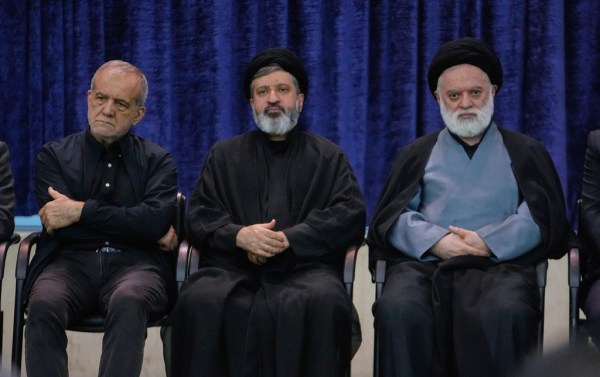
Without a doubt, August 2026 marked a pivotal shift as Oman and Iran finalized a preferential trade agreement to expand regional economic ties. Officials from both countries previously signed 18 comprehensive memoranda of understanding covering areas such as critical customs, energy, investment, and logistics. At the same time, bilateral trade between Oman and Iran has surpassed $5 billion, driven by Tehran’s non-oil exports rising by over 25% quarter over quarter. Muscat’s deepening complicity with Iran’s “Axis of Resistance” now includes joint working groups managing strategic transit through the Strait of Hormuz, while commercial front companies exploit Omani waters to launder vehicle shipments. For decades, Washington has coddled the myth of “Omani neutrality.” In reality, Muscat’s diplomatic double-game has consistently provided Tehran with the critical commercial and strategic breathing room necessary to evade sanctions and project power.
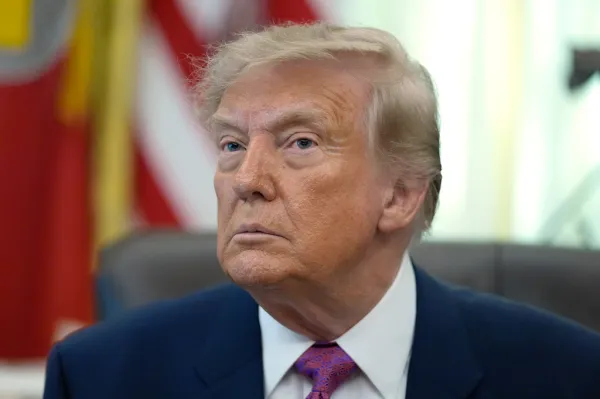
On Aug. 24, 2026, President Donald Trump launched “Operation Economic Outcast” — an explicit worldwide financial D-Day expanding secondary sanctions across digital assets, technology, gold, aviation, and shipping. America’s unequivocal goal is to sever every remaining Iranian revenue channel. However, Omani ports operating outside the naval blockade offer free-zone processing and overland connections, thus creating precisely the third-country nodes that past maximum-pressure campaigns struggled to close. Cargo originating in or linked to Iran can enter Salalah or Duqm under Omani documentation, continuing into global markets with reduced scrutiny.
STOP CALLING IRAN A ‘FOREVER WAR.’ IT’S A PRESSURE COOKER ABOUT TO BLOW
Hence, the United States must treat Oman’s port expansion as a major sanctions-integrity problem rather than a commercial success. The White House must condition every future security cooperation agreement, port-access arrangement, and technology transfer with Oman on mandatory, real-time cargo-origin transparency for every vessel and container that handles Iranian-linked goods or is beneficially owned by Tehran’s entities. Failure to meet this requirement must trigger automatic secondary sanctions for Omani free-zone operators or logistics firms. In tandem, the U.S. should accelerate funding and diplomatic support for competing rail and port corridors in the United Arab Emirates, Saudi Arabia, and India that explicitly exclude Iranian cargo, ensuring that Oman’s geographic advantage remains purely commercial rather than strategic for Tehran.
While Muscat’s ports exploit a gaping strategic loophole, they risk transforming Oman into the silent infrastructure that lets Iran survive the maximum pressure campaign that the U.S. designed to break a murderous regime that terrorizes the region and the world alike.
Jose Lev Alvarez is an American–Israeli scholar specializing in international security policy. A multilingual veteran of the IDF special forces and the U.S. Army, he holds three master’s degrees and is completing a Ph.D. in Intelligence and Global Security in the Washington, D.C., area.