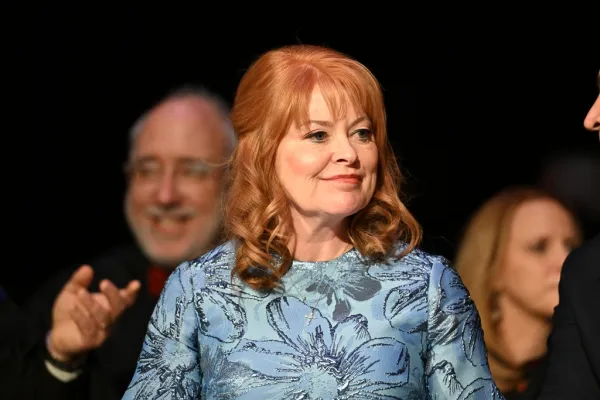
EXCLUSIVE — The Republican nominee for governor in Pennsylvania supports a ban on Flock cameras, the latest sign of how unpopular the vehicle tracking technology has become in races across the country.
In a statement provided by her campaign, Pennsylvania Treasurer Stacy Garrity called the cameras an “intrusive invasion of privacy” and said they should be “banned” in the commonwealth.
Recommended Stories
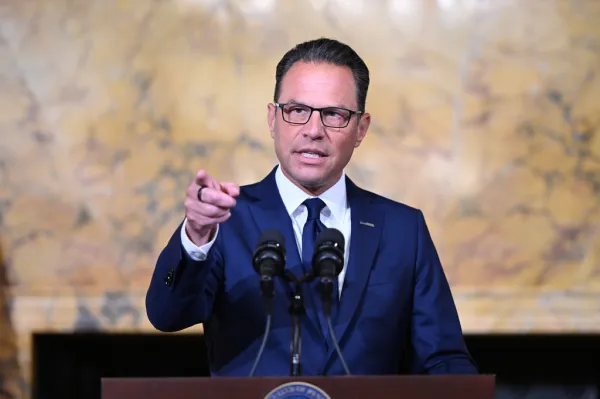
Her position mirrors that of her Democratic rival, Gov. Josh Shapiro (D-PA), who said on Friday that he would “welcome bipartisan legislation to ban these across the state.”
“This is not something I support. This is not something in the public interest,” Shapiro said at a public safety event near Philadelphia, noting that Pennsylvania State Police do not use them.
“I think law enforcement needs to have tools to keep communities safe. Flock cameras are not a tool that I support,” he added.
There are multiple bills under consideration in the Pennsylvania statehouse to regulate or outlaw the technology, which has raised privacy concerns over its mass collection of license plate data to assist law enforcement.
Nationally, the cameras and those produced by other AI companies became politically toxic earlier this month following reports of abuse.
On Monday, outgoing Gov. Ron DeSantis (R-FL) announced that Florida’s Department of Transportation would remove them from state roadways within 30 days. Gov. Greg Abbott (R-TX), who is running for a fourth term as governor of Texas, blocked state agencies from spending money on the cameras a few days earlier.
Garrity was initially asked about Flock cameras during a Friday interview on a local talk radio program but appeared unaware of the technology, asking host Mike Opelka to “tell me what they are.”
Following an explanation, Garrity briefly lamented them as “another example of government overreach” before pivoting to Shapiro’s feud with Health and Human Services Secretary Robert F. Kennedy Jr. over two measles-associated deaths in Pennsylvania.
Defenders of Flock cameras call them a valuable crime-fighting tool that can help recover stolen cars or find missing persons, but their sudden proliferation in cities across the country has made them a source of voter angst and raised questions over whether civil liberties are being violated.
EMBATTLED CALIFORNIA DEMOCRAT TO STEP ASIDE AS DADS CAUCUS CHAIRMAN
They join data centers as a flash point in the midterm elections and represent one of the few areas of bipartisan common ground in Harrisburg and Washington.
Both Shapiro and Garrity have stepped away from their support of data centers while accusing one another of flip-flopping on the issue. Shapiro recently signed an executive order that stopped short of a data center moratorium.