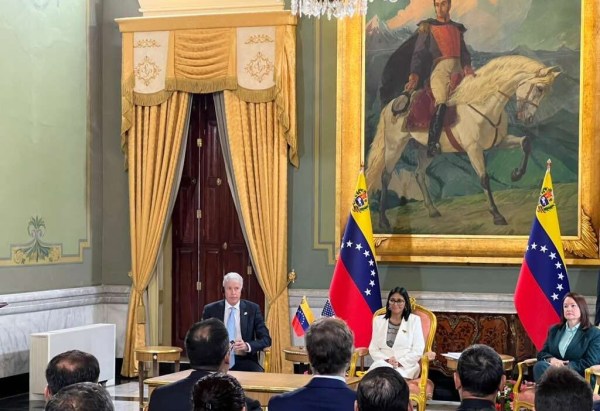
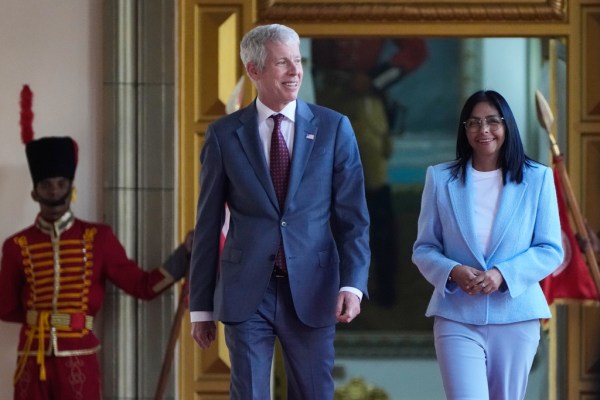
CARACAS, Venezuela — Energy Secretary Chris Wright said the Trump administration’s efforts to increase oil production in Venezuela would yield lower gas prices for Americans in one to two years, a timeline elongated in part due to the need to build more refiners capable of processing the heavy Venezuelan crude.
“We are ahead of schedule, ahead of plan,” Wright said during a visit to Caracas to broker major oil deals with the Venezuelan government.
Recommended Stories
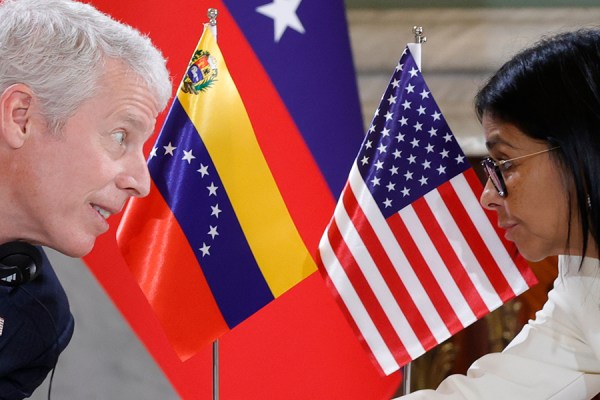
When asked directly about lower gas prices, Wright said he was confident Americans would “feel” the progress from the deal “in the next 12 to 24 months.”
That timeline means relief would be too late to help President Donald Trump and Republicans improve their standing with voters upset about high gas prices before the midterm elections. But it is also shorter than many outside analysts have said is possible.
Many experts have warned that it could take years to build out the amount of refining capacity necessary to process such an increase in Venezuelan imports, particularly as the United States aims to increase the country’s output to around 1.5 million barrels per day by the middle of next year. At the same time, refiners are likely to face additional hurdles due to aging infrastructure that has caused delays at export terminals. In early August, Reuters reported that some tankers were forced to wait up to 30 days to load new cargo.
“The faster Venezuelan production grows, the faster it goes into U.S. refineries,” Wright told reporters. “We also see opportunities to grow refining capacity from existing assets right here in Venezuela.”

The Trump administration confirmed on Monday that it will be taking a 35% equity stake in private oil and gas exploration and production company North American Blue Energy Partners.
As part of the deal, the White House said Venezuelan authorities granted NABEP 100-year concessions for 17 oil fields that have proven reserves of roughly 65 billion barrels of crude.
Gasoline prices have risen sharply over the last six months, primarily because the war with Iran has partially closed the Strait of Hormuz, a key oil supply choke point. And since the deal was announced, prices have continued to rise by a few cents on the gallon.
Trump has attempted to convince voters that higher gas prices are worth it to keep Iran from obtaining a nuclear weapon. But even as the administration has repeatedly claimed Iran has been defeated and the U.S. is in control of the Strait of Hormuz, gas prices have continued to rise.
As of Wednesday, the national average price of gasoline was roughly $4.12 a gallon, according to AAA, up from $3.18 one year ago.
MOST OIL PASSES THROUGH STRAIT OF HORMUZ SINCE WAR BEGAN, CHRIS WRIGHT SAYS
In addition to lowering gas prices, the Trump administration has said that purchasing Venezuela’s oil will ensure the U.S. government can refill the Strategic Petroleum Reserve.
The SPR facilities were not built to hold the type of heavy crude oil produced in Venezuela. Wright has suggested, though, that it could be traded for barrels that could replenish the SPR.