Friday’s jobs report for August showed the economy adding a robust 162,000 jobs and the unemployment rate holding at 4.1%, both strong signs for the economy.
But the headline numbers from the Bureau of Labor Statistics report don’t always tell the full story. A look at the trends and details underlying the figures can illustrate a lot more about the performance of the economy under President Donald Trump.
The underlying reality
Job numbers can bounce around from month to month. That is why it is important to look at the trend over multiple months.
Recommended Stories

With upward revisions to the numbers for June and July, the three-month moving average of job gains was a relatively strong 71,000 in August.
That is an acceleration from the previous month. And it is more than enough to keep up with population growth and to keep unemployment trending down.
Only a few thousand jobs each month are needed, thanks in large part to Trump’s crackdown on illegal immigration.
Because fewer migrants are coming into the country looking for work, fewer people need and are taking jobs.
Conversely, employment rates are high, showing the underlying strength of the labor market.
Prime-age employment, meaning for those between the ages of 25 and 54, has held near all-time highs. It was steady at 80.4% in August.
Is a recession looming?
The unemployment rate, taken from the jobs report’s household survey, is still low by historical standards. It has drifted upward in recent years, but only gradually. It held at 4.1% in August.
Friday’s data suggest that the U.S. labor market is moving away from triggering one major recession indicator — namely, when the three-month moving average of the unemployment rate rises half a percentage point relative to its minimum point over the past year. This indicator, known as the Sahm Rule, has signaled the start of all post-war recessions.
The indicator was triggered in mid-2024, but it is not signaling a recession right now.
Federal government employment has dropped under Trump
The Trump administration has reduced the federal workforce.
That has restrained overall job growth, but Trump officials argue that it will help with economic growth.
Federal employment dropped by 5,000 in August and is now down about 336,000 since Trump came into office.
Manufacturing employment is down under Trump
Employment in manufacturing grew by 16,000 in August.
Trump has implemented tariffs on a wide range of goods and trading partners in an effort to reshore manufacturing. So far, it has not worked. The sector has lost 35,000 jobs during his time in office.
Construction job growth has held up
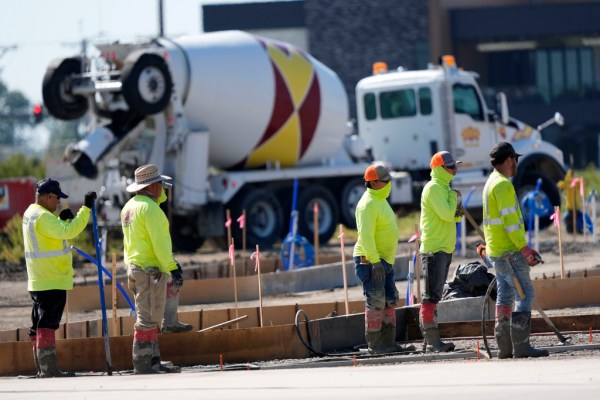
Construction employment rose by 22,000 in August.
Construction is a key sector to watch for signs of trouble in housing. The homebuilding industry has been at risk in recent years because of soaring prices and higher mortgage rates, which have kept some buyers on the sidelines. The sector is also under pressure from Trump’s tariffs and his immigration overhauls.