

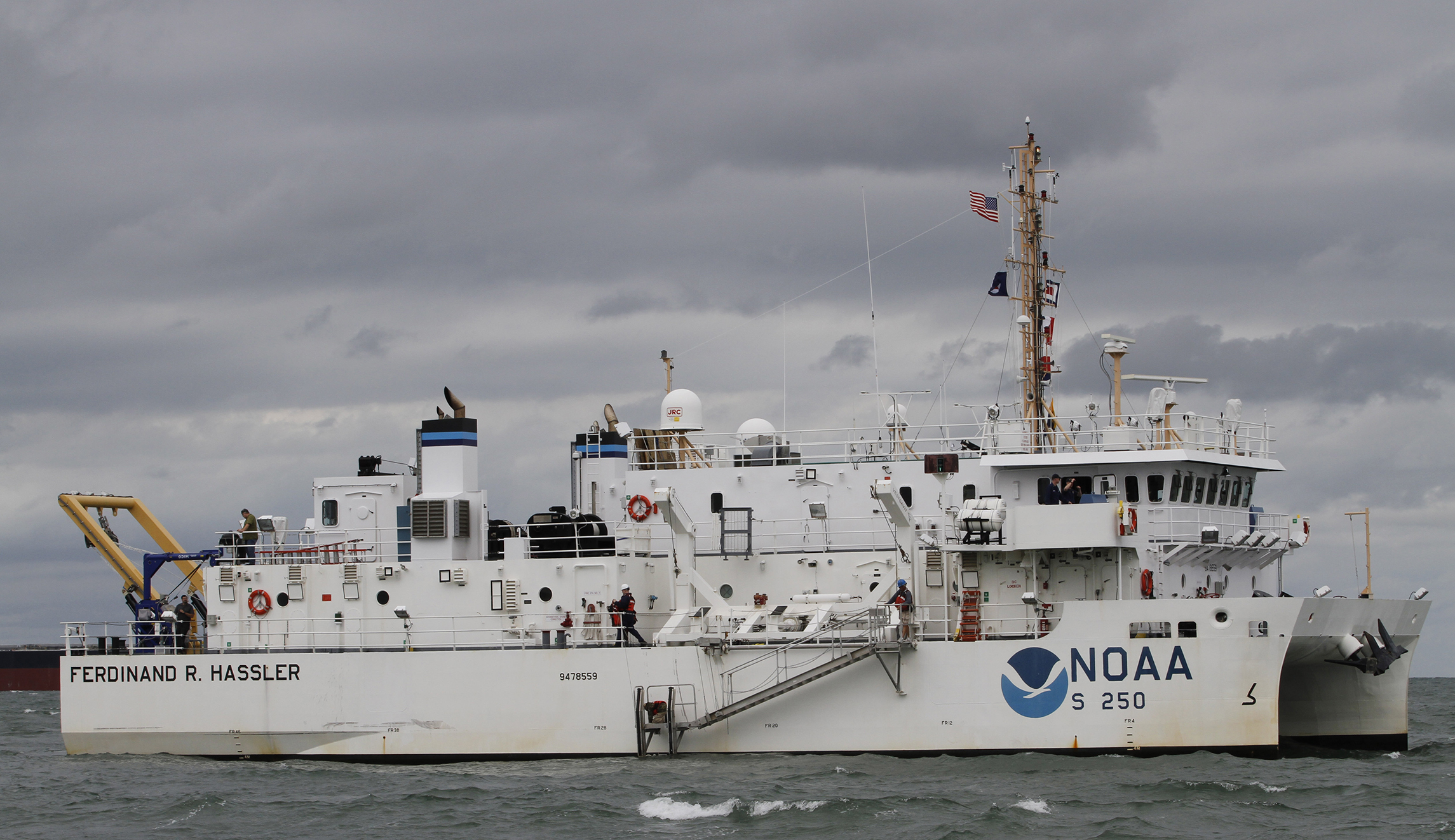
The U.S. is losing its ability to track climate changes because of a lack of technology and, most importantly, the research ships required to track global warming from the oceans, according to a study by the National Academies of Sciences released Friday.
The study, “Sustaining Ocean Observations to Understand Future Changes in Earth’s Climate,” said the U.S. needs to expand its fleet of research vessels if it is to accurately assess the effects of climate change, which the Earth’s oceans are key in monitoring.
Recommended Stories


The knowledge gained through “observations and models” make for “more informed decisions … about how to respond and adapt to the impacts of climate change on national security, the economy and society,” according to the study.
“While new technologies such as autonomous ocean-going vehicles hold promise … for access to the ocean, a capable fleet of research vessels, including those with global reach, is essential to sustaining the U.S. contribution to ocean observing,” according to one of the study’s main conclusions.
But the fleet is shrinking. “The decreasing number of global and ocean-class research vessels is creating a shortfall in the infrastructure required for sampling the global ocean and expanding collection into poorly sampled regions such as the polar seas,” the study said.
“Ships require long-term planning and investment, and maintenance of a capable fleet of research vessels is an essential component of the U.S. effort to sustain ocean observing,” the study added.
The study recommends that the U.S. create a long-term plan, perhaps for 10 years, saying that not having strong leadership presents a major challenge in keeping up U.S. contributions to ocean research.
The report also concluded that forming an organization to bring together industry and the commercial sector would benefit climate research. The organization would help “to enhance partnerships across sectors with an interest in ocean-observing, particularly nonprofits, philanthropic organizations, academia, U.S. federal agencies, and the commercial sector, would be an effective mechanism to increase engagement and coordination.”
The study suggested that maintaining a vibrant ocean research fleet would benefit industry beyond tracking the effects of carbon dioxide on the planet’s environment. “Given that ocean observations for climate provide a wide range of benefits to the agricultural, shipping, fishing, insurance and energy-supply industries, the committee that wrote the report suggested that efforts could be made to draw support for ocean observing from the commercial sector,” according to the study.
The primary agency that tracks climate change from the oceans, the National Oceanic and Atmospheric Administration, was one of the sponsors of the National Academies of Sciences study.
The study was sponsored by the National Academy of Sciences’ Arthur L. Day Fund and NOAA.
The Trump administration, not surprisingly, has targeted major cuts for climate research at the agencies that do the heavy-lifting on climate change, atmospheric research and weather trends, including NOAA and NASA.
Trump proposed a 32 percent cut in NOAA’s weather and climate programs. Congressional spending bills, however, have looked to rein in spending at the agency by a more modest 2 percent.
