


ORANGE COUNTY, California — President Trump’s unwavering support for Immigration and Customs Enforcement has helped, not hurt, its ability to arrest people who are illegally in the country, even as state efforts make doing so harder, according to a senior ICE official.
David Marin, director of ICE’s Enforcement and Removal Operations in the Los Angeles region, said the blowback against the federal agency over the past three years, including after immigrant family separations at the border, has been significant. But Marin said it has only prompted his more than 500 officers to go about doing their jobs in a different way, not to stop making arrests of people he said have been determined to be candidates for deportation.
Recommended Stories


“I don’t think that the administration or the president made things harder,” Marin said when asked if Trump’s support caused more problems than the agency would have had under another president. “I think what happened with this administration is they said, ‘Look, your job is to enforce the law. You are the experts — you enforce the law that you feel is best.’”
Under President Barack Obama, the administration directed the Department of Homeland Security entity to focus on arresting the most egregious criminal offenders who were at-large or in local police custody. The Trump White House expanded ICE’s powers to return to the level of the Bush years, making civil offenders and others as much a priority as those convicted of murder or rape.
Since 2017, California lawmakers have enacted measures to prevent local law enforcement from turning over people in custody to ICE on the grounds that it is not their responsibility to do immigration work.
One such law, Assembly Bill 668, went into effect last month and bans ICE officers from making arrests inside state or local courthouses when someone shows up for a hearing. Marin instructed his officers to wait outside the building and make the arrest there. “It’s not going to stop us,” he said.
A 2017 law blocked local police from directly sharing with ICE information about detainee releases. In response, Marin said, those local agencies began posting release information online for anyone to see. Marin said his officers monitor those databases “every single day” and glean much useful information out of them. He speculated that across the state’s 57 sheriff departments, 50 “strongly support” ICE, including a handful around Los Angeles.
Another new state law may eventually force ICE to transport its federal detainees to for-profit detention centers in other states if the ones it uses in California are shuttered, including a GEO Group facility, the Adelanto Detention Center, north of Los Angeles.
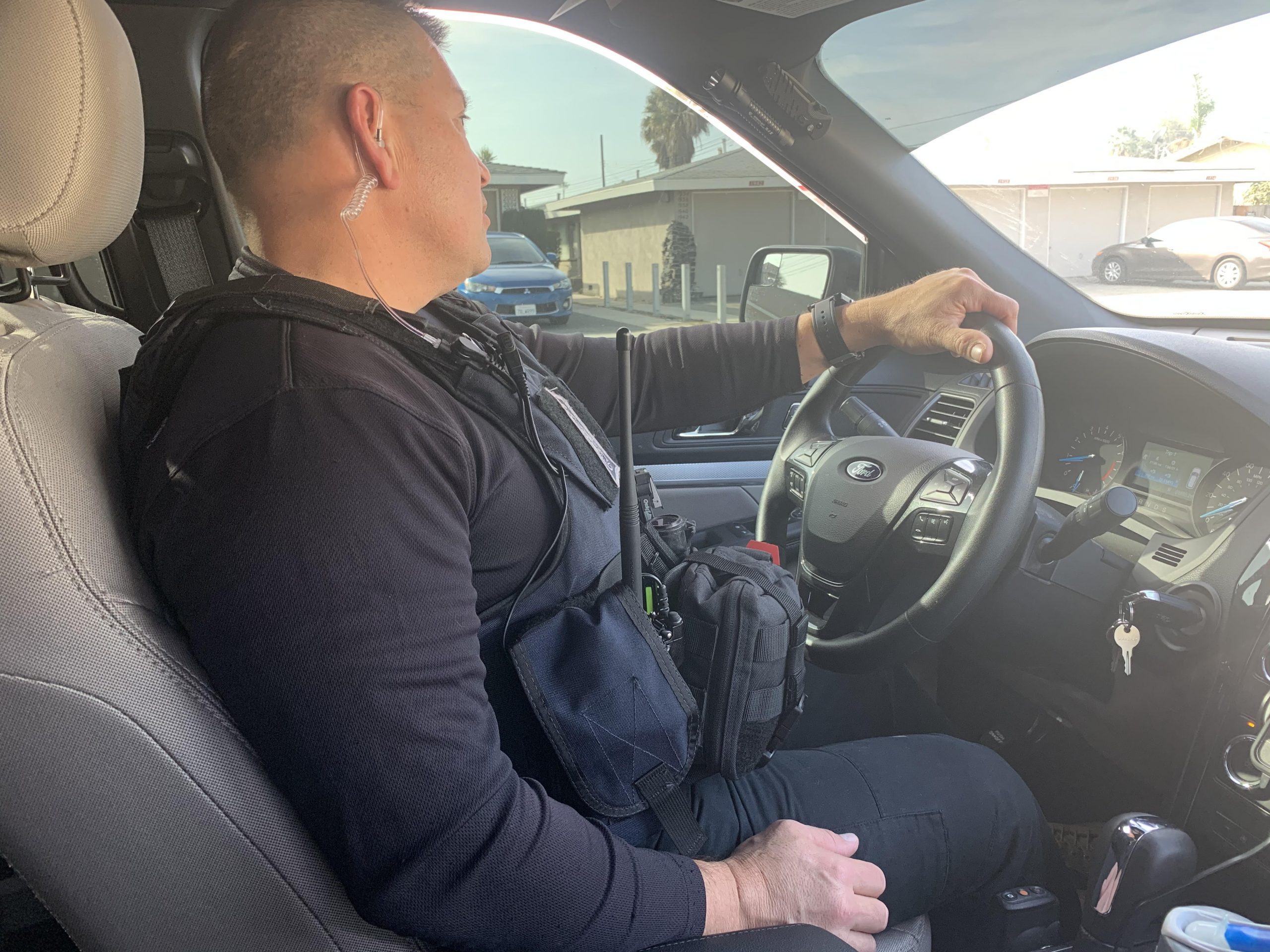
“Banning private prisons makes no sense at all, because when you arrest somebody, the person that’s being arrested needs to be close to their support system — your family, your attorney. Local law enforcement is not going to arrest somebody and then send them far away. We try to do the same thing,” said Marin. “California’s taken the step of, ’Let’s just ban them, and then they can’t keep anybody in custody here.’ That’s not going to stop us from doing our job.”
Marin said if his office no longer can detain people within the state, those arrested will be processed at existing ICE offices throughout the region and then flown to ICE-operated or private detention centers across the country, which would make family and attorney visits more difficult.
“For-profit prisons — this isn’t going to stop those. In fact, they’re going to probably become more lucrative to fly people to all of those different places,” he said.
Marin said Congress and the administration should work on permanent solutions for the estimated one million illegal immigrants living in his region, as well as millions throughout the country.
In private meetings with immigration advocacy groups and local faith leaders, Marin said he has urged leaders to tell immigrants to pursue lawful permanent status, even though it requires returning to their home country first.
“People here illegally need to become a U.S. citizen. The best thing you can do is help people become U.S. citizens. Citizens can get 10 DUI’s, and they won’t be deported,” he said. “If Congress wants things changed — they don’t want us to do this — then they need to change the laws. Going after, identifying, apprehending; that’s what we’ve always done. It’s just now it’s gotten more political.”
