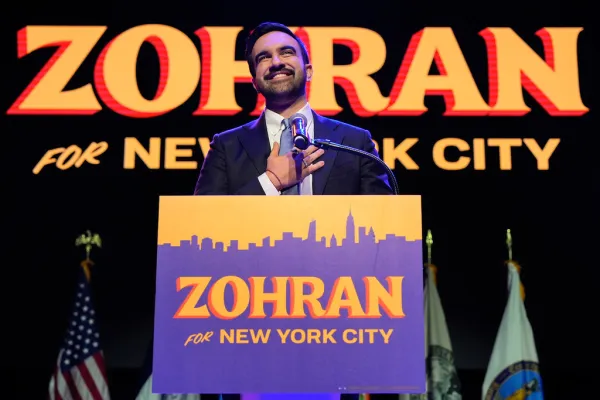
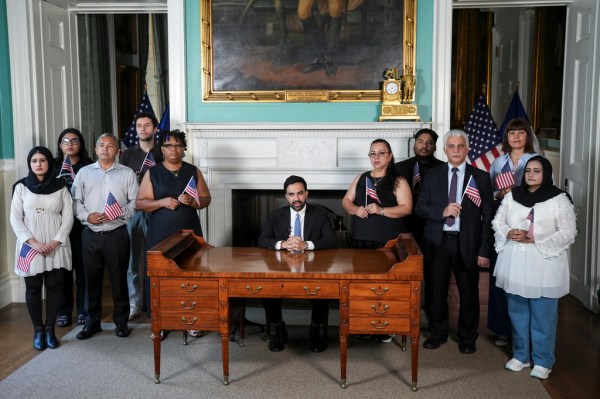
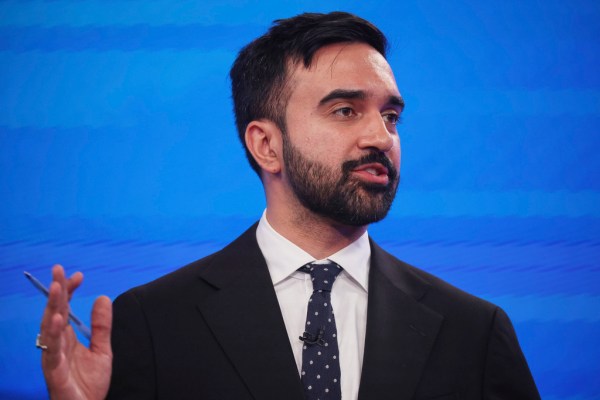
Few pairings in contemporary politics seem, at first glance, less alike than President Donald Trump and New York City Zohran Mamdani, a septuagenarian billionaire who remade the Republican Party, and a 34-year-old self-proclaimed “democratic socialist” who became New York City’s youngest mayor in a century. Yet their political biographies rhyme in instructive ways, even as their ideologies point in opposite directions.
Trump had never held elected office before 2016 and beat more than a dozen rivals in a Republican primary the party establishment treated as a novelty. Mamdani’s rise was even faster: in October 2024, he was a little-known state assemblyman barely registering in polls; 13 months later, he had defeated Andrew Cuomo, his own party’s preferred candidate and heir to one of New York’s storied dynasties, twice, in the primary and the general election, to lead the nation’s largest city. In both cases, a bottom-up primary electorate overruled the party’s preference, and gatekeepers underestimated a candidate who built a coalition loyal to him personally. The pattern isn’t new or uniquely American: in 1969, India’s Congress Party tried to discipline Prime Minister Indira Gandhi for defying its chosen candidate, and the clash split the party rather than containing her. In all three cases, institutional resistance was converted by the insurgent coalition into proof of authenticity rather than grounds for doubt.