
A Senate majority next year was once thought to be a pipe dream for Democrats that required them to run the table in deep-red terrain while defending several battlegrounds already controlled by their party.
By the early hours of Wednesday morning, any Democratic trepidation dissipated as they racked up win after win and secured commanding control of the Senate. Iowa was the state that delivered the 51st seat, shortly before midnight, as the Democrats rode a blue tsunami that saw them pick up GOP-held seats in North Carolina, Texas, Kansas, and South Carolina in an electoral drubbing that will be felt for election cycles to come.
Recommended Stories
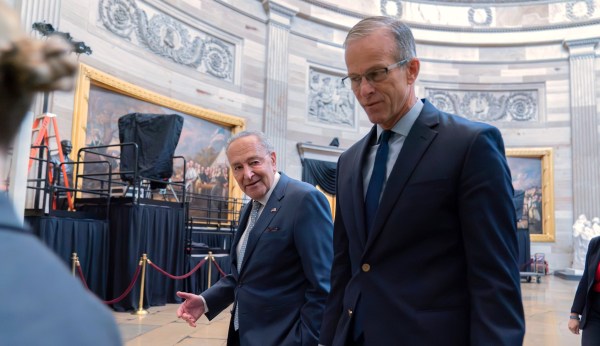
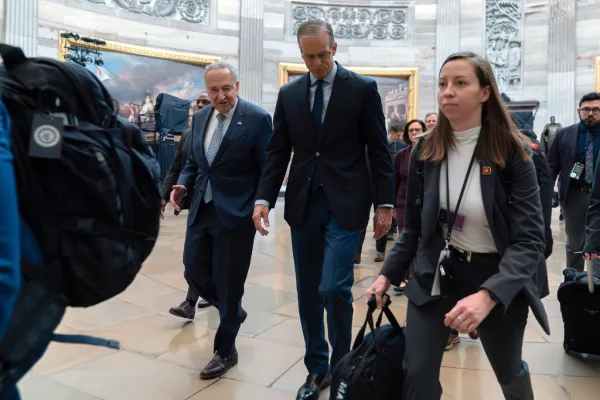
It also means Democrats won’t have to sweat out the results of the Alaska Senate race and the prospect of a drawn-out legal battle there, or the possibility of Sen. John Fetterman (D-PA) flipping parties.
The win will stymie the final two years of President Donald Trump’s second term, which was delivered in large part thanks to his plummeting approval rating and decision to drag the United States into an open-ended war with Iran that has fanned inflation.
MAINE DEMOCRATS FRET OVER TROY JACKSON’S GUARDED SENATE CAMPAIGN
Democratic control means that Trump will likely be unable to get his preferred nominees confirmed for the next two years, and could even have trouble appointing a successor to Justice Samuel Alito, should he decide to step down from the Supreme Court.
The result also means that Democrats will retake the committee gavels that give them subpoena power and open the door to more aggressive oversight of the Trump administration.
Similar scrutiny is expected in the House after Democrats picked up enough seats to reclaim the majority from Republicans.
For much of the election cycle, Senate Republicans were dogged by questions over whether they were jeopardizing their majority with a lack of message discipline from the White House and Trump’s preoccupation with nuking the filibuster to pass his signature election bill, the SAVE America Act.
In Texas, Trump’s unwillingness to go to bat for four-term Sen. John Cornyn (R-TX) opened months of debate over whether Republicans could save his seat after Ken Paxton, the scandal-ridden state attorney general, defeated Cornyn in the primary.
Senate Majority Leader John Thune (R-SD) was characteristically cautious about whether Republicans would be in charge next year, in stark contrast to Speaker Mike Johnson’s (R-LA) confident declarations that the House would stay in Republican hands.
But Thune staked his majority on erecting a “big wall” around Republican candidates in the form of hundreds of millions in TV advertising.
The biggest expenditure was in Ohio, followed by a deluge in Texas, a red stronghold where Paxton consistently underperformed in the polls against Democrat James Talarico. Republicans also had to make surprisingly large investments in states like Iowa and Kansas, where a Democrat hasn’t won a Senate race in almost a century.
KATHY HOCHUL COUNTS ON MAMDANI TO REV REELECTION TURNOUT DESPITE GOP ATTACKS
For Democrats, the midterm drama centered on Maine and Michigan, two states where progressive candidates defeated rivals favored by Senate Minority Leader Chuck Schumer (D-NY). Both were considered controversial and brought their share of party infighting.
Oyster farmer Graham Platner, after surviving scandals over his Nazi-linked tattoo and old social media posts, was pushed out of the race in July following allegations of sexual misconduct, prompting a rushed convention to choose his successor, Troy Jackson.
The sniping in Michigan centered on Abdul el Sayed’s views on Israel and was revived by Rep. Haley Stevens (D-MI), who narrowly lost the primary, in the final days of the election. After endorsing el Sayed, Stevens rescinded her support and backed Republican Mike Rogers. Her about-face reflected lingering doubts that el Sayed would adequately represent the Jewish community in Michigan.
The outcome of the election could set Democrats on a bigger collision with Trump, who has promised to make extensive use of his veto power as a lame duck president.
It also puts Schumer in a stronger position after nearly 10 years leading his caucus in the Senate. He’s fielded complaints from progressive Democrats who believe his pragmatic streak does not fit the Trump era, but is less likely to face a challenge after helping recapture the majority.
JOSH SHAPIRO HOPES HIS PENNSYLVANIA COATTAILS CAN FLIP THE HOUSE FOR DEMOCRATS
For Thune, the November election could prompt conservative members of the Republican conference, or even Trump, to blame him for the outcome, although there hasn’t been talk of a leadership challenge up to this point.
Both Schumer and Thune are up for reelection in 2028 and have yet to say definitively whether they will run again.