
Incumbent parties almost always face downsizing in midterm elections, and in that way, 2026 is no different. But what may differentiate an ordinary blue wave from the evident indigo tsunami that voters delivered to Republicans is how uniquely President Donald Trump manufactured the dismantling of his own Senate majority.
I am not talking about responding to the 2024 electorate’s outrage over the cost of living with a sweeping tariff regime that increased the cost of living. I am not talking about starting a war in Iran to prevent lunatic terrorists from obtaining a nuclear weapon (a perfectly justifiable proposition) but then deciding to pause the war to try to negotiate with those lunatic terrorists who never had any intention of making a deal. I am not talking about the nontroversies gassed up by the lamestream media — think: the actually quite justified renovations to the White House ballroom, the Reflecting Pool, and the Kennedy Center — or the real scandals in the margins, such as the corruption of the Lutnicks and the Witkoffs.
Recommended Stories
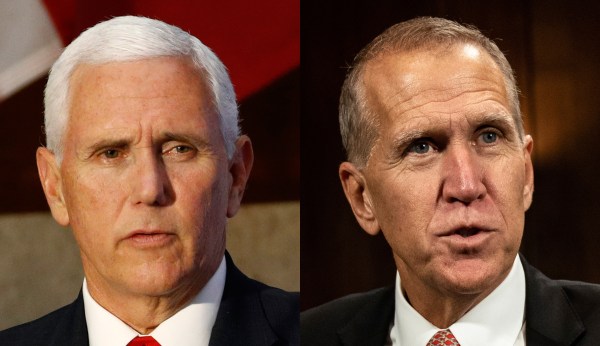
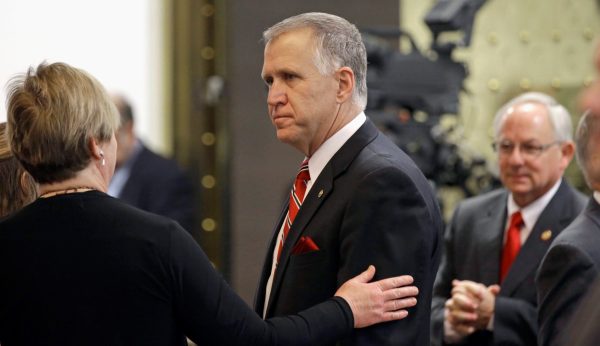
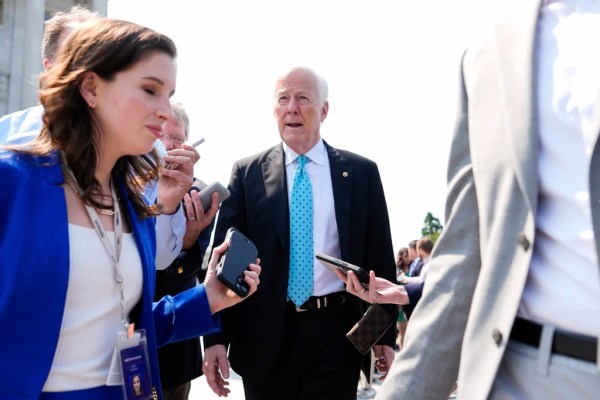
Rather, I mean that Trump personally sowed the seeds of his own political destruction by bullying his actual, tangible Senate majority out of existence.
The domino effect began either with Trump’s incessant haranguing of Georgia Gov. Brian Kemp — ensuring that incumbent Sen. Jon Ossoff (D-GA) would not face the Peach State’s most popular Republican in his reelection bid — or with plucking political neophyte JD Vance from his U.S. Senate seat representing Ohio to serve as Trump’s second-term vice president. That Ohio vacancy wasn’t a crisis. Sen. Jon Husted (R-OH) was a perfectly fine and boring replacement. What happened to the rest of the map, however, became a mess.
Trump kicked off his second stab at the Oval by beefing with his own majority. After Trump lambasted Sen. Thom Tillis (R-NC) over the 2025 One Big Beautiful Bill Act, instead of simply accepting the senator’s face-saving and ultimately innocuous vote against the bill, the president pledged to primary Tillis. Rather than face months of a MAGA mob driving him to inevitable defeat, Tillis bowed out of his reelection bid just in time for the state’s recently retired and idiosyncratically popular Democratic governor, Roy Cooper, to run against Trump’s handpicked Tillis replacement, a perfectly competent and virtually unknown Republican operative, Michael Whatley.
Trump similarly sparred with Sen. John Cornyn (R-TX), who reliably voted with the president 99% of the time and successfully won statewide general elections in Texas six times in 30 years. Although Ken Paxton (R-Loser) would eventually launch his failed primary challenge against Cornyn without Trump’s explicit endorsement, Trump waffled over whether to weigh in — as Senate leadership begged him to, fearing Paxton’s very well-publicized baggage — before he finally decided to fully back Paxton in the primary.
When Sen. Lindsey Graham died of a sudden aortic dissection, Trump urged the state’s governor to appoint Graham’s sister, Darline Graham, as the late legislator’s temporary replacement. It was a poignant gesture in honor of the lifelong bachelor who had mostly raised his little sister after their parents died at young ages. But then Trump threw his full endorsement behind the younger Graham’s run for a six-year term to replace her brother, steamrolling the primary and, in the process, plenty of other candidates with proven electoral records in the Palmetto State.
THE CLOSING ECONOMIC PITCH REPUBLICANS ARE TOO SCARED TO MAKE
None of this is to mention past candidates whom Trump successfully browbeat out of office (think of Arizona’s Jeff Flake, whose departure, along with the death of John McCain, resulted in Arizona flipping from ruby red to bright blue). Nor is it to mention downballot decisions, such as the White House’s refusal to force Rep. Max Miller (R-OH) off the ticket, which surely dragged down Husted’s odds. Ditto for the eleventh-hour campaign strategy of Trump’s handpicked gubernatorial nominee, Vivek Ramaswamy.
But the point is that in a world where Cornyn, Tillis, and Vance all remained in the upper chamber and South Carolinians were allowed to vote for one of their own known politicians in an open primary, Republicans would keep, at a minimum, four Senate seats that they lost tonight, save hundreds of millions of dollars in cash, and likely save their own majority from the poppycock investigations, stonewalling, and impeachments to come.