
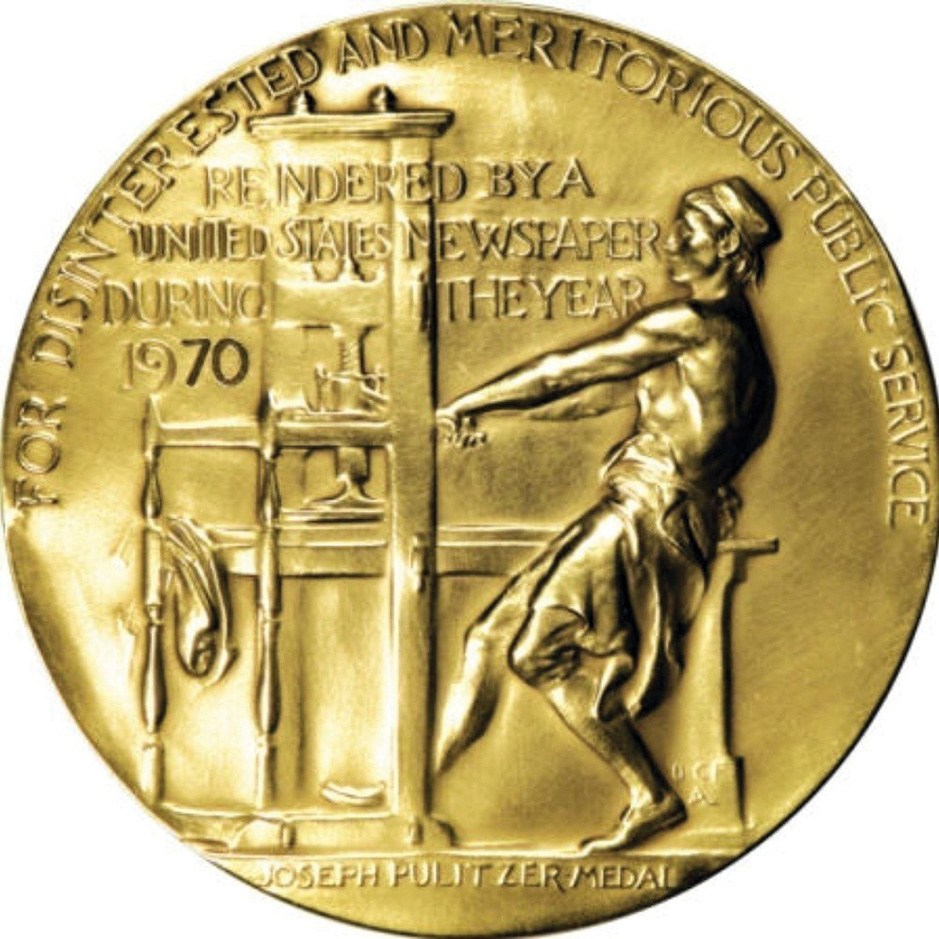
Nearly a decade ago The Weekly Standard’s own Philip Terzian, who had been a finalist for a Pulitzer Prize and served as a Pulitzer juror, wrote in the pages of this magazine, “The Pulitzer Prizes are a singularly corrupt institution, administered by Columbia University and the management of the New York Times largely for the benefit of the New York Times and a limited number of favored publications and personalities” (“Prize and Fall,” April 30, 2007).
Nothing about the 2016 Pulitzers, announced on April 18, suggests any need to revise or extend those remarks. True, the New York Times didn’t win the Pulitzer for editorial writing, but the fact they were a finalist for the award is appalling enough.
Recommended Stories



You may recall that back in December the Times made a splash when the paper ran its first front-page editorial since 1920, in the wake of the San Bernardino terror attack. The editorial didn’t argue for fixing the obviously dysfunctional immigration system that, despite myriad warning signs, let the terrorists into the country. It didn’t argue that the Obama administration’s abundance of spectacular foreign policy failures had made us less safe.
Instead, the paper editorialized in favor of preventing terror attacks by “eliminating some large categories of weapons and ammunition. . . . It is possible to define those guns in a clear and effective way and, yes, it would require Americans who own those kinds of weapons to give them up for the good of their fellow citizens.” The paper did not mention that the guns used by the terrorists in the San Bernardino attack were already illegal to own or that gun violence has declined by nearly half in the last two decades or so.
To make their point about banning certain kinds of ammunition, an online version of the editorial also linked to a fake web news site that claimed, incorrectly, that California had banned .45 caliber ammunition, which is one of the most commonly used bullets for handguns.
And despite the insistence that it’s “possible to define those guns in a clear and effective way,” an editorial a week later demonstrated a lamentable ignorance of firearms by stating that .50 caliber rifles had been covered by the so-called assault weapons ban. Such rifles, usually bolt-action types that hold relatively few rounds, were never banned under that law. A Mexican military helicopter was, however, shot down by Mexican drug cartels with one of these guns. And a .50 caliber rifle was found in January, along with the apprehension of the notorious Mexican drug lord El Chapo. In both cases, the weapons had been provided by Obama’s Justice Department as part of the baffling and incompetent Fast and Furious sting -operation. It will probably not surprise you that the Times has repeatedly editorialized against Republicans in Congress for demanding the Obama administration explain that episode and take responsibility for the thousands of guns that were sold to gangs under the guise of investigating gun-running.
The Scrapbook further noted the hypocrisy when an editorial ran in December blasting congressional Republicans for not supporting the Obama administration’s call for banning gun purchases for those on the no-fly list. A year earlier, the same Times editorial board had inveighed against the list as a matter of due process, noting that half of the 71,000 people on it may be there erroneously. Further, many on the list are simply suspects; denying constitutionally guaranteed rights to people who have never been convicted of a crime would be grossly unconstitutional.
Even gun control advocates should be aghast at the Times. Displays of brazen ignorance in the process of less-than-artful calls for gun grabbing are undoubtedly driving gun sales through the roof. That such undeniable journalistic incompetence would be saluted by the Pulitzer committee once again affirms they are indeed a singularly corrupt institution.