

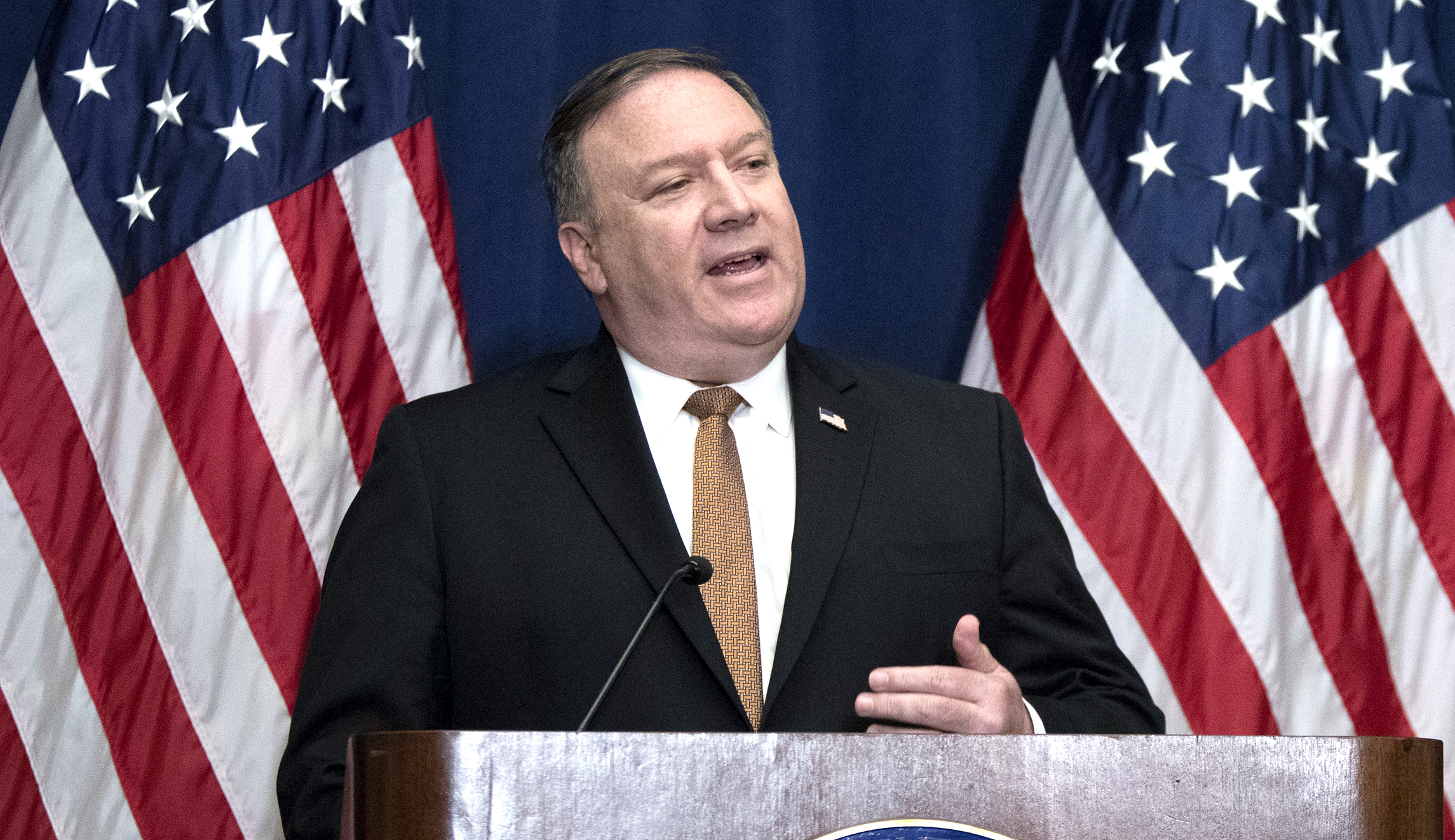
European allies are adopting policies that will help Iran finance terrorism, Secretary of State Mike Pompeo charged Tuesday as he condemned new efforts to preserve the 2015 nuclear deal.
“This is one of the most counterproductive measures imaginable for regional and global peace and security,” Pompeo told an audience of regime critics on the sidelines of the United Nations General Assembly.
Recommended Stories


President Trump withdrew from the 2015 Iran nuclear deal in part to deprive the regime of economic relief that the administration believes is being used to fund terrorism and military activities in Yemen and Syria. But the other parties of the deal — especially the United Kingdom, France, Germany, and the European Union — credit the pact with defusing a nuclear crisis. Those countries announced a plan late Monday to facilitate business with the regime despite the looming threat of U.S. sanctions, which Pompeo criticized.
“By sustaining revenues to the regime, you are solidifying Iran’s ranking as the number one state sponsor of terror, enabling Iran’s violent export of revolution, while the Iranian people scrape by,” Pompeo said at a United Against Nuclear Iran event. “I imagine the corrupt ayatollahs and the IRGC were laughing this morning. This decision is all the more unacceptable given the litany of Iranian-backed terrorist activity inside of Europe.”
U.S. allies, along with Russia and China, announced a plan to form a “special purpose vehicle” to play the role of a bank for purposes of oil transactions and deals involving Iranian exports.
“In practical terms, this will mean that EU member states will set up a legal entity to facilitate legitimate financial transactions with Iran and this will allow European companies to continue to trade with Iran in accordance with European Union law and could be open to other partners in the world,” Federica Mogherini, the European Union’s top diplomat, said after a meeting at the UNGA.
Pompeo seemed to regard the plan as a credible threat to the U.S. ability to meet its goal of “getting as many countries importing Iranian crude down to zero as soon as possible.” But proponents of the Iran deal still must grapple with the problem that major international oil companies have declared themselves unwilling to invest in Iran for fear of having their U.S. operations shut down by sanctions.
“There are a lot of reasons for European firms to abide by U.S. sanctions and to stay out or pull out of Iran,” Jarrett Blanc, who worked to implement the deal while serving at the State Department during Barack Obama’s presidency, told the Wall Street Journal. “Opening one payment channel will not address all those problems.”
Pompeo implicitly dismissed Iranian President Hassan Rouhani’s suggestion, earlier Tuesday, that Trump only scrapped the nuclear deal out of hostility to Obama’s legacy.
“Countries are now facing a choice about whether to keep doing business in Iran,” he said. “Reimposing sanctions and discouraging international business with Iran is not something we are doing out of spite. This is a necessary security measure. The regime must no longer be allowed to get its hands on billions of dollars that its already proven it will spread around the world to its client states, rebel groups, and terrorists.”
