Dulles rail labor bill moves forward in House

Republican efforts to strike down a labor agreement that would encourage the use of union labor to build the Dulles Metro rail project advanced Monday as part of a broader attempt to trim organized labor’s influence in the right-to-work state.

The House of Delegates gave preliminary approval to a bill that bans the state from participating in mandated project labor agreements — negotiated terms that often require deference to union contractors. It could get a final vote Tuesday in the House before moving to the Senate, where passage is expected.

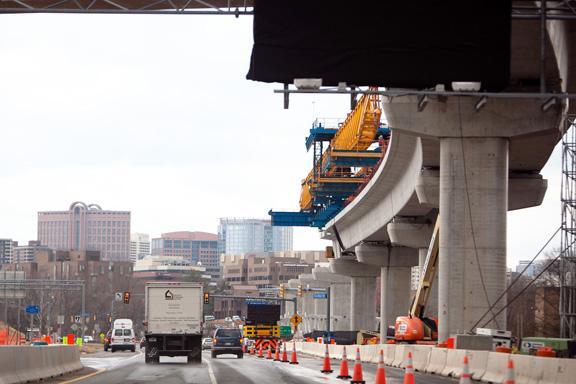
The issue arose when the Metropolitan Washington Airports Authority moved to enter into a project labor agreement for the second phase of the rail project that would extend Metro to Dulles International Airport. That irked Virginia Republicans, who celebrate the state’s right-to-work laws that starkly contrasts with the union-friendly District and Maryland.

Virginia threatened to not fund its share of the rail line if union workers were required for the second phase of the 23-mile, $6 billion project, but an agreement was tentatively reached to avoid the problem.

Related Coverage
  • More news from Virginia
  • Del. Barbara Comstock, R-Fairfax, the bill’s chief patron, said the option to enter into labor agreements was still on the table, but no longer would non-union contractors be excluded from the bidding process.

    “Everyone will be able to compete on a level playing field with everyone else,” Comstock told House colleagues.

    But Northern Virginia Democrats cautioned that labor agreements ensure employee safety because of the elevated workplace standards negotiated by unions. Del. Vivian Watts, D-Annandale, noted there was no project labor agreement for the Springfield Interchange in her district, which resulted in four deaths during construction and gross cost overruns.

    “To make the statements that we need to fight public labor agreements because somehow it’s a matter of safety or somehow it’s a matter of controlling costs is simply not borne out of the record,” Watts said.

    Del. Tim Hugo, R-Centreville, countered that the first phase of the Dulles project was subject to an optional project labor agreement and still  overran its budget. He warned that keeping such an agreement in place would provoke Republicans to withhold funding of the project.

    “If you want to kill the Dulles rails project,” Hugo said, “vote no.”

    Related Content