

President Obama took a brief break from the heated 2012 race Wednesday to focus on the nation’s most pervasive drought in decades, a parching of farmland that could push up food prices and further imperil Obama’s economic pitch to voters.
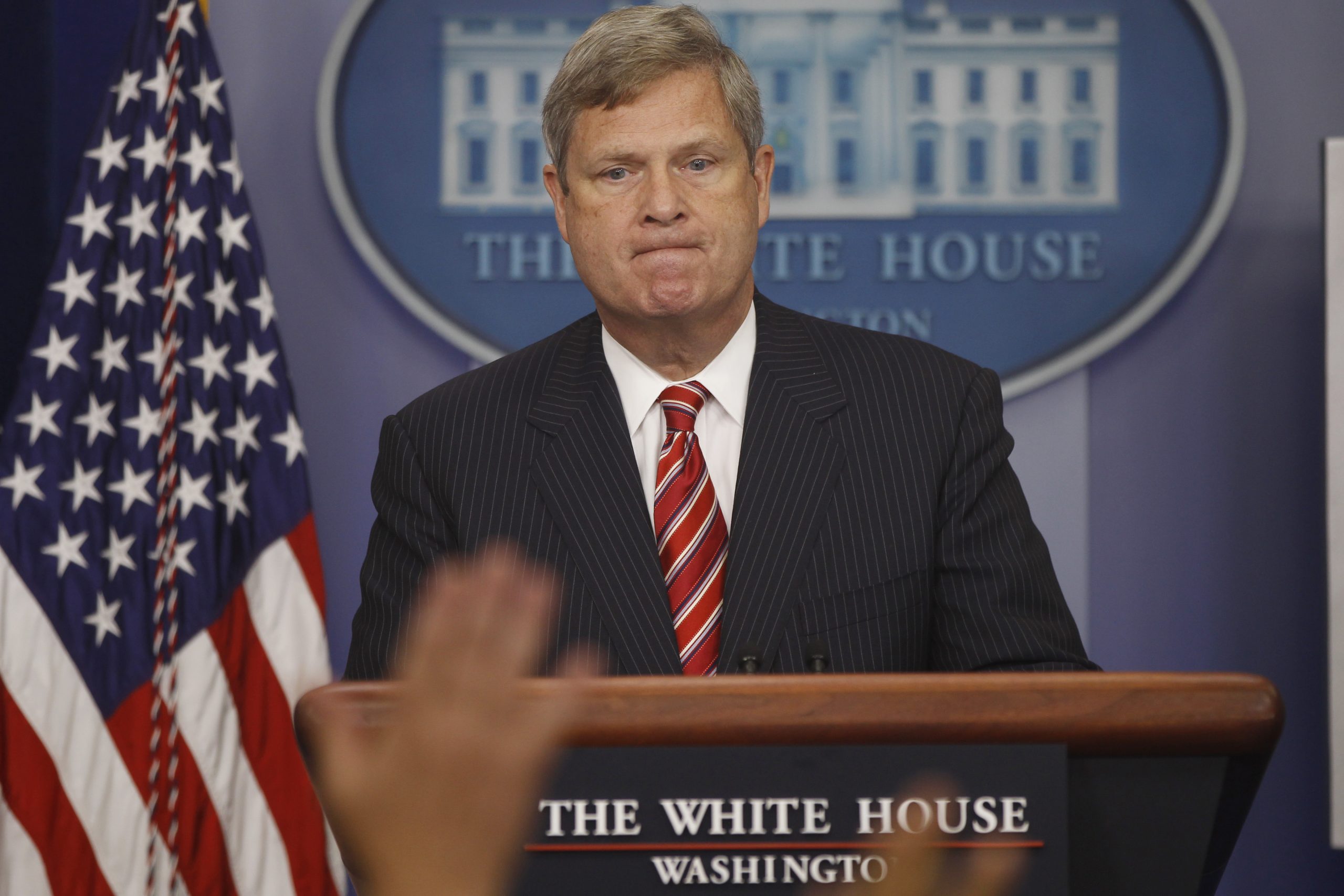
Obama met at the White House with Agriculture Secretary Tom Vilsack, who was then dispatched to tout the administration’s commitment to monitoring the drought and pushing Congress to aid embattled farmers and ranchers.
“Weather conditions were so good at the beginning of the season that farmers got in the field early, and as a result, this drought comes at a very difficult and painful time in their ability to have their crops have good yield,” Vilsack said, predicting higher food prices by the “later part of this year, early part of next year.”
Much of the United States has been enduring 100-degree temperatures in recent days, and the outbreak of wildfires in Colorado brought more tumult for America’s food producers.
Vilsack called on the House to pass a five-year, $500 billion farm bill or, at a minimum, push through additional disaster relief programs that would give farmers greater borrowing power.
The arid conditions are not as dire as the historic drought of 1988, which ravaged the Midwest, partly because the U.S. is raising its third-largest corn crop ever, Vilsack said.
Amid so much public focus on the scorching weather, however, the Obama administration warned against potential price gouging in supermarket aisles.
“If in fact people are beginning to see food price increases now, it is not in any way, shape or form related to the drought, and we should be very careful to keep an eye on that to make sure that people don’t take advantage of a very difficult and painful situation,” Vilsack said.
The timing of any price increase will determine its impact on the fall elections, analysts said. Combined with pain at the gas pump and underwater mortgages, rising food costs could damage already fragile consumer confidence.
“Everybody’s talking about it out here,” said Dennis Goldford, a political scientist at Drake University in Iowa. “Though it’s not Obama’s fault, he just has one more thing to shoulder. It reinforces the sense that we’re not heading in the right direction.”
The reason for the potentially widespread damage is that roughly one in 12 jobs are connected to farming. Those jobs had fared better than most in the grip of the recession, preventing further economic mayhem.
Some Democrats are pushing Obama to use the soaring temperatures as an opportunity to revamp climate change legislation, but the White House showed no appetite for such a move Wednesday.
Vilsack refused to be drawn into the global warming discussion.
“I’m not a scientist,” the former Iowa governor said. “If I had a rain prayer or rain dance I could do, I would do it.”
