

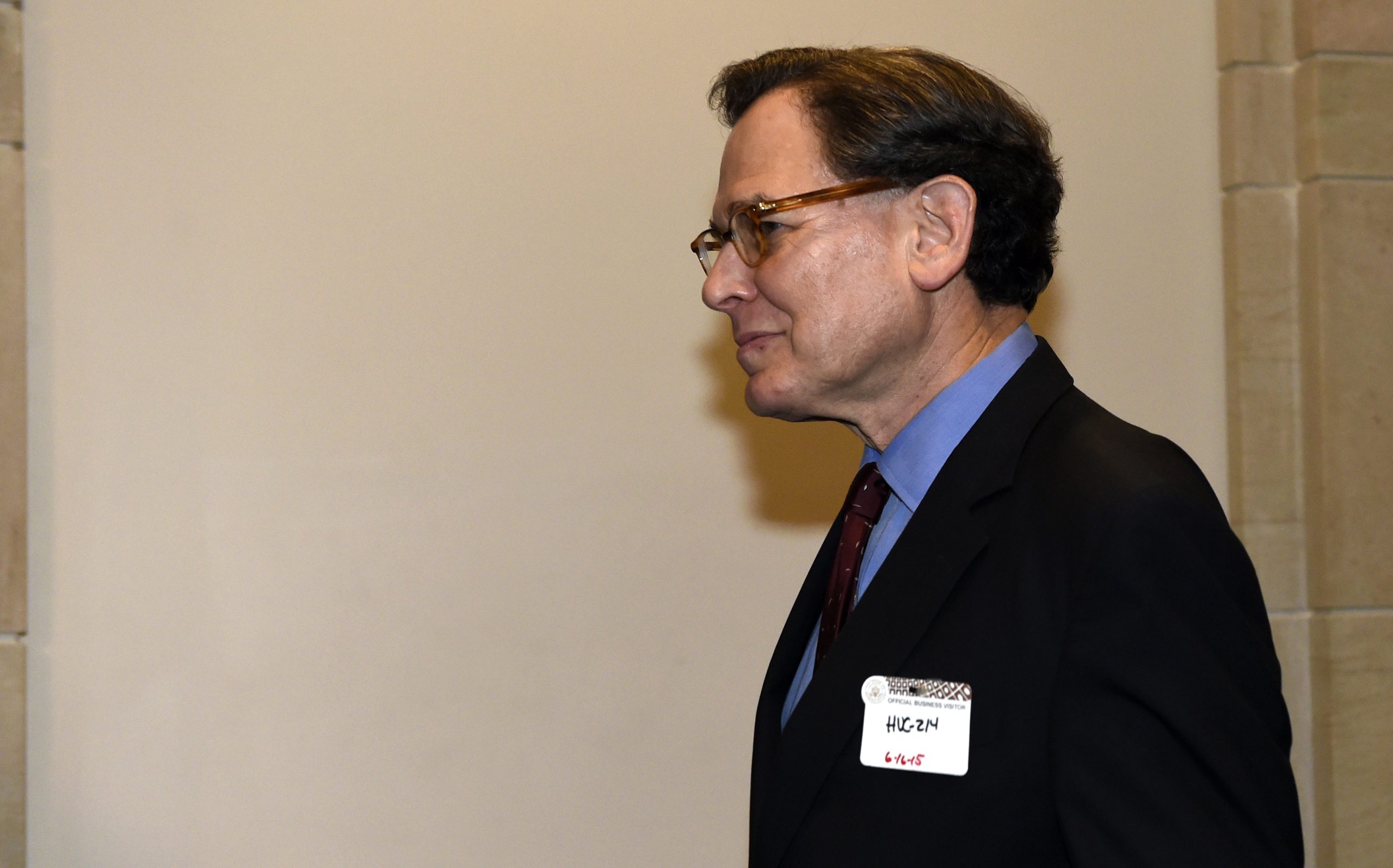
Rep. Trey Gowdy, chairman of the House Select Committee on Benghazi, said Thursday the panel will likely require an informal adviser to Hillary Clinton to return for a second interview in light of new information.
Gowdy said emails between Clinton and Sidney Blumenthal, a divisive former aide and confidante, indicate Blumenthal outed the name of a CIA source to Clinton and that Clinton forwarded the name of that source to another State Department aide.
The identities of human intelligence sources are among “the most protected information in our intelligence community,” Gowdy noted, adding that Clinton should have instantly recognized the classified nature of Blumenthal’s email.
State Department officials gave the select committee 1,500 pages of new Clinton emails two weeks ago, including 500 pages of emails to and from Blumenthal.
The set of emails suggest nearly half of all email correspondence about Benghazi and Libya before the 2012 attack was with Blumenthal, a proportion Gowdy called “simply astonishing.”
Blumenthal began sending Clinton unvetted intelligence about Libya in Feb. 2011, according to the letter.
Gowdy said the emails indicate Blumenthal lobbied aggressively for U.S. intervention in Libya, raising the possibility of a no-fly zone long before the idea was officially under consideration.
After the no-fly zone was implemented by the United Nations, Blumenthal continued to push for deeper U.S. involvement in the conflict — including calls to arm Libyan rebels against the regime of Muammar Gaddafi.
“Blumenthal notes that the humanitarian rationale for intervening in Libya — something the administration and Secretary Clinton noted heavily — does not contain much political benefit, and offers alternative ways to sell the American public on why the country is involved,” Gowdy said of the Blumenthal emails, adding that Blumenthal suggested ramping up military action in Libya in order to boost President Obama’s poll numbers.
But Gowdy cited a “perhaps more disturbing” motivation behind Blumenthal’s fixation on Libya.
He published parts of a memo to Clinton that detailed a contract between Blumenthal’s company, Osprey Global Solutions, and the transitional government of Libya. Blumenthal seemingly tried to convince Clinton that he and his associates had established the business deal — which entailed training rebel forces — in order to cement U.S. support for the rebels.
The revelations came in a scathing 13-page letter from Gowdy to Rep. Elijah Cummings, the committee’s top Democrat. The letter followed Cummings’ announcement earlier this week that Democrats on the panel plan to release the transcript from a closed-door interview with Cheryl Mills, Clinton’s former chief of staff.
Cummings has accused Republicans of selecting leaking portions of Mills’ testimony for their own political purposes.
But Gowdy turned that allegation around on the Democrats, instead suggesting they were the ones who leaked part of Mills’ interview to the press.
“No sooner had I begun to walk up the stairs to the Capitol — minutes after Ms. Mills finished her interview — than a reporter repeated back to me, nearly verbatim, portions of her testimony favorable to Secretary Clinton,” he said. “I am convinced that information could only have come from Democrat members or those associated therewith.”
The chairman said the leaks were designed to “selectively mischaracterize” the interview in order to help Clinton. Some of the leaks indicated Mills had played a role in shaping an internal report on Benghazi by the State Department’s Accountability Review Board.
Gowdy noted Mills did indeed edit the report before it was released, but only after hand-selecting the members of the board.
He included another excerpt of testimony from Admiral Mike Mullen, a member of the board, that indicated Mullen alerted Mills to the fact that a State Department witness was likely to falter if called before Congress.
Gowdy also debunked the oft-repeated charge that he unnecessarily served Blumenthal at his home with a subpoena using U.S. Marshals. The chairman said his staff had made several attempts to contact Blumenthal and invite him to testify, but after they were repeatedly rebuffed, they had no choice but to tap the marshals service.
Republicans on the committee plan to release the new Blumenthal emails within five days. Gowdy urged Cummings to reconsider his decision to publish the Mills transcript.
