

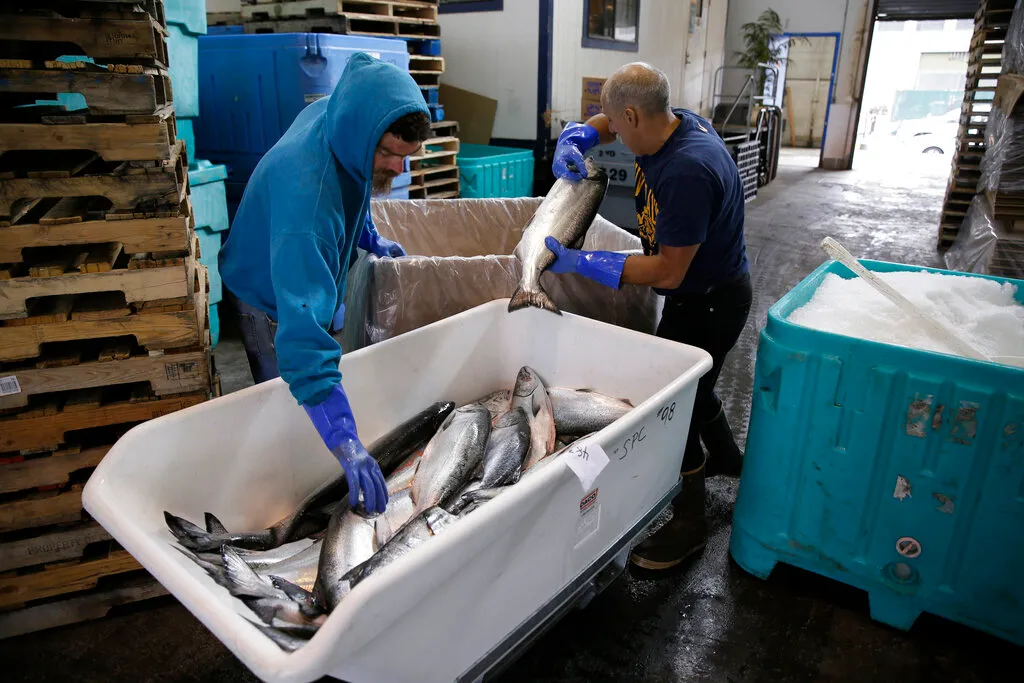
The Food and Drug Administration is redefining its antiquated criteria for what packaged food can be labeled as “healthy,” allowing salmon, olive oil, nuts and seeds, and water to qualify.
Recommended Stories


To meet the new definition, such edible items need to have a minimum “amount of food from at least one of the food groups or subgroups (e.g., fruit, vegetable, dairy, etc.) recommended” for consumption by the Dietary Guidelines for Americans, according to the agency — and it could not contain too much saturated fat, sodium, or added sugars.
EXPERIMENTAL ALZHEIMER’S DRUG SLOWS COGNITIVE DECLINE IN LATE-STAGE STUDY
“Today’s action is an important step toward accomplishing a number of nutrition-related priorities, which include empowering consumers with information to choose healthier diets and establishing healthy eating habits early. It can also result in a healthier food supply,” said FDA Commissioner Robert M. Califf.
Plain, non-carbonated water and plain, carbonated water; nuts and seeds; higher-fat fish, including salmon; and certain oils would now qualify under the revised definition for the healthy label. Raw whole fruits and vegetables would also qualify. Meanwhile, white bread and some sweetened yogurts and cereals with too many added sugars would no longer meet the requirements.
For a cereal to claim the healthy label, it would need to contain three-fourth ounces of whole grains and “no more than 1 gram of saturated fat, 230 milligrams of sodium and 2.5 grams of added sugars,” the agency said.
CLICK HERE TO READ MORE FROM THE WASHINGTON EXAMINER
The FDA said that the change was needed as federal dietary guidelines and nutrition science have evolved since the food packaging criteria were first established in 1994. The agency said it is also developing a symbol that could be placed on food products that meet the criteria.
