

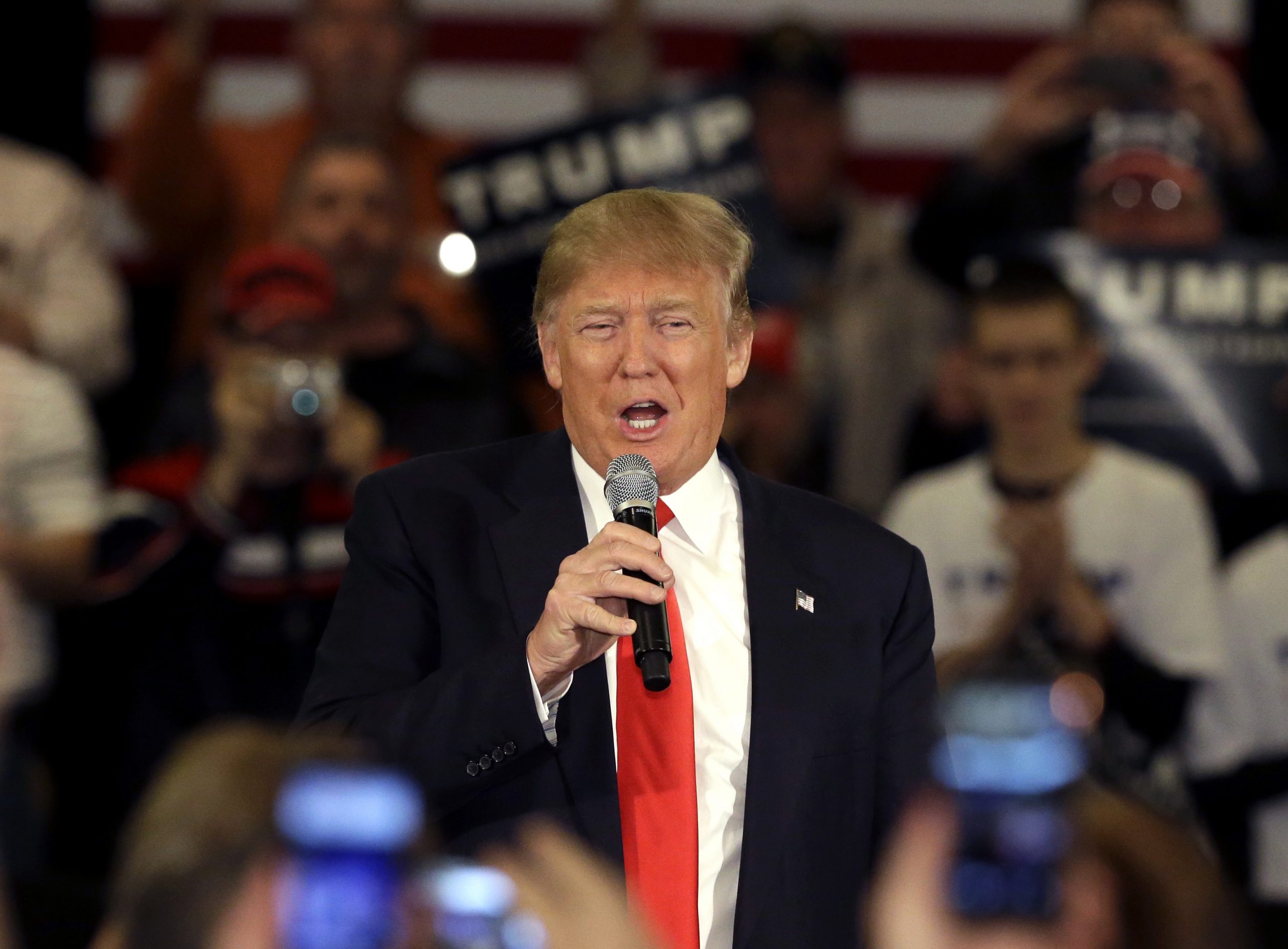
California Republicans opposed to Donald Trump are mobilizing to defeat the billionaire front-runner ahead of the state’s June 7 presidential primary.
Recommended Stories


Absentee ballots hit mailboxes in early May, leaving slightly more than one month for the forces opposed to the New Yorker’s candidacy to act. Veteran Republican operatives with deep ties to California’s biggest GOP power players are spearheading the effort: Rob Stutzman, Richard Temple and Ray McNally.
“There need to be things that happen now to prepare for an election that truly begins on May 7,” Stuzman told the Washington Examiner on Thursday. “This is about campaigns by [congressional] district, and opportunities that you can optimize — if you organize.”
The trio expects to formalize a strategy sometime in the next two weeks and begin soliciting potential donors for funding. California is reliably Democratic in state and national elections, but functions as well of resources for Republican campaigns. This story was first reported by the Los Angeles Times’ Seema Mehta.
Stutzman, a top advisor to Arnold Schwarzenegger during the actor’s succesful insurgent campaign for governor in the 2003 recall, declined to reveal strategic details. But he indicated the anti-Trump campaign would focus on identifying voters opposed to the reality television star and utilize digital and direct mail advertising to turn them out. Messaging might urge a vote for Sen. Ted Cruz of Texas, and in some instances, Gov. John Kasich of Ohio, as means to block Trump from 1,237 delegates and force a contested nominating convention.
Jon Fleischman, a conservative activist in Orange County, Calif., who is against Trump, was happy to see opposition to Trump begin to coalesce. “This new anti-Trump effort based out of California, lead by GOP establishment types, is another sign of Republicans unifying to stop Trump. Very pleased to see it happening!” he said via email. Fleischman publishes the Flash Report, a website of political news and conservative commentary.
California has several media markets and advertising on television can be prohibitively expensive. The anti-Trump campaign hopes to leverage the state GOP’s unique rules for apportioning delegates to Cleveland to advertise efficiently in markets with high concentrations of delegates. California has 53 congressional districts; candidates earn three delegates for every district they win. The statewide winner garners an additional 10 at-large delegates.
Bill Whalen, a research fellow at the conservative Hoover Institution think tank at Stanford University in Palo Alto, Calif., said the Stutzman-led anti-Trump campaign could work. Whalen, who focuses on California politics, predicted that Trump would have a hard time winning a majority of congressional districts, let alone the two-thirds he might need to win enough delegates to avoid a contested convention.
“It’s a very competitive primary,” Whalen said.
Trump led Cruz by 8.3 percentage points, 34.3 percent to 26 percent, in the RealClearPolitics average of all recent polls taken gauging California’s GOP electorate. But the most recent survey, from the Los Angeles Times, showed Trump leading Cruz among likely voters by just 1 percentage point, 36 percent to 35 percent, with 14 percent for Kasich. The California GOP primary only permits registered Republican to participate, which could benefit Cruz.
Trump led Cruz in the hunt for delegates, 736 to 463, and whether he an garner the 1,237 delegates he needs to avoid a contested convention could be determined by the outcome in California. The state is wort 172 delegates, of which 159 are awarded proportionally, three per congressional district, with 10 at-large going to the statewide primary winner. The state GOP chairman and the Republican National Committee man and committeewoman are the other three delegates.
The prize could be huge for whichever candidate walks away with the most delegates, and not only because of how many are at stake. Rather than holding delegate elections, the California Republican Party allows the presidential campaigns to choose their own delegates individually. Theoretically, they should be loyal to the candidates in the event of a multi-ballot contested convention.
In the event that California delegates want to vote for a different candidate on the convention floor in Cleveland, state law binds them to the candidate that chose them for the first two ballots.
