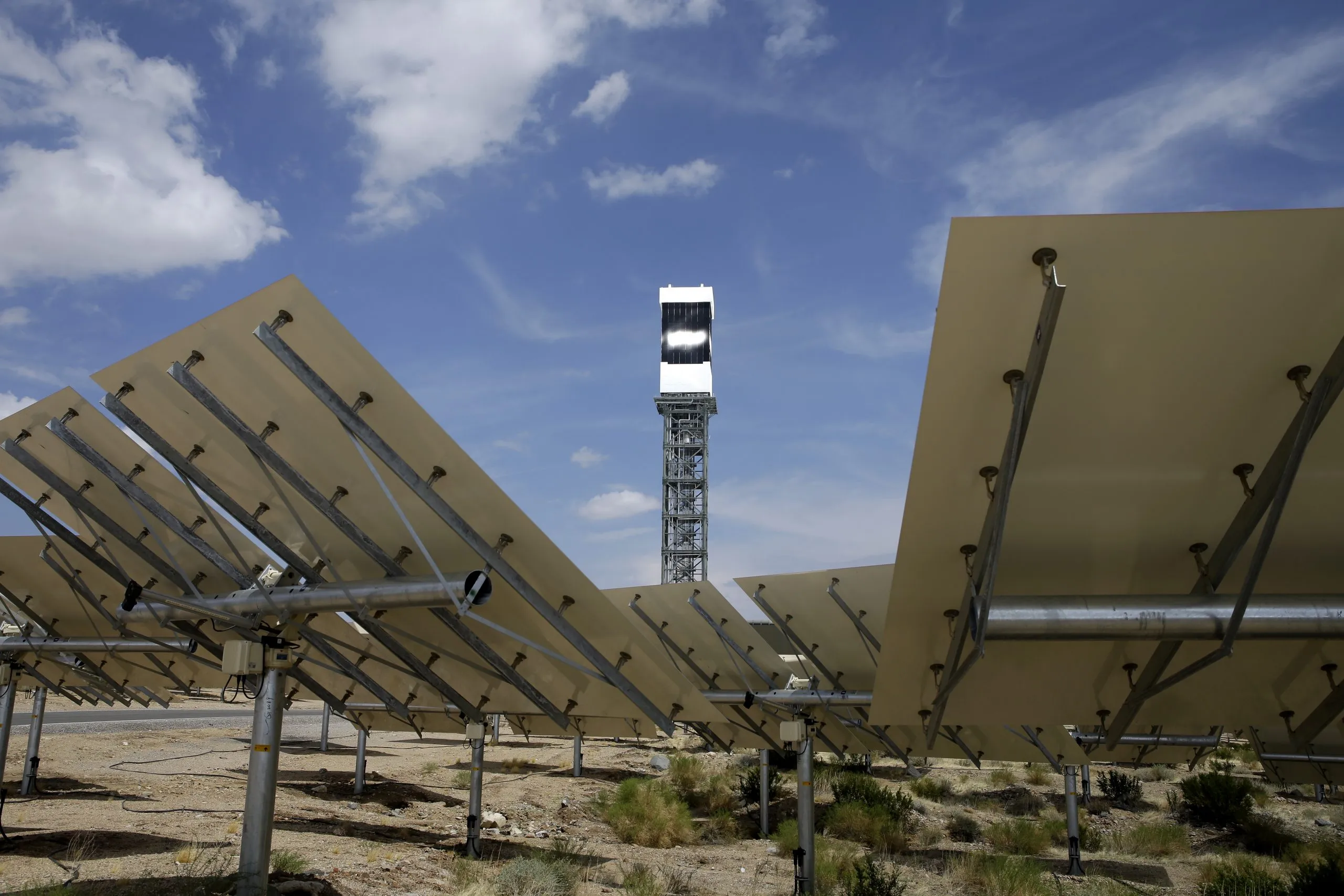
House takes aim at Obama’s solar bird-killer

House Republicans on Thursday will be taking a close, hard look at the Obama administration’s subsidies for a fleet of large solar power plants, the flagship of which caught fire earlier this year and has singed birds in mid-flight.

Rep. Louie Gohmert, R-Texas, will lead the House Natural Resources Committee’s oversight panel in examining the Ivanpah utility-scale solar plant and others like it that benefited from federal loan guarantees and grants but have suffered from performance issues.

A committee memo said the plant near the Nevada state line with California, which covers nearly 3,500 acres, “impairs” the Mojave National Preserve’s most scenic vista and poses harm to protected wildlife. In addition, the plant has faced technical challenges since opening in 2014.

Yet the “underperforming plant” benefited from a $1.6 billion federal loan guarantee, the memo said. It also received over $500 million in federal grants “to help pay back the loan.”

The federal support “subsidized” the joint owners of the $2.2 billion facility, including tech giant Google, Brightsource and investor-owned utility NRG. And that was just the beginning, the committee said.

“During the Obama administration, taxpayers have subsidized tens of billions of dollars in renewable energy projects, including risky utility scale solar projects on federal land,” the hearing memo added. “These projects cover vast tracts of land, and have demonstrably impacted protected species.”

Other plants such as the Ivanpah concentrated solar plant are planned to supply energy to California and have received loan guarantees to begin construction. But the flagship is not able to meet its contractual obligations to supply electricity, the memo said.

“Despite its corporate backers, and billions in funding provided by the federal government, Ivanpah has been unable to meet its contractual agreements to supply electricity to consumers in California,” the committee said. “In March of this year, the facility was granted an extension, with financial penalty, to provide extra time to meet its obligations.”

Headlines in March said the plant may be forced to shut down. Two months later, one of the plant’s towers caught fire, lending more doubt to the future of the facility.

“While the technology may already be irrelevant, [the plant] could still be financially viable due to the 20-year, fixed price power purchase agreements with utilities that are obligated to meet renewable standards,” the memo said. “However, if the terms of the contract are not met and market relevant prices are renegotiated, the viability of the plant is in doubt.”

The committee points out that the plant also has the uncanny ability of cooking birds in midflight, which has riled wildlife advocates.

“Known as ‘streamers,’ it is believed that the birds are drawn to the installation — either mistaking the bright light for water, or pursuing the insects that are drawn to the light,” the memo said. “The birds are then incinerated in the air by 1,000-degree Fahrenheit rays from the collection towers. This includes many species covered by the Migratory Bird Treaty Act.”

Big solar concentration plants such as Ivanpah don’t operate like rooftop solar panels. The tens of thousands of mirrors at the facility reflect sunlight at a tower, atop of which is a power turbine. The water in the tower is heated to produce steam to power the turbine to produce electricity.

The vast amount of land need to set up one of the plants needs to be enormous to accommodate the mirrors. And because of that land requirement, a number of “animal habitats also were disturbed during construction of the project, including that of the desert tortoise,” the committee said.

Related Content
