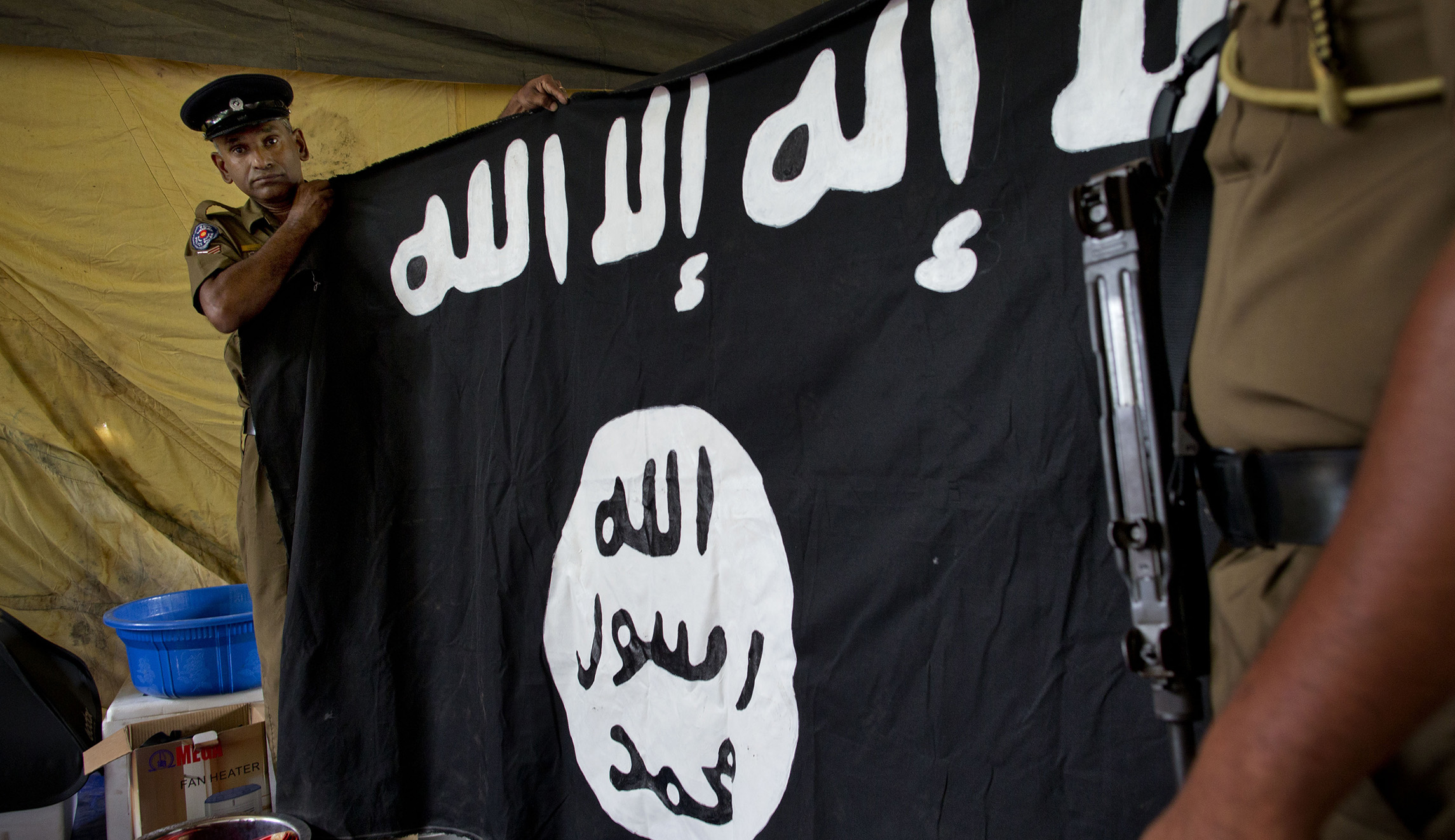
Despite the destruction of the Islamic State’s physical caliphate in March, thousands of its fighters have simply gone underground and remain a significant threat, carrying out deadly attacks, a senior coalition military officer said Tuesday.
“It has been reorganizing itself into a network of cells and intent on striking key leaders, village elders, and military personnel to undermine the security and stability in Iraq and Syria,” British Maj. Gen. Chris Ghika, a senior spokesman for Operation Inherent Resolve, said from Baghdad in a briefing for Pentagon reporters.
“Daesh fighters are still ambushing security patrols, detonating [improvised explosive devices], and conducting kidnappings,” said Ghika, using the Arabic acronym for ISIS. “Despite its territorial setbacks, Daesh is still having successes, and its ideology still inspires people around the world.”
Ghika said there are “on the order of 10,000” members of ISIS in Iraq and several thousand in Syria, including people who are not fighters but support the group.
[Opinion: The ISIS ‘caliphate’ has been smashed. Now what?]
Many of the ISIS fighters the U.S.-led coalition drove out of the terrorist group’s final stronghold in Syria are Iraqis, and most of them have returned to Iraq and have been hiding in mountain caves, where they have been targeted by U.S., coalition, and Iraqi airstrikes in recent weeks.
“We are doing everything we can to defeat Daesh in Iraq and Syria, and the global coalition and the international community must continuously work to prevent the evil brand from spreading worldwide and terrorizing our communities at home,” said Ghika.
Ghika paired his warning with a plea for help. “We cannot do it ourselves. Campaigns cannot be won by fighting alone,” he cautioned, saying the last defeat of ISIS depends on international assistance to rebuild the civil institutions and local governance that can restore peace and prosperity.
