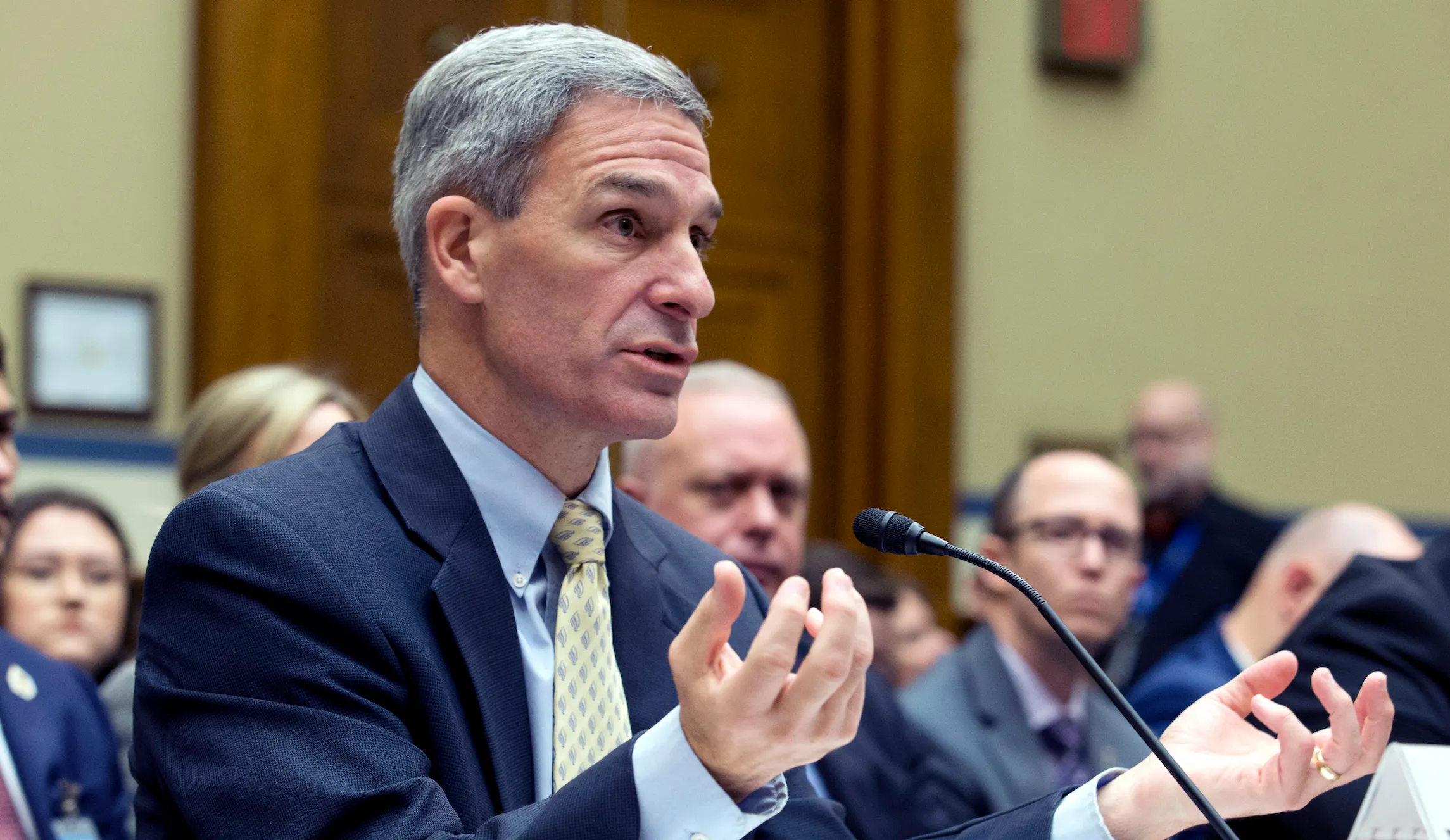
A federal district court judge in Washington, D.C., ruled Ken Cuccinelli, a senior political appointee at the Department of Homeland Security, lacked legal authority to lead an immigration agency last year.
U.S. District Judge for the District of Columbia Randolph D. Moss concluded Sunday that Cuccinelli, who was acting director of the 19,000-person Department of Homeland Security agency U.S. Citizenship and Immigration Services, did not meet the requirements in the Federal Vacancies Reform Act of 1998 to have the job. The judge’s decision deemed Cuccinelli’s policy changes invalid, teeing up new legal troubles for the Trump administration.
The Democracy Forward Foundation, a Washington-based legal services organization, created during Trump’s first year in office, sued with other groups in September over Cuccinelli-pushed policies the group argued made it more difficult or impossible for some asylum seekers to have claims heard at the southwest border.
Federal law experts told the Washington Examiner in October that they believed Cuccinelli’s appointment to USCIS last June was illegitimate and, if successfully challenged, would mean the immigration policy changes he put into place would become defunct. Cuccinelli was named principal deputy director of USCIS, a position that had not previously existed, and lawyers proposed it was a backdoor way to get him into the agency. He was promoted suddenly to second-in-command at the 240,000-person department in January.
Cuccinelli, 51, was a Virginia state senator in the 2000s and later became state attorney general. He advised the presidential campaign of Texas Sen. Ted Cruz in 2016 and was later general counsel for tea party-aligned FreedomWorks. While in these positions, he adamantly advocated for policies and laws that restrict immigration.
Cuccinelli is known for going after those who disagree with him on Twitter and frequenting Fox News shows — pages out of Trump’s playbook. He has introduced several regulations despite not being confirmed, which is normally the prerequisite for taking such legal actions. Those proposals and rules include the “public charge” update that bars more green card applicants who have relied on public assistance, changes to the asylum process that make it more difficult to apply, and lengthening the period asylum seekers must wait to obtain work permits.
