

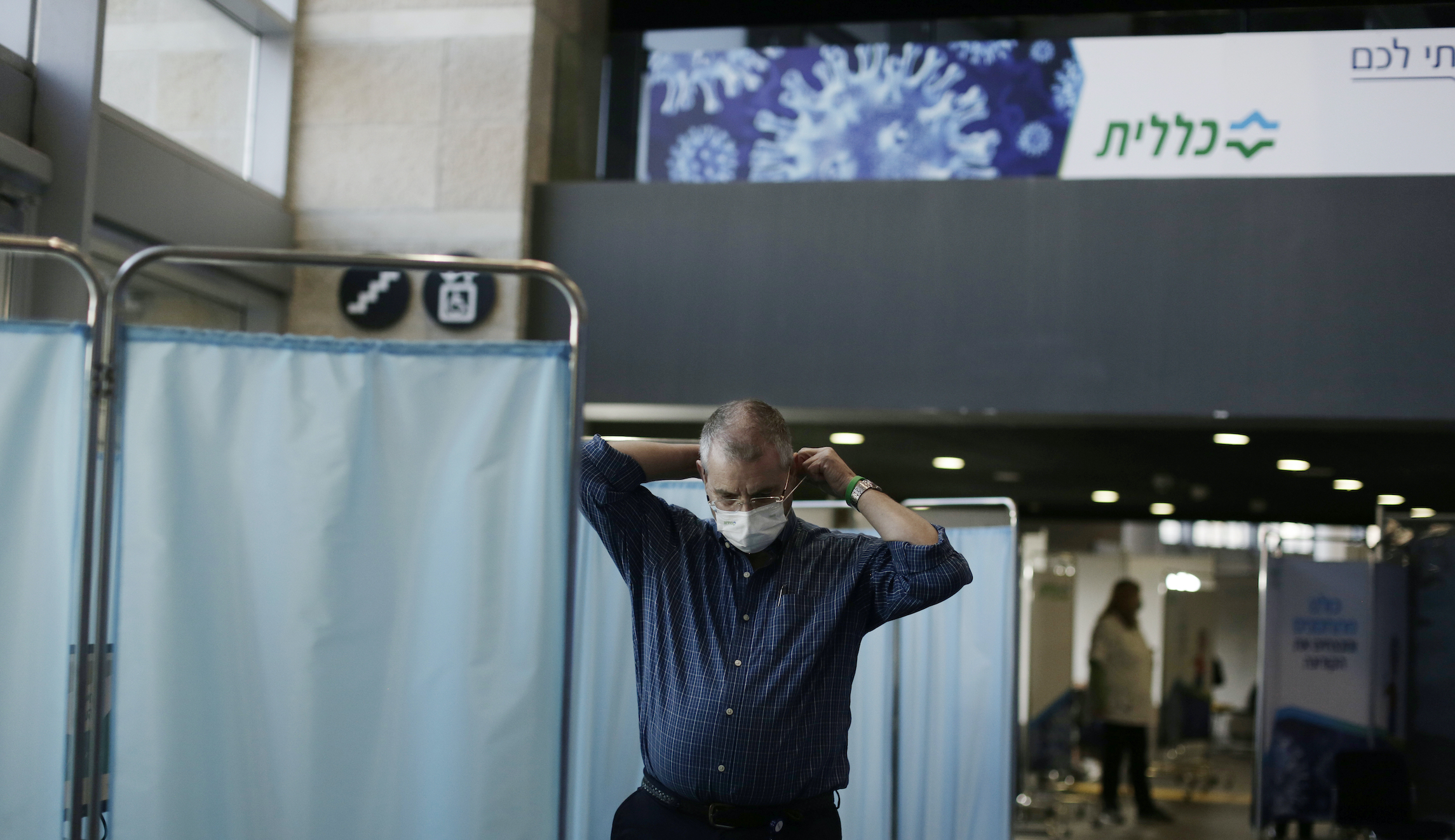
While U.S. health officials were busy debating who to vaccinate first, Israel rolled out a record number of vaccinations in just a few weeks.
Israel became the first in the world on Friday to inoculate 10% of its population after administering its 1 millionth COVID-19 vaccination. For comparison, only 1% of the U.S. population has been given the first dose of the vaccine.
Recommended Stories


Failure to pick up the pace belongs to the individual states, many of which have put together complicated distribution plans that bog down the process. But our ineffectual bureaucracy is also to blame. The Centers for Disease Control and Prevention is encouraging states to vaccinate healthcare workers first, then other front-line workers deemed “essential,” including grocery store employees and transit staffers, and then vulnerable senior citizens. Unsurprisingly, the states that have followed this guidance are struggling to maintain a quick rollout of the vaccine. In New York, for example, only 32% of the vaccine doses delivered have been administered.
Israel, on the other hand, laid out a basic approach: healthcare workers first, then Israelis aged 60 and over. As a result, the majority of Israel’s vulnerable population has already received the first dose of the vaccine.
To be sure, there are certain innate advantages Israel enjoys that have helped its government significantly. For starters, Israel’s population is just over the size of New Jersey, and its small geographic size makes accessibility to vaccination centers less of a problem. Israel also has a centralized healthcare system, allowing health officials to introduce an aggressive and universal approach with very little confusion.
Even so, there are steps U.S. officials could take to replicate Israel’s success. The most obvious step would be to vaccinate older people first, after healthcare workers. Not only are older people more susceptible to the virus, they are also easier to track down because the majority of the over-65 population is enrolled in Social Security and/or Medicaid. Essential workers, on the other hand, vary in age and work in a variety of different professions, which means it will take much longer to determine who needs to be vaccinated.
Other changes must be made, as well. Making older people the priority will certainly help speed up the process, but the handful of states that have adopted this approach are still falling well behind expectations. Texas, Florida, and Ohio, each of which put the elderly in the top tier of the vaccination rollout, have only vaccinated about 1% of their respective populations — which suggests the problem is not just that states don’t know who to vaccinate first; it’s that they can’t figure out how to vaccinate a large number of people quickly.
Like Israel, the states must create an aggressive plan of action. They should start creating new vaccination centers in centralized, accessible locations and then inform the public of where these centers will be located. Introduce clear guidance that explains when residents can expect to be vaccinated and where they fall on the vaccination tier. And lastly, the states must make sure they have enough vaccine doses to inoculate an entire tier at a time, if possible. Pausing the process will only make things more confusing.
Hopefully, if state governments follow Israel’s example, the U.S. will see similar success. That way, we can finally put this pandemic behind us.
