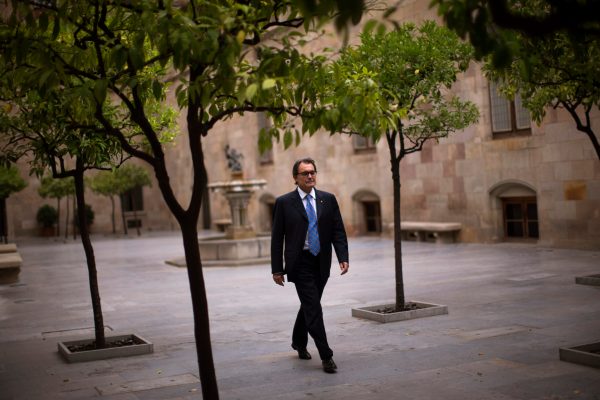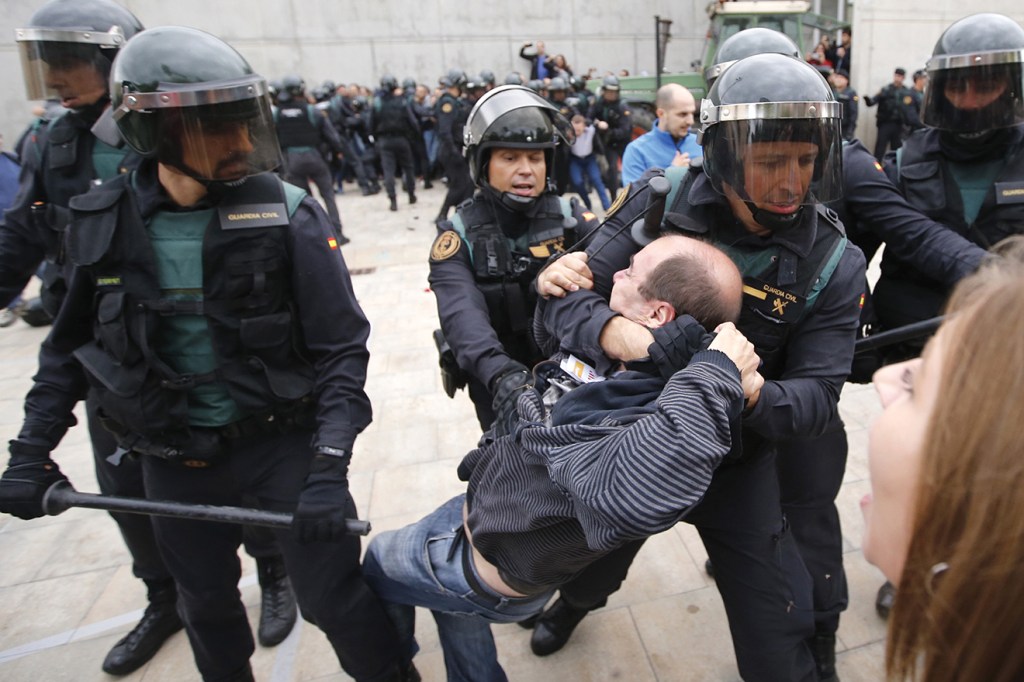
The Panamanian dictator Omar Torrijos, who in the 1970s won the Panama Canal back for his country, used to tell less successful Latin American leaders that the United States is like a monkey on a chain. You can play with the chain all you like—but if you play with the monkey, you’ll get badly hurt. The great and ancient European nation of Catalonia—with its beautiful language that resembles medieval French, its epic poets, its classical composers, its exemplary architects, and above all its shrewd businessmen—has long been in the same position with Spain. Lately Catalonia’s president, Carles Puigdemont, has begun harassing the monkey.
Catalonia is a serious country. As part of what used to be Aragon, it shaped Spain from before Columbus until the 18th century. If it were a member-state of the European Union it would be of average size (16th of 29). But for hundreds of years now, Catalonia has been a mere province of a Spanish state that is primitive, pious, and poor by comparison. Not only is their culture being disrespected, the Catalans complain, their money is being stolen. The region’s 7.5 million people pay about $18 billion more in taxes than they get back in services, say advocates of independence.