

In an age of constant connectivity, politicians use social media to their great advantage. While some may utilize it only when campaigning or for infrequent updates, others access it regularly as a means of communication with the general public. For all the benefits associated with Facebook, Twitter, and the like, these online destinations are still bubbles unto themselves that give users, well-known or not, the feeling of power and some portion of sway. Reality tells a different story.
Both President Trump and Rep. Alexandria Ocasio-Cortez use Twitter to speak to their audience and to make waves in the news world. They both have a penchant for tweeting that which will cause a rise out of others. It can be an effective tool. But while the response to their musings is seen both online and offline, the belief that tweets make a real-world difference is shaky at best.
Recommended Stories


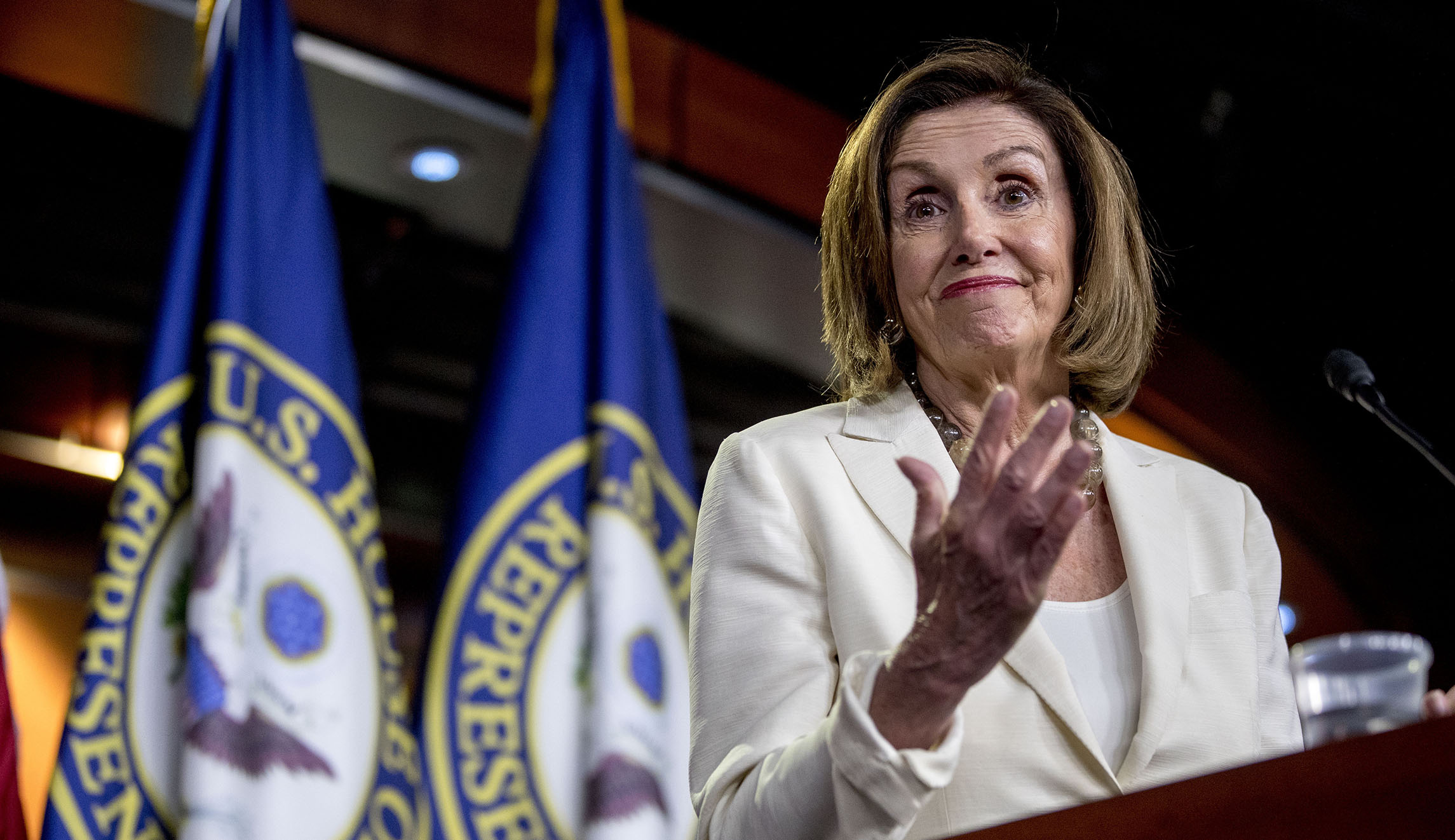
Recently, Speaker of the House Nancy Pelosi chastized Ocasio-Cortez in a New York Times interview by insisting that popularity in the online world (in this case, Twitter) is not synonymous with offline power. Pelosi, a California progressive, has a habit of being wrong. In this case, she was absolutely right, much to the continued chagrin of her younger, inexperienced colleague.
This statement is a blow to the millennial sentiment that online superiority translates to real-world dominance in some form or fashion. Certainly, retweets and likes make any social media user feel they are reaching the masses. But these metrics are only reactions in a personally curated echo chamber located within a slightly larger echo chamber called Twitter. In the first quarter of 2019, the number of monthly active Twitter users in the U.S. reached roughly 68 million. That’s well and good, but it’s still less than half the number of registered voters in the United States, a figure that stands at 153 million. Of all eligible voters in the country (which includes those registered or not), only 50.3% showed up on midterm election day to cast a ballot. This percentage is better than other years, but still, many who can vote simply aren’t.
For Ocasio-Cortez, it matters little if she makes waves in the world of Twitter. Only eligible voters in her district have any say as to whether she spends more years touting her far-left ideology in Congress. Even if voters elect her again, her influence is still only one vote and a long way from any leadership position held by her experienced nemesis, Pelosi.
While actual tweets themselves may not do much in the online world in which they exist, the news about said tweets can often reach far and wide. This is especially evident with President Trump, whose words on Twitter reach those who couldn’t care less about the platform. Instead, they prefer to watch cable news. The same can be said for Ocasio-Cortez whose cocky, and sometimes entirely incorrect, Twitter and Instagram Live rants become the subject of articles and roundtable discussions.
Like it or not, we’re still in the beginning stages of a world where social media is a major focal point. What is a fixture now will surely undergo changes, big and small, in the years to come. Platforms will continue to emerge and serve as competitors to long-standing ones. But regardless of the influence they provide, an online world where politicians like Trump and Ocasio-Cortez can command attention and persuasion still does not have an identical twin in the unplugged world. Pelosi is correct to imply that such a thing must still happen organically.
Online tools and networking platforms can be useful for politicians from either party who want to create a brand. But lasting power and influence in government still require hard work that can only take place away from the glow of a screen.
Kimberly Ross (@SouthernKeeks) is a contributor to the Washington Examiner‘s Beltway Confidential blog and a columnist at Arc Digital.
