Daily on Energy: Europe’s pricey nuclear needs

Published January 10, 2022 5:55pm ET


Subscribe today to the Washington Examiner magazine and get Washington Briefing: politics and policy stories that will keep you up to date with what’s going on in Washington. SUBSCRIBE NOW: Just $1.00 an issue!

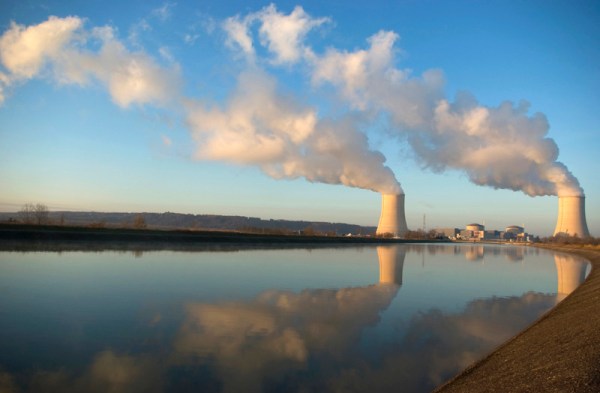
EU’S NUCLEAR NEEDS: A leading European Commission official maintains the EU needs to spend more than half a trillion euros on new and existing nuclear power by midcentury, reinforcing divisions between the bloc and some of its leading economies on the role atomic energy should play in pursuit of Europe’s clean power goals.

Thierry Breton, who oversees the EU’s single market as commissioner of internal market, set out an investment target of 50 billion euros for Europe’s existing nuclear fleet up until 2030, saying also that member governments need to invest 500 billion in plants fueled by advanced nuclear technology until 2050.

“To reach carbon neutrality, it will really be necessary to change up a gear in the production of carbon-free electricity in Europe,” Breton said in an interview published over the weekend by the French Journal du Dimanche.

Breton’s targets follow the European Commission’s recently publicized draft sustainable investment taxonomy, which would dub nuclear as “green” so long as new projects receive construction permitting by 2045 and have detailed radioactive waste management plans.

Extension of the life of existing nuclear facilities also would receive the commission’s blessing under specific conditions, with the draft recognizing that existing installations “can support the decarbonisation of the energy system in the near to medium term.”

The commission’s proposal, and Breton’s funding targets, mesh with the position of more than one institutional body that has commanded a stake in the energy transition. The International Energy Agency’s ideal global “net-zero by 2050” scenario envisions nuclear power making up the rest of electricity generation beyond the 90% provided by renewables.

For its part, the United Nations’s International Atomic Energy Agency has turned to developing a modeling tool to help nations build out hybrid nuclear-renewable grids.

“Nuclear power already contributes a lot, but an enabling environment is needed for its continued operation and further development and deployment, including innovations such as small modular reactors,” IAEA Director General Rafael Grossi said following a meeting last September with Energy Secretary Jennifer Granholm, who herself said nuclear enables nations to fight against climate change in “a truly sustainable way.”

The overwhelming support for nuclear power among these bodies and among economies across Europe, including France and non-EU member U.K., has hardly convinced the likes of Germany and Austria, where opposition remains strident and is feeding disagreements about how to reach net-zero emissions.

Austrian climate minister Leonore Gewessler threatened to sue over the inclusion of nuclear (and gas) in the European Commission’s draft proposal. In Germany, where three reactors were just shuttered and the nation’s remaining three are scheduled for closure this year, government spokesman Steffen Hebestreit said the country rejects the plan.

Next door, Belgium is also on track to shut down all of its currently operating reactors by 2025, although it plans to invest in small modular reactor technology.

Ultimately, Breton’s spending targets reflect something of an institutional consensus that emissions-free nuclear power is integral to decarbonization of the electricity sector, but he and other proponents have their work cut out to get contributions, concessions, or both from skeptical EU members.

Welcome to Daily on Energy, written by Washington Examiner Energy and Environment Writer Jeremy Beaman (@jeremywbeaman). Email [email protected] for tips, suggestions, calendar items, and anything else. If a friend sent this to you and you’d like to sign up, click here. If signing up doesn’t work, shoot us an email, and we’ll add you to our list.

2021’S RISE IN EMISSIONS: Total U.S. greenhouse gas emissions rose by an estimated 6.2% in 2021, according to researchers with Rhodium Group, with a boost in coal-generated electricity “largely” responsible.

Coal-fired power generation increased 17% last year, making for the largest such increase year over year since 2014, per Energy Information Administration data.

Rhodium found the largest increase in emissions to have occurred in transportation — already the largest single sector emissions source — due to high demand for freight transportation of consumer products and an increase in passenger travel.

“In 2020, due to the economic impacts of the COVID-19 pandemic, emissions fell to 22.2% below 2005 levels. In 2021, US emissions ticked up to 17.4% below 2005 levels,” Rhodium said this morning in a note detailing the emissions estimates.

Importantly, despite the rise, emissions in 2021 did not reach 2019’s levels, although they set the nation back relative to President Joe Biden’s goal of cutting emissions by at least 50% by 2030.

UK’S FALLING NUCLEAR OUTPUT: Output from the U.K.’s nuclear power plants dropped 9% in 2021 to reach its lowest level in nearly 40 years, according to an analysis by Carbon Brief’s Simon Evans.

Evans notes that generation from the current fleet is on course to decline even further as all but its one reactor at the Sizewell B plant in Suffolk are scheduled to close by 2030.

Such closures will take a hunk of Britain’s carbon-free electricity offline, meaning that a lot is riding on government-backed advanced nuclear technology for the goal of 100% carbon-free power by 2035 to remain in reach.

Aside from funding Prime Minister Boris Johnson’s government has committed to new generation nuclear, pro-nuclear members of Parliament are pushing their own proposals. The House of Commons is considering a bill designed to change the financing model for nuclear projects.

Under the proposal, consumers will help finance the new nuclear power projects up front, something the bill’s summary says will help attract additional private investment due to greater certainty.

SOLAR TO LEAD NEW GENERATION CAPACITY: Nearly half of new electricity generation capacity planned to be added to the grid this year will come from solar power, the EIA says.

Based on surveys of project developers and power generators, EIA estimates that 21.5, or 46%, of the 46.1 gigawatts of new capacity planned for 2022 will be utility-scale solar projects, compared with the 15.5 gigawatts added last year.

Texas will be home to the largest share of those additions, with California following.

Compared to gas: Some 9.6 gigawatts of new natural gas-fired generation capacity is expected for the year, the second-largest planned generation source.

CANADA’S ONE-OF-A-KIND CARBON CAPTURE PROJECT STRUGGLES: The carbon capture and storage facility at Boundary Dam Power Station in Saskatchewan, the globe’s only CCS project operating at a large power plant, captured 43% fewer metric tons of carbon dioxide last year than in 2020, E&E News reports.

A spokesman for the plant’s operator said the drop was due to technical issues with a CO2 compressor motor, which he called “exceptional events.”

Backers of CCS insist it’s a necessary technology for the road to net-zero, as it allows power generators to tap and burn abundant fossil fuels while capturing emissions.

But skeptics are apt to point to difficulties in expanding the technology widely and successfully, challenges outlined in a recent Government Accountability Office report.

GAO found the Department of Energy has spent some $1.1 billion on carbon capture and storage demonstrations for coal and industrial facilities, but only three of 11 projects were ultimately built.

The single successful coal CCS project, built at the W.A. Parish Electric Generating Station in Texas, was completed in 2016 and operated for three years before closing down in 2020 for financial reasons.

The Rundown

Reuters Shrink to fit: the year Big Oil starts to become Small Oil

Bloomberg Nuclear power gets a fresh look as nations chase climate goals

Calendar

TUESDAY | JAN. 11

10 a.m. 366 Dirksen The Senate Energy and Natural Resources Committee will hold a hearing to examine U.S. existing hydropower capacity.

WEDNESDAY | JAN. 12

10 a.m. The American Petroleum Institute and Energy Citizens will host the 13th annual 2022 “State of Energy” forum.

THURSDAY | JAN. 20

12 p.m. The National EV Charging Initiative will host a first-of-its-kind electric vehicle summit.