Not naming sex assault accusers contributes to stigma, says expert

Media outlets that refuse to name those making sexual assault accusations are promoting the stigma surrounding rape, says a veteran journalist who has written on the issue for decades.

Geneva Overholser, who edited the Des Moines Register when the paper won a 1991 Pulitzer Prize for a series on rape, told the Washington Post that not naming accusers undermines attempts to remove the stigma of rape.

“[Withholding the accuser’s name] is a particular slice of silence that I believe has consistently undermined society’s attempts to deal effectively with rape,” Overholser said. “Nothing affects public opinion like real stories with real faces and names attached. Attribution brings accountability, a climate within which both empathy and credibility flourish.”

Overholser also said that not publishing the names of accusers hasn’t led to more reporting of sexual assault or a reduction in retaliation against accusers.

Sex crimes are the only crimes in which the victim/accuser’s name is withheld unless they give permission. Because of this — and the current media trend of dragging an accused person’s name through the mud before any evidence is presented — I would like to see no one’s name printed in these situations.

Time and time again, those whose accusations make the front page are vindicated — but not before their reputations are destroyed. Duke Lacrosse and Rolling Stone are just the most glaring examples of this, but there are other stories — both at colleges and in the broader public — where the accusation didn’t hold up to even slight scrutiny.

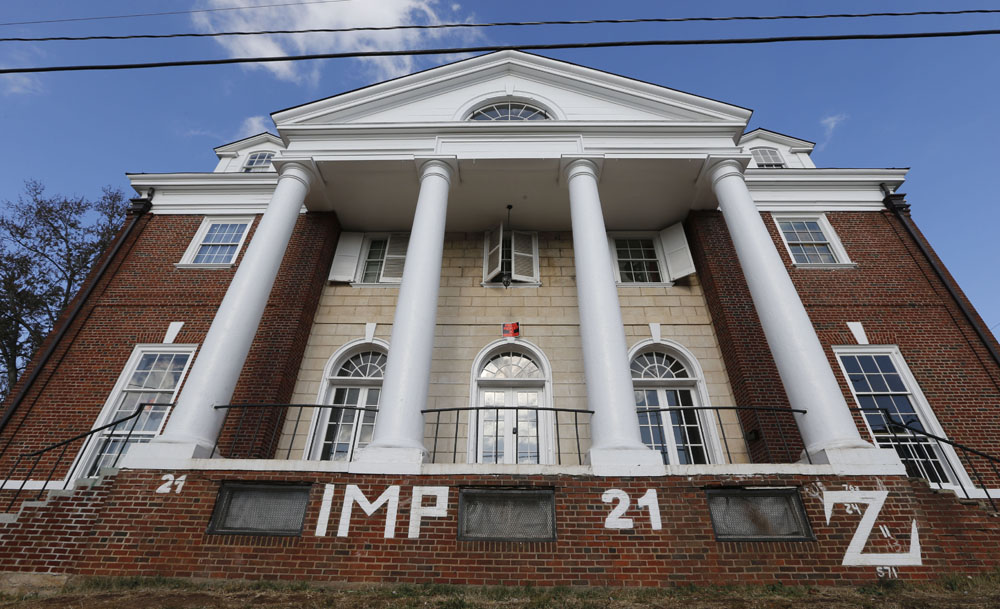
Speaking of Rolling Stone, it was in an article about that story in which Overholser made her comments. The Washington Post asked why the media haven’t named Jackie, the woman who told the magazine she was gang-raped at a fraternity party. Every aspect of her story was proven false, yet she is still known only as Jackie.

For one thing, she hasn’t been charged with anything. Despite her story being proven false, no one can currently say nothing happened to her that night (which illustrates the larger problem of proving the validity of rape accusations). This has allowed feminists to continue to stand by Jackie and call her a “survivor.” The Post’s Metro editor, Mike Semel, alluded to such a possibility when he discussed why the paper still hasn’t named Jackie.

“We told her we wouldn’t name her, in large part because we thought she was a ­sex-assault victim at that time and we don’t name victims of sexual assault without their permission,” Semel said. “That agreement for anonymity needs to be considered until we are absolutely certain that there was no assault at all.”

Which means the Post isn’t convinced — despite all the evidence they themselves discovered — that Jackie isn’t a victim.

The Post’s Paul Farhi also said the paper hasn’t named Jackie because it made an agreement with her back in 2014 to withhold her name in exchange for her interviews.

There really isn’t much use in naming her at this point, honestly. The lawsuits against Rolling Stone over her hoax are providing plenty of details. I don’t see, at this point, how knowing her name will serve any purpose.

But this gets back to my original point: If someone like Jackie can’t be named, then the people she accuses shouldn’t be named, either — and that should go for all accusations. Even when there is an arrest, if the accuser isn’t named, the accused shouldn’t be.

This is because, as the Post reported, “it’s unfair for media accounts to shield the accuser but identify the accused, potentially putting a social stigma on a person who may be innocent.”

In my own writing, I’ve been trying to name the accused less and less. If the accused and accuser’s names are known — as in the case of Emma Sulkowicz — then I’ll name both. If I can avoid naming either, I try. Even more recently when it comes to reporting on lawsuits that name the accused students, I’ve been trying to use their names less and instead simply refer to “the accused.”

You may recall a recent article in which I named the accused, and while I didn’t want to name them, there were two, and trying to find ways to separate them in a long and complicated story was going to be difficult.

The point is, I’m trying, but obviously not perfect. When I can, I’ll avoid naming the accused, but sometimes it’s difficult.

And as we’ve seen in the past few years, as this issue has exploded in the media, with outlets rushing to report any accusation, the conclusion jumping can be devastating to innocent people. Colleges across the country are creating systems where false accusations are easy to make and prohibited from being punished. The media’s desire to get traffic off of a rape accusation also encourages attention-seeking hoaxers to come forward.

The answer appears to be to stop naming the accused in these situations.

Ashe Schow is a commentary writer for the Washington Examiner.

Related Content
