Missing the point on low-yield nukes

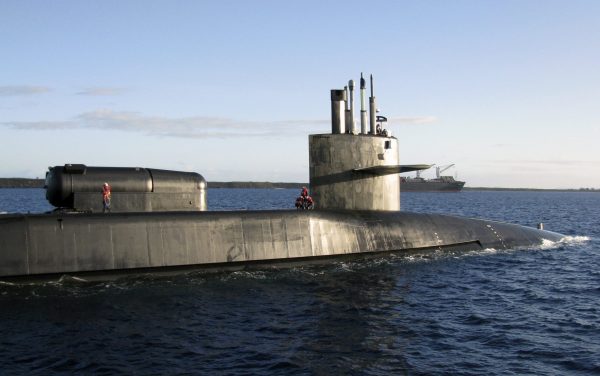
There was a spirited debate this month in the House Armed Services Committee over the wisdom of arming America’s ballistic missile submarine force with a lower-yield version of the thermonuclear warhead that has been standard since the Cold War.

The last Congress approved the plan as a deterrent to Russia, which is developing its own low-yield weapons, but the Democrats who now control the House voted to block the deployment of the less powerful warheads, arguing they are unnecessary and destabilizing.

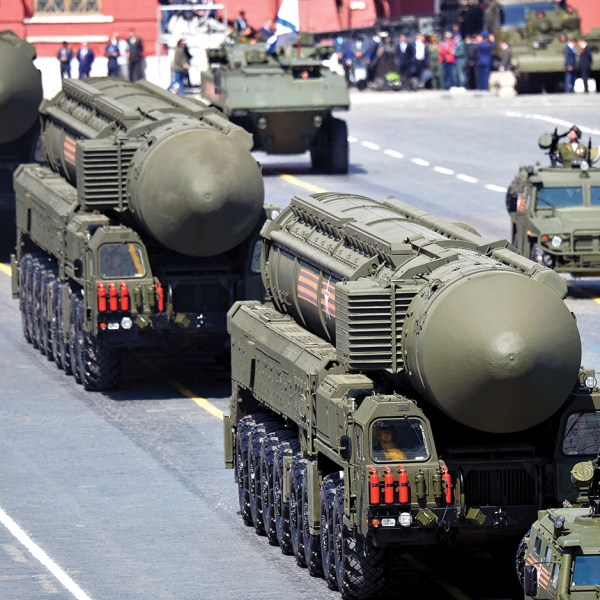
Most of the arguments in the marathon committee hearing centered around how the so-called low-yield weapon — it’s still as powerful as the bomb dropped on Hiroshima — would be employed in some hypothetical scenario in which Russia uses one of its tactical or “battlefield” nukes first, under its stated doctrine of “escalate to de-escalate.”

The concept sounds oxymoronic, but in simple terms it means that if Russia were to, say, decide to annex the rest of Ukraine, instead of waging a low-level conventional war, Russia would immediately raise the stakes dramatically using a “small” nuclear weapon against a “limited” target to force a quick capitulation and then dare the United States to risk all-out nuclear war in response.

A full-scale tit-for-tat exchange of nuclear weapons between the U.S. and Russia would end life on the planet as we know it and is therefore unthinkable by any rational actor. Thus, in this scenario, the United States would face what Henry Kissinger called a “suicide or surrender” dilemma.

But the whole argument about what Russia might do, and then what options the U.S. president might have in response, misses the whole point of having nuclear weapons in the first place, which is to avoid nuclear war, not ever to fight one.

The best and only rational use of nuclear weapons is for deterrence, and deterrence is not a mathematical formula that can be measured in kilotons or megatons. It is a psychological effect entirely in the mind of the adversary.

“Low-yield weapons are critical to our security because they give us a credible deterrent,” argued Rep. Liz Cheney, R-Wyo., who sponsored the failed amendment to restore funding to deploy the low-yield warhead.

“Russia’s confidence that, if they were to strike us, we would have the capability and the will to respond in a proportional manner, makes a strike by the Russians less likely, not more likely,” she said.

Once Russia employs a nuclear weapon, no matter how small a blast radius, the game is already lost. Any response would be fraught with danger and miscalculation and risk spinning out of control.

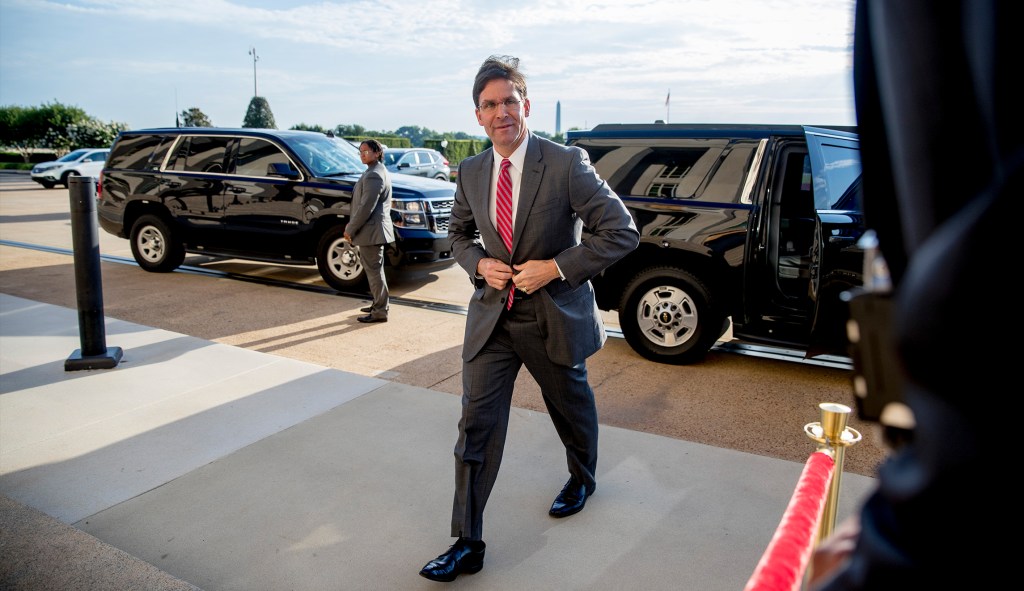
As then-Defense Secretary James Mattis testified more than a year ago, “I don’t think there is any such thing as a tactical nuclear weapon. Any nuclear weapon used any time is a strategic game changer.”

Opponents of adding a smaller version of the D-76 warhead into the mix of submarine-launched D-5 Trident missiles make a number of valid points, including that the U.S. already has a very low-yield version of the B-61 gravity bomb that’s just 0.3 kilotons and can be delivered by a stealthy F-35.

They also argue that deploying a low-yield missile on a submarine is destabilizing because it converts a strategic system into a tactical platform, with no way for the enemy to know the difference.

In an attempt to respond “proportionally,” the U.S. could provoke a full-scale counterstrike, since the Russians would be unaware that the warhead 30 minutes away was just a “baby nuke” until it hit.

The point of having a lower-yield option on a submarine is not to ever use it, but to complicate the deterrence matrix so that no adversary thinks it can push in all its chips and bluff the U.S. into folding.

Rep. Susan Davis, D-Calif., cited Mattis’ no-such-thing-as-a-tactical-nuke quote in opposing the Pentagon’s plan to deploy two lower-yield warheads on each of America’s ballistic missile submarines, but she failed to mention the rest of what Mattis said in advocating for the plan.

“We don’t want someone else to miscalculate,” Mattis told Congress. “We do not want even an inch of daylight to appear in how we look at the nuclear deterrent. It is a nuclear deterrent and must be considered credible.”

Critics of lower-yield nuclear weapons argue that the smaller the blast, the more usable the bomb, and therefore the higher the incentive to use one in a crisis.

The converse of that argument is that if your only option is a weapon so powerful you can’t use it without risking the fate of the entire world, then it’s not really a credible deterrent against a battlefield nuke that destroyed a relatively small target.

Before President Trump was elected, he reportedly asked one of his national security advisers what the point of having nuclear weapons is if you can’t use them.

The point of having them is to try to ensure they are never used.

Adding a smaller warhead to the submarine arsenal is a simple matter of removing the fusion part of a two-stage warhead, leaving only the fission trigger behind.

The work is already funded. Deploying the two dozen or so such warheads will not increase the number of deployed nuclear weapons nor their lethality.

If the move gives Russia even a moment’s more pause, they will have served their intended purpose.

If they are ever fired in anger, we will have entered the realm of the unthinkable.

Jamie McIntyre is the Washington Examiner‘s senior writer on defense and national security. His morning newsletter “Jamie McIntyre’s Daily on Defense,” is free and available by email subscription at dailyondefense.com.

Related Content