

There’s a great joke about acting. One actor says to another actor, Hey, I just got cast in Hamlet. The other actor says, I know this is embarrassing, but I’ve never read or seen it. What’s it about? The first one says, It’s about this guy, Gravedigger #2 . . .
Nobody goes into acting to specialize in small parts, just as no one seeks a career as a middle-inning reliever in baseball or as a third-string quarterback in football. All actors want to be stars, the fixed points around which all other action revolves, onstage and off.
Stay informed.Stay ahead.
Join Washington Examiner for unlimited access to the news, analysis, and commentary that matter most.
Already a member? Log in
Stars are the primary recipients of the fame and adoration all performers falsely believe will sate the desperate hunger for attention that drives them to expose themselves on stage or screen. It follows logically for them that the more attention you get, the better your life will be, even though we have more than 100 years of evidence to suggest that a life lived in the spotlight can be a pretty awful one and that the loss of everyday anonymity is more often a living nightmare than the fulfillment of a glorious dream.
Stars are figures of controversy, too: People hate them as well as love them. And often the people who love them eventually come to dismiss them once fashions change.
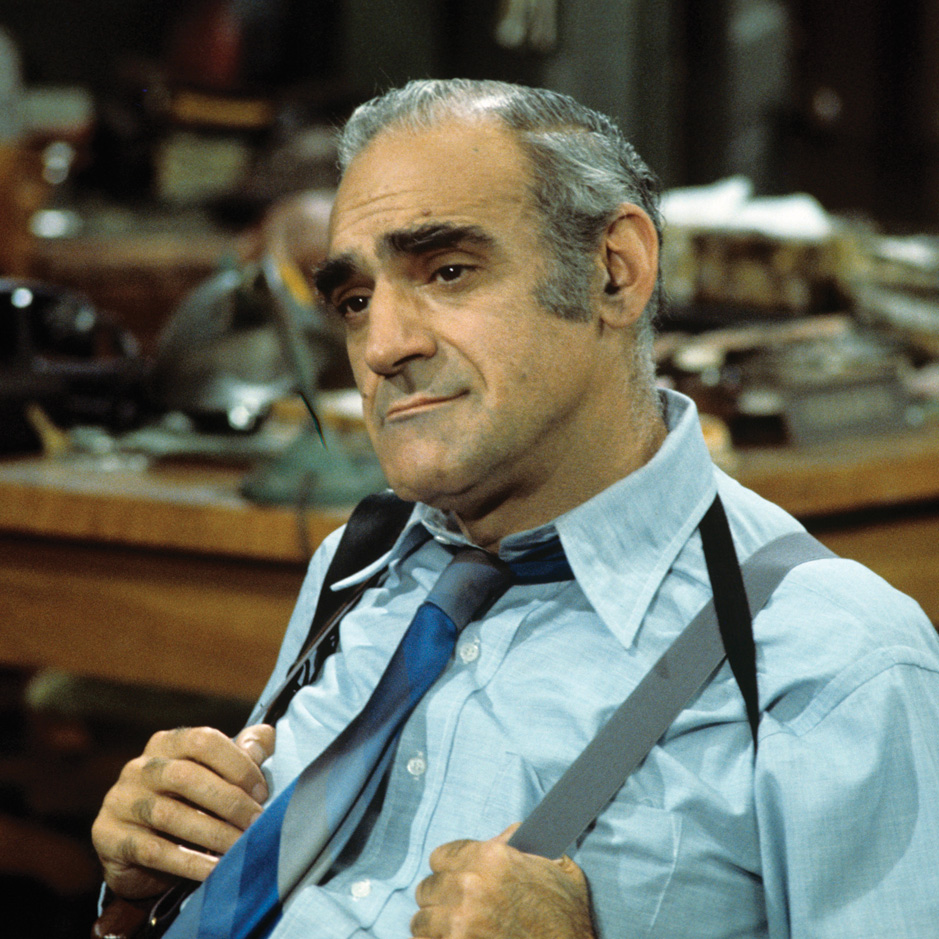
No one feels this way about actors who aren’t stars. No one is gunning for Gravedigger #2. Indeed, memorable character actors—those who fill secondary roles on stage, in the movies, and on television and come to be well known even though they are not at the center of the work they do—are among the most beloved people in the world. Case in point: Abe Vigoda, who died this past week at the age of 94.
Vigoda was a narrow, long-faced New York stage actor who had done some work in television when he got cast in a small but crucial role in The Godfather in 1971 as the proper Mafia lieutenant Salvatore Tessio—the one who quietly betrays Michael Corleone to the rival Barzini clan.
Vigoda’s great scene comes when Tessio realizes he has been found out: “Tell Mike it was only business,” he says. “I always liked him.” Then he makes a halfhearted plea for his own life that he knows will fail. The brilliance of the moment is how Vigoda captures Tessio’s punctilious concern with his own dignity even to the very last—the same punctiliousness that leads him to betray Michael because he believes the kid is not up to the job of running the Corleone empire.
One moment, however great, does not a legend make, and as we’ve learned, it turns out that Vigoda was kind of a legend. People said in the wake of his death that this was due to a false report of his death in People in 1982, to which Vigoda responded by posing in a coffin holding a copy of the magazine. But I don’t think that’s right. What really made Vigoda endure in pop-culture memory was that two years after The Godfather he took to the small screen in another secondary part—as the consummate depressive New Yorker, NYPD detective Phil Fish, on Barney Miller. Fish was a slow-moving, mournful hypochondriac who spent much of his shift in the bathroom, carried with him a donut cushion to help with his hemorrhoids, and conducted a running conversation about his woes on the phone with his unseen wife Bernice.
Vigoda appeared on the show for four seasons, and to my knowledge never cracked so much as a smile. He didn’t speak all that much, either. He didn’t need to. Whenever Barney Miller needed a laugh, all director Noam Pitlik had to do was cut to Vigoda’s seen-it-all-and-it-was-all-pretty-lousy face. It was the deadpan performance to end all deadpan performances, one of the funniest turns in television history.
Of course, Vigoda didn’t want to be in the background. He wanted to be a star. And so he complained and pushed and got himself a spinoff series called Fish, which ran for a season-and-a-half. On it, Fish and his wife (now unfortunately seen) raised foster kids. It was a lousy concept, and in any case it turned out that Vigoda couldn’t hold anyone’s interest when he was the center of attention. He couldn’t have known this about himself because it would have been too much for any actor to bear; but what Vigoda had was the opposite of a star’s charisma. Both in The Godfather and on Barney Miller, he was the embodiment of an ordinary person just trying to get by. And that is what character acting really is.
Stars are larger than life. Character actors are realistic representations of life. They’re not heroes and they’re not fantasy projections of what we would like to be. They are the people in movies and on television who truly remind us of ourselves.
The truth is that, deep down, every sensible person knows that while he may dream of being Hamlet, he’s really just Gravedigger #2. He speaks in prose, not poetry. He’s just a regular guy, not a tortured prince. And that’s a good thing. After all, Hamlet dies young and tragically. And Gravedigger #2? He probably lives to 94 and dies peacefully in his sleep. Just as Abe Vigoda did.
John Podhoretz, editor of Commentary, is The Weekly Standard‘s movie critic.
