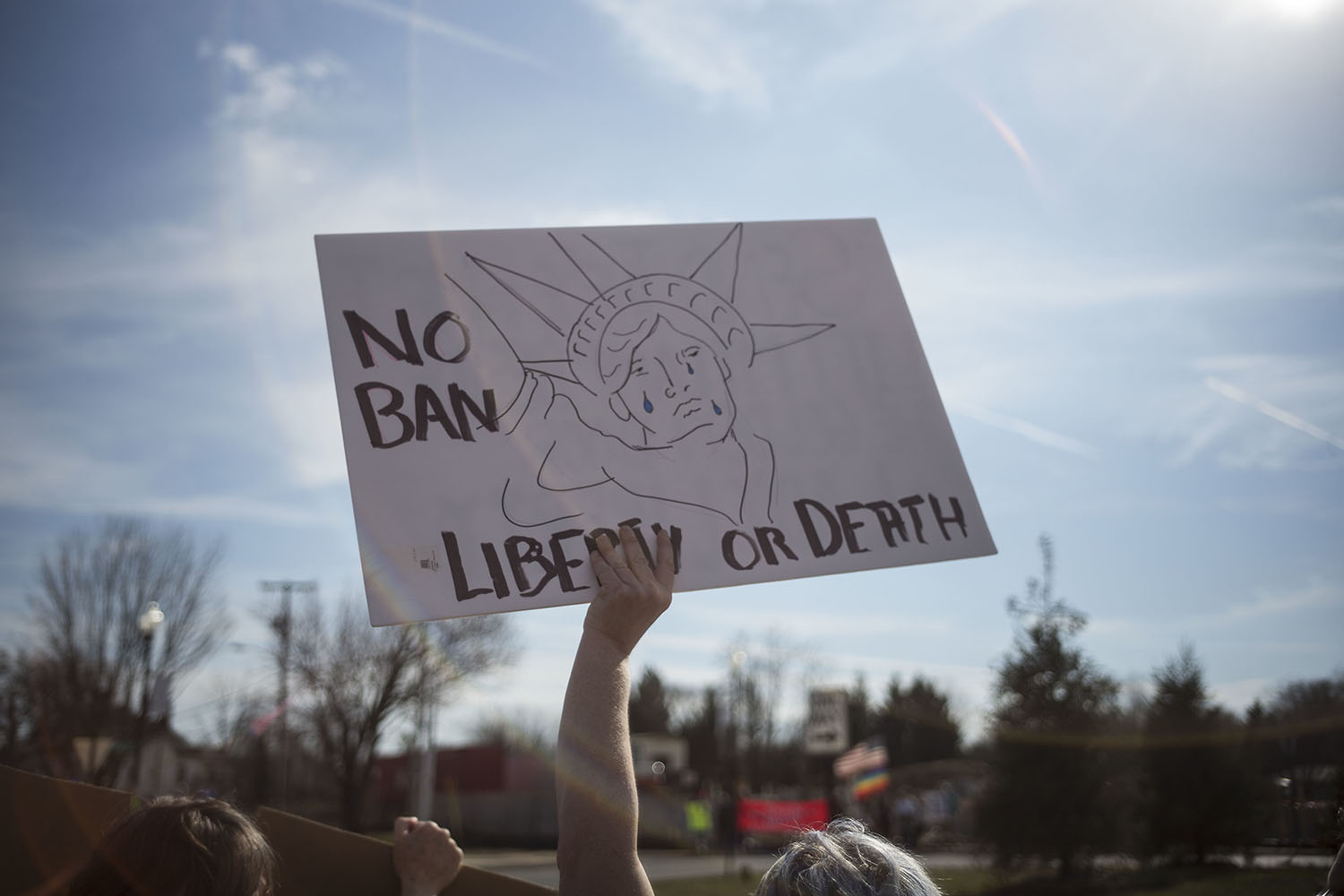
The Trump administration is asking for this compromise ruling on its visa executive order

President Trump’s executive order on refugees and travel from seven countries of special concern had one effect that was widely understood to be the most harmful and arbitrary: Foreigners who had already been admitted to this country, including permanent residents (green-card holders) but happened to be abroad when Trump signed the executive order, were being denied re-entry.

The corollary to this policy is that residents, students and other visitors who are from those seven countries can’t leave the U.S. if they want to return.

These were the people on whose behalf Washington State sued and successfully won a temporary restraining order against Trump’s executive order. The state argued that the order “discriminate[s] against … its inhabitants.” The only inhabitants of Washington that are covered by the order are those foreigners who are already in the country or have set up some sort of base in the country. The other people affected by the executive order — that is, people who aren’t in the U.S., haven’t been granted visas, but who want visas — obviously aren’t inhabitants of Washington State or any U.S. state.

Further, it’s hard to make an argument about equal protection of the laws for a foreigner who lives in a foreign country and doesn’t have a home in the U.S. or a visa yet. Our government obviously doesn’t extend the same protection of the law to an Iranian in Iran who has never been here that it does to people who live here.

The enforcement of the order against permanent residents, or others already granted a visa to come here is the central moral, political and legal problem of the order. That’s probably why the White House counsel and Homeland Security have ruled that the order should not be enforced against people who have already come here.

In the Trump administration’s arguments Tuesday before the 9th U.S. Circuit Court of Appeals, one of its final arguments was an appeal that the court should remove the temporary restraining order — with regard to those people not yet granted visas. That is, the White House said that if the appeals court is to restrain enforcement of the executive order, it should ONLY restrain its enforcement against those already given visas.

Timothy P. Carney, The Washington Examiner’s commentary editor, can be contacted at [email protected]. His column appears Tuesday nights on washingtonexaminer.com.

Related Content
