

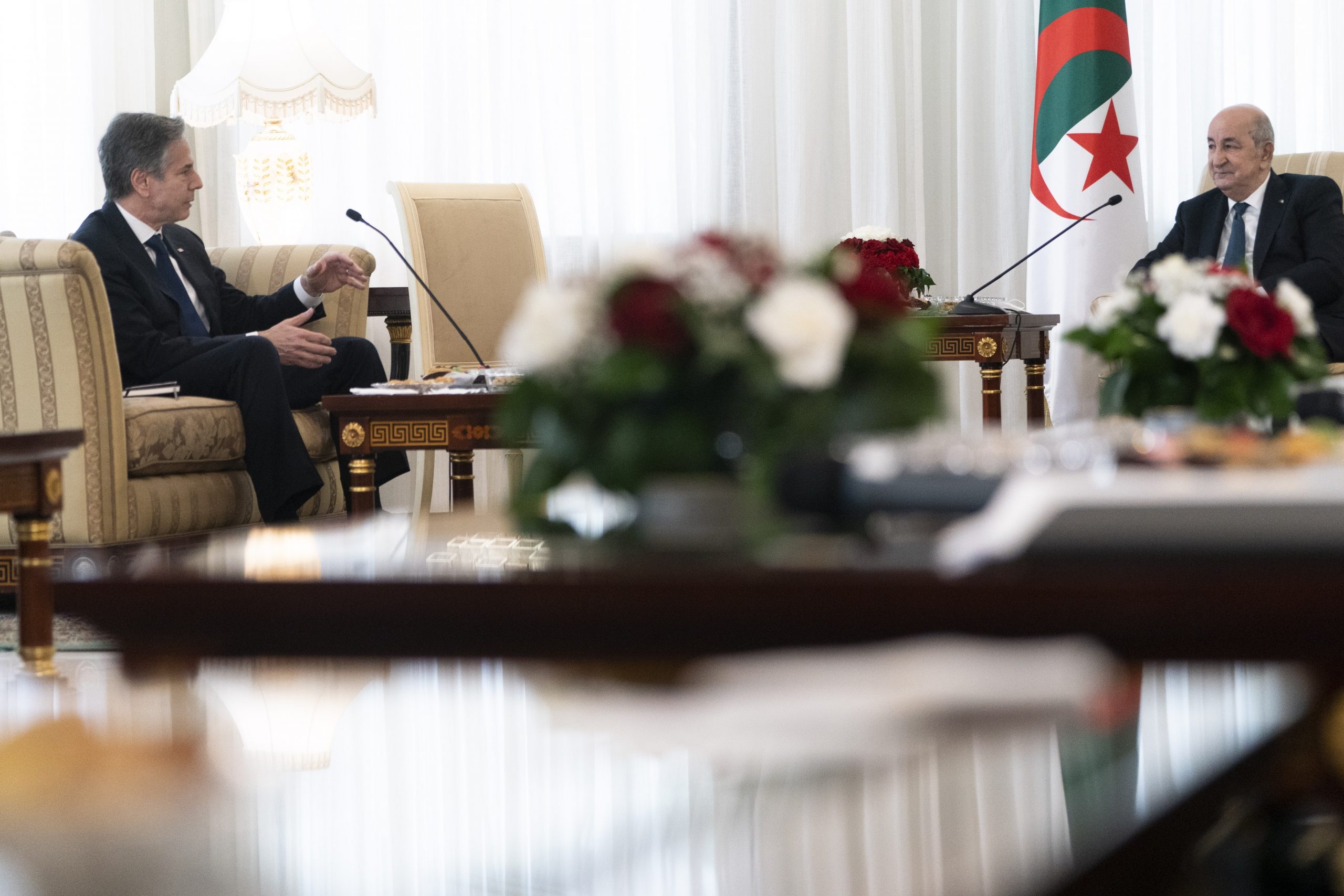
On March 30, Secretary of State Antony Blinken visited Algeria, an ally of Russia and one of the major gas producers Europe depends on, following the increase in prices from Russia’s invasion of Ukraine. Blinken’s message was clear: Algeria should limit its ties with Russia, join efforts to secure gas for Europe, and improve diplomatic relations with its neighbor, Morocco, which it declared war on in November. “The international community must increase the pressure on Russia to end this unprovoked and unjustified war,” he stated, hinting at the previous declarations of Algerian President Abdelmadjid Tebboune, who referred to Russia as a “brotherly country.”
However, a few days after Blinken’s visit, Russia’s ambassador to Algeria, Igor Belyaev, announced that an Arab committee, which includes Algeria, will visit Moscow soon to discuss the Ukrainian crisis. It is no surprise that Russia is earnestly trying to gather support as it invades Ukraine. Belyaev also highlighted his concern at what he considered a “sudden change” in Spain’s position on the issue of the Western Sahara, as it expressed support for Morocco’s sovereignty. From a Russian perspective, Algeria is a strategic partner. It is Moscow’s largest client in Africa, and the Algerian military regime is the only reliable friend in the region given the circumstances. Indeed, from 2014 to 2018, Russia supplied the Algerian military with 66% of its weapons.
Stay informed.Stay ahead.
Join Washington Examiner for unlimited access to the news, analysis, and commentary that matter most.
Already a member? Log in
