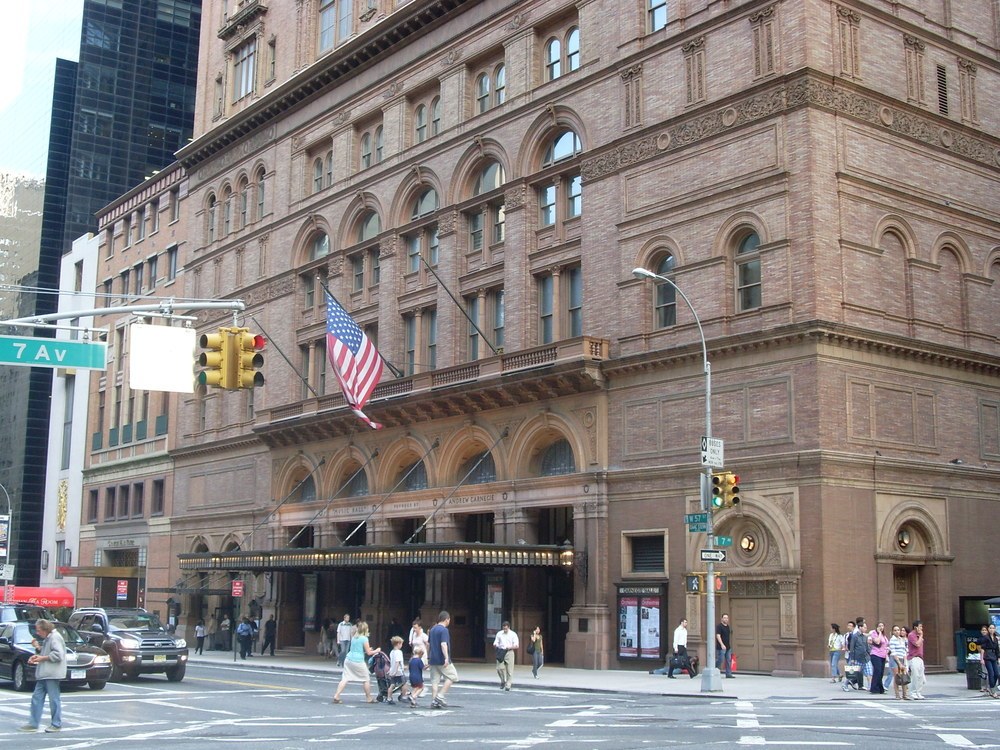
The Royal Concertgebouw Orchestra of Amsterdam performed at Carnegie Hall last week under Russian-American conductor Semyon Bychkov. Because the venue is so well known and the performers are so good and the seats so expensive and hard to get, Carnegie’s programmers are rather blasé on the question of whether the audience deserves to hear music they might like. A ticket-holder can rebel by showing up late or leaving early, and a significant portion of the audience chose the path of civil disobedience last night and arrived at intermission, skipping Detlev Glanert’s Theatrum bestiarum, a twenty-two-minute orchestral work that opened the performance. The more sophisticated concertgoers thought Glanert’s work backward-looking and unoriginal, even while praising his ability to showcase each section of the orchestra effectively. Glanert’s largely atonal composition invoked an emotional palette consisting largely of anxiety. Five minutes into the music, the listener will find himself wondering if he has lost his keys, defaulted on his mortgage, failed his exams or ruined his marriage. Glanert says his theme is “a zoo of human beings” and adds that he looks at humans as animals “because sometimes they behave as animals”—a thought that would be impressively trenchant if Mr Glanert had just graduated from elementary school. He is obviously well-trained and shows great polish and technical command. But Theatrum bestiarum belongs firmly in the class of paper-music that is best studied rather than actually performed.
The second half of the Concertgebouw program was Mahler’s Fifth Symphony, an enormous epic of five movements which takes over an hour to perform. From the opening funeral movement in c-sharp minor, the work increases in majesty as Mahler gives ever greater reign to his romantic tendencies. Mahler was an unwilling romantic, but he is at his best when allowing his deep emotional reservoir to overpower the avant-gardist intellectual in him. The fourth movement, for string section only (plus a harp) is gorgeously luscious and deservedly among Mahler’s most beloved compositions. The final movement accelerates from invigorating to thrilling and ends with an ebullience felt throughout the concert hall and reflected by the ovation that followed.