

All of a sudden, in the winter of my senior year of high school, the mail starting coming at 7 p.m. or later. I was waiting to hear from the admissions offices of eight colleges, and so this delay was excruciating.
I would rush home before basketball practice to see if I had gotten in. No mail. I’d go to practice and come back. No mail. I couldn’t possibly focus on homework while waiting for the mail. Or at least, that’s my excuse for my dropoff in grades second semester of senior year.
Recommended Stories



So I took action. I called my congresswoman, Rep. Nita Lowey, D-N.Y. I told her office that the U.S. Postal Service was doing its job in an unacceptably lackadaisical way. Soon, things actually improved. It was when Lowey’s office called back that I got scolded by my parents for making the call in the first place.
You see, my father was mayor of our small town (“town supervisor” was his official title). Lowey had sworn him in. My parents explained that a constituent-service request from the home of a local elected Democrat (yes, my father is a Democrat), might carry extra weight in a congressional office. It may seem like my dad was throwing his weight around.
So any random constituent has the right to complain about slow mail delivery, I objected, but we lose that right because Dad is in office?
Exactly, my parents explained.
Power rightly comes with constraints. Some things that are okay for you to do as an ordinary person become no longer okay when you obtain power.
This is a lesson much needed today. Whether it’s EPA Administrator Scott Pruitt using his office for personal benefit, President Trump using his bully pulpit to grind cultural axes, or male bosses in every industry recently exposed for using their professional clout to lure, exploit, and abuse women, it’s clear that too many see power as delivering license, rather than constraints.
Pruitt reportedly had his staff at the Environmental Protection Agency try to arrange a meeting between Pruitt and Chick-fil-A President Dan Cathy for the purpose of getting Mrs. Pruitt her own Chick-fil-A franchise. Because Pruitt used EPA officials to set up the meeting, and because he proposed meeting with Cathy himself (although his wife was supposed to be the franchisee), it looks like an attempt to use his public position to get something for his family.
If we are charitable, though, we could posit that Pruitt intended no quid pro quo and no threat. He was just a husband and a former businessman (he started his own law firm out of law school) calling to help his wife set up a business. Surely he has every right to help his wife who in turn has every right to try to be a Chick-fil-A franchisee?
But even this charitable interpretation doesn’t make Pruitt’s call proper. Even if Pruitt never suggested any favors or expected any special treatment, he should have imagined how the request would sound to Chick-fil-A executives. Pruitt has the power to regulate and subsidize industry. Pruitt’s boss has a history of attacking companies that displease him.
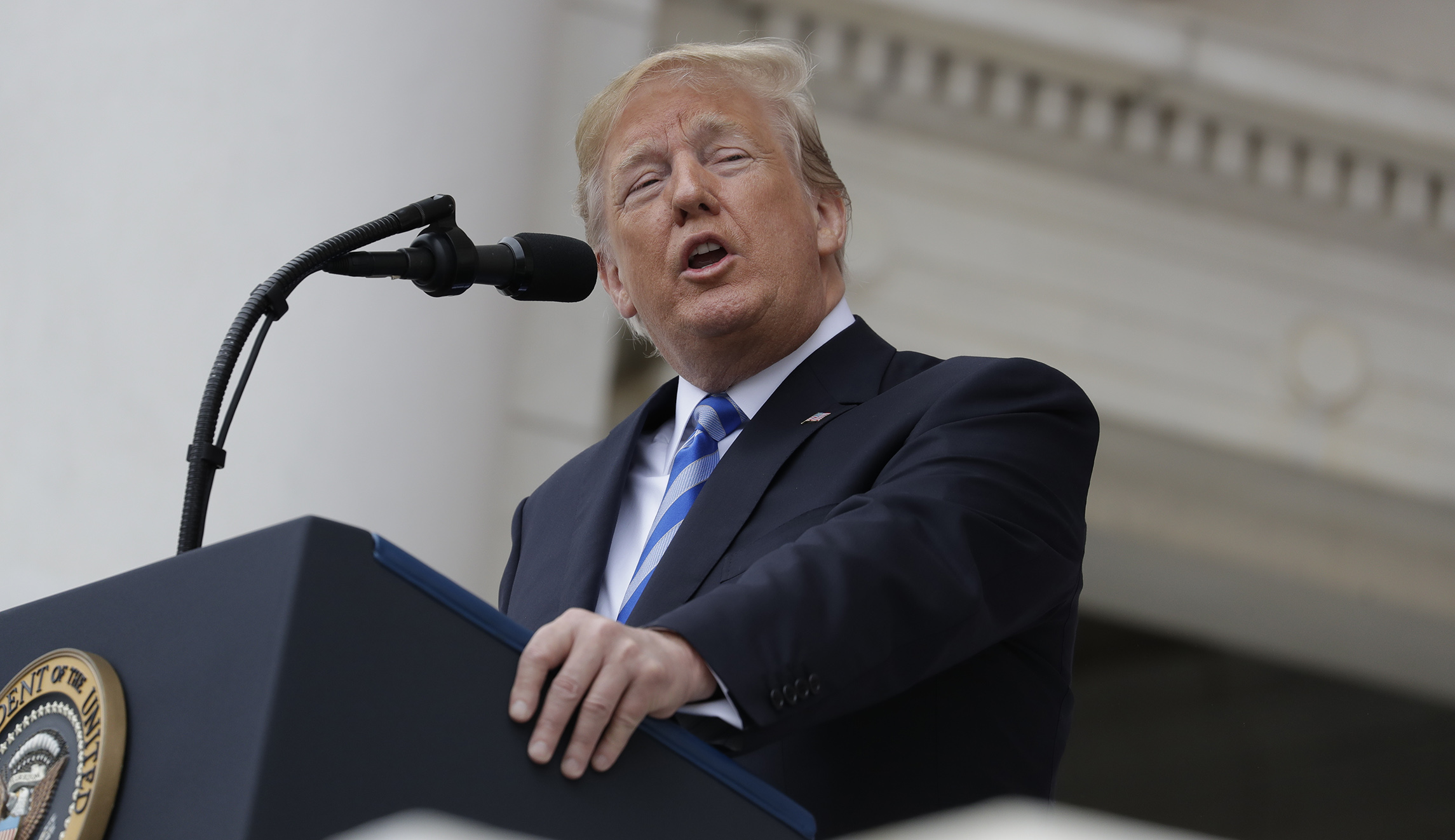
On that note, Trump’s power as president is precisely why he shouldn’t speak up on his dislike of protests by NFL players. Of course all Americans are entitled to their opinion, and of course NFL players’ freedom to protest the anthem isn’t a freedom from criticism for their protests. But the president of the United States, uniquely, ought not offer his opinion.
Trump heads a government that taxes teams and players, and that regulates the NFL. Even if it’s just his own uninformed, ill-considered opinion, it carries extra weight. It can sound like a threat. The opinions that it was fine for a reality star to utter routinely are opinions the president ought to keep to himself.
This old-fashioned view, that power imposes constraints upon the powerful, could have mitigated the trauma that caused the #MeToo moment. While some culprits were just plain predators, some of the men who harassed and scarred women defended their actions as mere romantic come-ons. But when you’re the boss, with the power to hire or fire or give a raise, a come-on may not come across as a mere come-on.
And of course, the problem isn’t merely that people with power today don’t abide by the constraints of power. The problem is also that the people with power often see it as license. Or as one former reality television host put it, “When you’re a star, they let you do it.”
This amounts to asking people in power to give up some privileges or liberties that others have. That’s part of the reason we call it “public service.”
