Trump hits 17 Russian officials, 7 oligarchs with sanctions

The Trump administration on Friday sanctioned 17 senior Russian officials, seven key Russian businesspeople and more than a dozen companies and banks under a law that Trump signed last year.

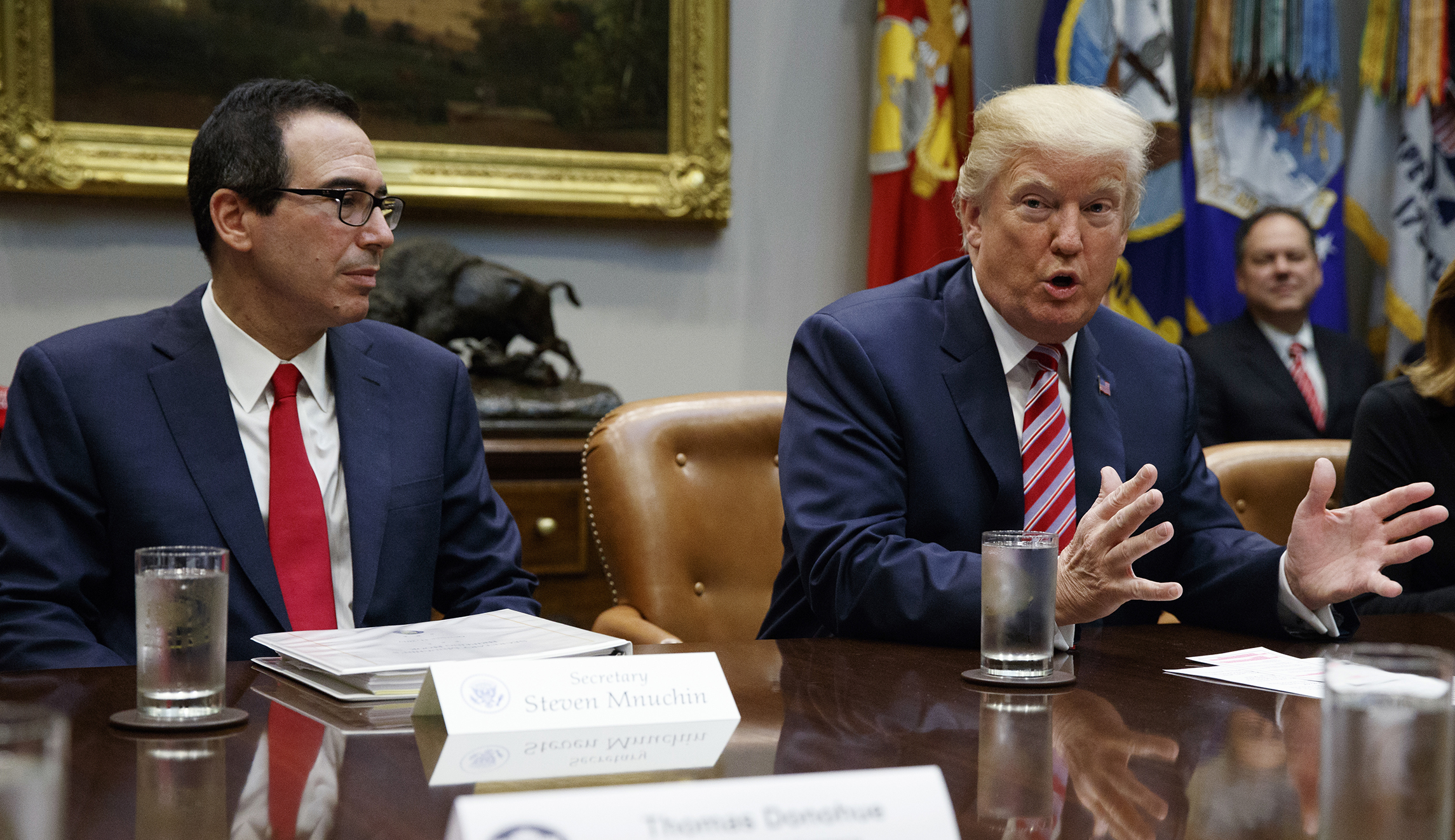
The sanctions are imposed under the Countering America’s Adversaries Through Sanctions Act, and Treasury Secretary Steven Mnuchin said the action is targeted against Russian people and entities involved in “malign activity.”

“The Russian government operates for the disproportionate benefit of oligarchs and government elites,” Mnuchin said. “The Russian government engages in a range of malign activity around the globe, including continuing to occupy Crimea and instigate violence in eastern Ukraine, supplying the Assad regime with material and weaponry as they bomb their own civilians, attempting to subvert Western democracies, and malicious cyber activities.”

“Russian oligarchs and elites who profit from this corrupt system will no longer be insulated from the consequences of their government’s destabilizing activities,” he said.

Targets of the U.S. action will have their U.S. assets frozen, and most U.S. people and entities will be banned from any dealings with them.

“Additionally, non-U.S. persons could face sanctions for knowingly facilitating significant transactions for or on behalf of the individuals or entities blocked today,” the Treasury Department said.

Treasury specifically designated seven Russian oligarchs under the action, and 12 companies they control. The sanctions also apply to 17 top Russian officials, a state-owned Russian weapons trading company called Rosoboroneksport, and its Russian bank subsidiary.

“Rosoboroneksport is a state-owned Russian weapons trading company with longstanding and ongoing ties to the Government of Syria, with billions of dollars’ worth of weapons sales over more than a decade,” Treasury said.

The sanctions come amid ongoing charges from Democrats that Trump somehow coordinated with Russia to defeat Hillary Clinton in the 2016 election. Trump and his allies have said repeatedly that there was no collusion, although most agree Russia paid for messages over social media platforms to sow division within the U.S. electorate.

Related Content
