

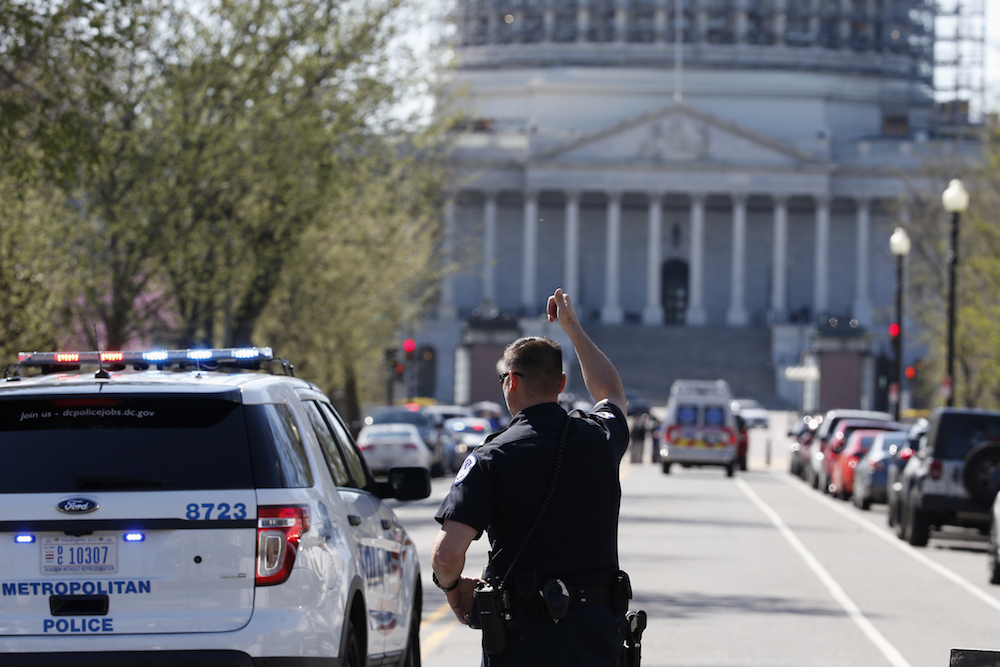
The gunman who attacked the Capitol Visitors Center on Monday didn’t appear to have any ties to the Islamic State, but that doesn’t mean terrorists won’t benefit from the incident.
Analysts say that terrorist groups watch incidents all over the world and collect intelligence about the response that could help plan more attacks.
Real journalism.Trusted by millions.
Unlimited access to in-depth reporting, expert analysis, and the stories that shape our country.
Already a member? Log in
“I don’t want to go into too much detail, but suffice to say, every time an attack takes place, terror organizations are watching in order to see how the victims, bystanders, first responders act. They then use these observations to plan future attacks,” Chris Harmer, a senior naval analyst with the Middle East Security Project at the Institute for the Study of War, told the Washington Examiner.
Larry Russell Dawson was charged late Monday night with two criminal offenses after he entered the Capitol Visitors Center that afternoon with a gun, injuring one female bystander. Capitol police then shot Dawson, who remains in the hospital.
The Islamic State is “absolutely” aware of the attack and studying it to learn as much as they can about the police response, said Seth Jones, director of the International Security and Defense Policy Center at the RAND Corporation.
Jones said in the case of Dawson, the Islamic State is likely looking at everything from how the gun was purchased and how quickly Capitol Police responded, to how visitors responded and how congested the area got in the immediate aftermath.
“Everything from specific tactics, techniques and procedures used by law enforcement in the response at the Capitol Visitors Center to how it was picked up and covered by the media,” Jones said. “There are multiple angles they would use for this.”
More broadly, Jones said “competent terrorist groups” including al Qaeda and the Islamic State will often comb through court documents to see how suspects were identified and other federal documents or affidavits that could help them identify sources planted inside organizations.
While the result was nowhere near as catastrophic as the terrorist attack in Brussels, which killed more than 30 people, the location of the attack is similar. Both spots were “soft” areas, or areas before the first level of security, yet chosen because they can still inflict damage due to the high number of people milling about.
Still, Rep. Ryan Zinke, R-Mont., commended the Capitol police response to the incident and said he feels “very safe” with them protecting the Capitol.
“As a former military commander, when I see Capitol police take swift action to neutralize the threat I believe it would likely discourage some attacks. But you have to understand that terrorists have at their disposal weapons of mass destruction and possibly chemical and biological weapons,” Zinke told the Examiner in a statement.
