Subscribe today to the Washington Examiner magazine and get Washington Briefing: politics and policy stories that will keep you up to date with what’s going on in Washington. SUBSCRIBE NOW: Just $1.00 an issue!
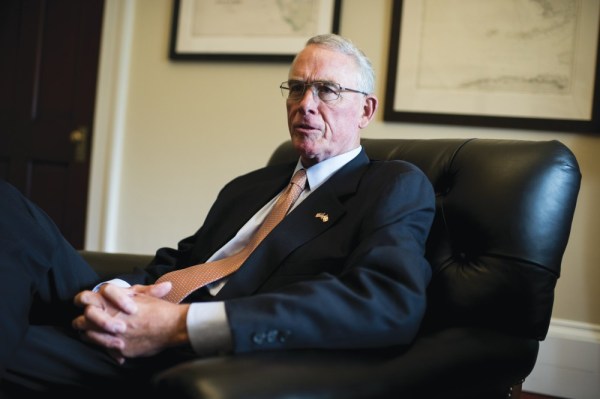
ROONEY SPEAKS: Congressman Francis Rooney won’t retire from Congress quietly, and instead will warn fellow Republicans to rally around fighting climate change or face electoral consequences.
“I really do worry about the future of Republican electoral success if we can’t connect with young and suburban people. The environment is a very important issue to them,” the Floridian told Josh in an interview Tuesday evening, just a few days after announcing he won’t run for re-election in 2020.
Politics as usual: Rooney said it’s “inexplicable” that more Republicans won’t join him in supporting a tax on carbon emissions when even large fossil fuel companies have come around to endorse versions of the policy.
“There is movement,” Rooney said. “The last people to figure it out will probably be Congress. The elected officials are so far behind the curve on it.”
Rooney has introduced multiple carbon tax bills in Congress, including one that would return the revenue to households as a dividend, and another that would use the money to offset payroll taxes. He views a carbon tax as a market-driven approach that goes further than the congressional Republican consensus of spending on R&D to fund “innovation,” but is not as radical as the Green New Deal.
Only one other congressional Republican — Brian Fitzpatrick of Pennsylvania — has publicly endorsed a carbon tax.
“I don’t know what it’s going to take for Republicans,” Rooney said. “I just hope they get with the program before it’s too late and we get cap and trade, a Green New Deal, or a hard stop on carbon instead of a more rational response.”
Why he retired: Rooney, first elected in 2016, insists his support for a carbon tax would not have been a vulnerability in winning re-election to his conservative southwest Florida district.
President Trump won Rooney’s wealthy district, which includes Fort Myers, Naples, and Marco Island, by more than 20 points in 2016.
“My district might not be where I am with supporting a carbon tax, but they care about the environment, and I at least got people to see the other side of the argument now,” Rooney said.
A millionaire real estate builder before joining Congress, Rooney, 65, said he always planned for a short stay, and felt content to leave after accomplishing two major goals.
In September, the House passed a bill he wrote that would make permanent a Congressional moratorium on offshore drilling in the eastern Gulf of Mexico near Florida. Rooney also helped secure $1.1 billion to restore the Everglades, a funding boost that he credits Trump for supporting.
Rooney urged Trump to push Senate Republicans to consider his House bill banning offshore drilling. He sees the issue as key to winning tourism-dependent Florida, which he says the president must do to secure re-election.
“My message to the president is very simple: we need him to push the Senate to pass an extension of the offshore drilling moratorium to show he can protect Florida just like Nancy Pelosi did,” Rooney said.
Measuring his impact: Rooney has not been able to rally more Republican support for a carbon tax, and his leadership of the bipartisan Climate Solutions Caucus has been uneven.
He said he regrets the caucus has only hosted one meeting since he took over the Republican leadership spot this year from former Rep. Carlos Curbelo, a fellow Floridian and carbon tax supporter who lost his purple seat in 2018. Rooney blames Democrats’ impeachment drive for distracting from bipartisan endeavors like the climate caucus.
Rooney says he plans to stay active on climate change policy after leaving Congress, listing Oceana, the Environmental Defense Fund, and Citizens Climate Lobby as organizations he enjoys working with. He keeps a home in Georgetown, along with his waterfront residence in Naples.
It remains to be seen if his carbon tax advocacy will matter outside Congress.
“This system responds to people making good arguments and taking intellectually honest positions,” Rooney said. “I don’t think you need to be a resident in this building to make an impact. I guess I will find out.”
Welcome to Daily on Energy, written by Washington Examiner Energy and Environment Writers Josh Siegel (@SiegelScribe) and Abby Smith (@AbbySmithDC). Email [email protected] or [email protected] for tips, suggestions, calendar items, and anything else. If a friend sent this to you and you’d like to sign up, click here. If signing up doesn’t work, shoot us an email, and we’ll add you to our list.
AS ONE GOP CLIMATE HAWK LEAVES, MORE COULD TAKE FLIGHT: Senate Republicans want their own piece of the climate conversation, and that’s leading to a new bipartisan forum on the issue.
Republican Senator Mike Braun of Indiana and Democratic Senator Chris Coons of Delaware formally launched a new Senate Bipartisan Solutions Caucus on Wednesday, the first such group of its kind in the chamber. The House has had a bipartisan climate caucus since 2016.
“Our caucus seeks to take the politics out of this important issue,” Braun and Coons wrote in an op-ed in The Hill, announcing the new group. “Instead, members will commit to an honest dialogue, through which we can develop solutions that solidify American environmental leadership, promote American workers, and make meaningful progress on protecting our environment.”
Braun and Coons also outline a few areas they’re interested in working on together, including “promoting the role of agriculture as a climate solution.”
The caucus doesn’t have a membership list yet, but Braun and Coons say the group will have an equal number of members from each party. They want the group to meet regularly and bring in experts “across the political spectrum” for policy discussions.
Key Republican senators are eager to get the work started: Senate Energy and Natural Resources Committee Chairwoman and Alaska Senator Lisa Murkowski told the Washington Examiner she’s participating in the group, and she wants to bring her committee work to the discussion.
“I think we’ve got a lot to contribute to the conversation just in terms of what’s going on with technologies that are going to help make a difference,” she said.
Democratic Senator Tom Carper of Delaware, the top Democrat on the Senate environment committee, also said he’d be interested in joining.
“We have a lot of caucuses. Some of them don’t do a lot,” Carper told the Washington Examiner. “This is one that may have some real potential.”
FUELS STANDARD FIGHT HITS THE COURTS: The Environmental Protection Agency isn’t going to have an easy time with any piece of its Renewable Fuel Standard as it’s caught in the middle of Big Corn and Big Oil.
Its decision to exempt some small refiners from the biofuels mandate for 2018 is no exception. Agricultural groups and biofuels producers are suing, saying the EPA provided only a “bare-bones” reasoning that wasn’t sufficient to spare the oil refiners from the fuels program. The coalition includes the American Coalition for Ethanol, Growth Energy, the National Biodiesel Board, National Farmers Union, and Renewable Fuels Association.
The lawsuit comes as the Trump administration is negotiating a new RFS deal — one that attempts to smooth things over with biofuels producers on future exemptions, but that neither agriculture groups nor the oil industry is happy with.
SUPREME COURT WON’T SPARE OIL COMPANIES FROM CLIMATE SUITS: At least for now.
Justices on the Supreme Court on Tuesday denied oil companies’ requests to pause three separate lawsuits brought by cities and states accusing the fossil fuel producers of misleading the public about the climate change damages they knew their products would cause.
The full court — with the exception of Justice Samuel Alito, who didn’t participate — denied the companies’ request to halt a case brought by the city of Baltimore. Individual justices then rejected similar petitions in lawsuits brought by Rhode Island and several Colorado cities and counties.
The Supreme Court decisions come the same week that trial begins in New York in a lawsuit against ExxonMobil, arguing the oil major deceived its investors about its financial exposure to climate regulations. All of these lawsuits are putting increasing pressure on the fossil fuel industry, Josh reported recently for the Washington Examiner magazine.
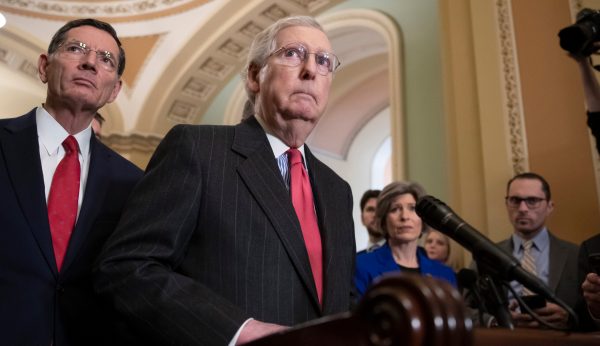
INDUSTRY GAINS A FRIEND ON AIR PERMITS IN GOP SENATORS: A group of Republican senators — led by Senate environment committee Chairman and Wyoming Senator John Barrasso — introduced legislation Tuesday that would alter requirements under a major EPA air permitting program.
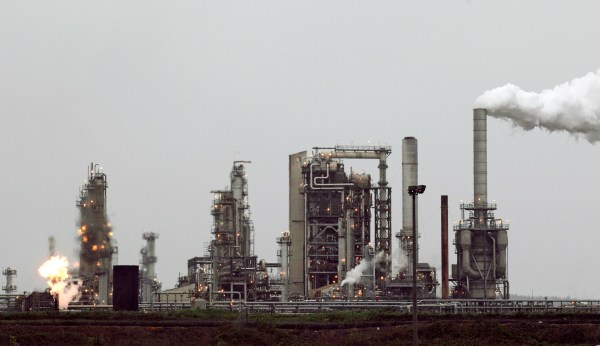
The program at issue, the EPA’s new source review, has long been a target of industry. The permitting program requires major industrial facilities making upgrades or major modifications that increase the plant’s air pollution to install pollution controls. Industry has argued the program is overly burdensome and often disincentivizes upgrades that would make plants more efficient.
The senators’ legislation — the Growing American Innovation Now (GAIN) Act — would clarify new source review requirements, they say. That includes a change the EPA has also previously proposed: quantifying emissions increases that would trigger pollution controls by using an hourly rate, as opposed to an annual rate.
“New Source Review is the poster child of negative unintended consequences from otherwise well-intentioned government policies,” West Virginia Senator Shelley Moore Capito said in a statement.
‘NO QUESTION’ CLIMATE CHANGE IS HAPPENING, TRUMP’S SCIENCE ADVISOR SAYS: Kelvin Droegemeier, director of the White House Office of Science and Technology Policy, doesn’t share Trump’s view that climate change is a “hoax.” But he’s also adept at navigating the turbulence of holding a science advisor post in an administration that sometimes publicly bucks science, particularly on climate change.
“A strong economy is critical,” Droegemeier said. “We can’t upend the economy and expect to arrest climate change.”
Read more in Droegemeier’s exclusive interview with the Washington Examiner’s Rob Crilly.
IS EPA’S POWER RULE ‘HOUSE OF CARDS’ DOOMED TO TOPPLE? A new white paper from Harvard University’s Environmental and Energy Law Program says yes.
The paper was written by two of the program’s attorneys — Caitlin McCoy, a fellow, and Joseph Goffman, the executive director who also served as a top air attorney in the Obama EPA. Goffman helped write the Clean Power Plan, the Obama administration’s centerpiece climate rule and the regulation the EPA is now seeking to replace.
But McCoy and Goffman say the EPA is taking a big gamble in the courts when it argues under the Chevron doctrine its reading of the Clean Air Act, allowing only much narrower power plant carbon standards, is the only way to read the law.
The Rundown
Wall Street Journal Trump administration sues California over cap-and-trade market
Wall Street Journal Exxon misled investors over climate change, court told
Los Angeles Times California ditched coal. The gas company is worried it’s next
Washington Post Industry dominates Trump’s new council of science advisers
New York Times The world can make more water from the sea, but at what cost?
Politico USDA inspector general launches climate change investigation
Calendar
WEDNESDAY | OCTOBER 23
10 am, 2154 Rayburn: The House Oversight and Government Reform Committee’s Civil Rights and Civil Liberties Subcommittee will hold a hearing on “Examining the Oil Industry’s Efforts to Suppress the Truth about Climate Change.”
10 am, 2167 Rayburn: The House Transportation and Infrastructure Committee’s Water Resources and Environment Subcommittee will hold a hearing on “The Pebble Mine Project: Process and Potential Impacts.”
10:30 am, 2322 Rayburn: The House Energy and Commerce Committee’s Environment and Climate Change Subcommittee will hold a hearing on “Building a 100 Percent Clean Economy: Solutions for Planes, Trains and Everything Beyond Automobiles.
THURSDAY | OCTOBER 24
9:00 am, American Gas Association, 400 N Capitol St. NW, Suite 450: The American Gas Association will present its annual winter outlook on natural gas supply, demand, storage, temperatures, weather events, pipeline capacity, and potential impacts on customer bills.