
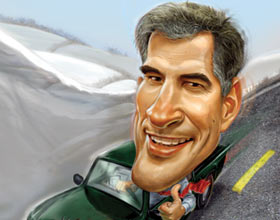
Life doesn’t simply imitate art. There are important differences between the Scott Brown story and Jefferson Smith’s. And the differences make Brown’s actual achievement more impressive than Smith’s fictitious one. For example, Smith (Jimmy Stewart) was appointed to his seat in the Senate. Scott Brown won his in an upset electoral victory. And at the climactic moment in the film, Smith collapses in a faint, but his cause is saved by a fellow senator, Joseph Paine (Claude Rains), who has had sudden pangs of conscience. By contrast, at a key moment in Brown’s effort, the televised debate a week before Election Day, it was Brown all alone, relying on his own wits, who seized the moment. He responded to David Gergen’s patronizing question as to whether he was willing to “sit in Teddy Kennedy’s seat” and block liberal health care policies by saying, coolly and calmly, “Well, with all due respect, it’s not the Kennedys’ seat, and it’s not the Democrats’ seat, it’s the people’s seat.”
But there are also similarities between the sagas of Smith and Brown. Both had happy endings, featuring the upset victory of a good (and good-looking!) guy, who sought to represent the public interest and was in touch with public sentiment, over an entrenched, corrupt, and out-of-touch political machine.
Recommended Stories

And both victories horrified the political establishment. When Frank Capra’s Mr. Smith Goes to Washington premiered at Constitution Hall in Washington in October 1939, half the Senate was in attendance. The senators were outraged by the film’s depiction of widespread venality and corruption in that august body. Senate Majority Leader Alben Barkley denounced Mr. Smith as a “silly and stupid” movie that “showed the Senate as the biggest aggregation of nincompoops on record.”
When Scott Brown won last Tuesday night, once again more than half the Senate was surely outraged and/or shell-shocked. And today’s majority leader, Harry Reid, followed in Barkley’s footsteps by issuing a grudging and graceless statement, which included no congratulations to Scott Brown (“The people of Massachusetts have spoken”) and no recognition that the public was sending any sort of message (“While Senator-elect Brown’s victory changes the political math in the Senate . . . there is much work to do to address the problems Democrats inherited last year, and we plan to move full speed ahead”).
Another similarity between art and life was provided by the Kennedy family. The patriarch, Joseph Kennedy, was ambassador to Great Britain in 1939, and he complained to the head of Columbia Pictures that Mr. Smith would harm “America’s prestige in Europe.” Indeed, he urged that it be withdrawn from European release. Seventy years later, various Kennedys campaigned against Scott Brown’s upstart effort to capture the Senate seat held by Joe’s youngest son for 47 years.
But the biggest similarity is this: Americans liked an underdog in 1939. They liked one in 2010. When the establishment is arrogant and unresponsive, they tend to side with a Jefferson Smith/Scott Brown figure.
In 1939, that establishment seemed to be made up of conservative economic royalists. Today, that establishment seems to consist of liberal political royalists.
This difference is, politically, a big deal. It is at the heart of the Republicans’ opportunity to build on what Scott Brown has accomplished. It suggests the GOP, and the conservative movement, should embrace the kind of enlightened, good-natured, constructive populism that Brown demonstrated in his campaign. And it means resisting the twin perils of Republican establishmentarian royalism on the one hand, and a bitter and destructive populism on the other.
Critics in 1939 were surprisingly lukewarm about Mr. Smith Goes to Washington. But the public liked it, and the film struck a chord around the world. Supposedly, when American-made films were banned in German-occupied France in 1942, some theaters showed Mr. Smith as the last movie before the ban, and one theater owner in Paris showed the film for 30 days running after the ban was announced.
Pundits today may not be crazy about Scott Brown’s victory. But the public seems to approve. And Brown’s momentum will carry Republicans along for at least 30 days. Still, it’s a long ten months until November, and Republicans will need more than just momentum and sentiment. They’ll need policy proposals that advance the cause of democratic capitalism against crony capitalism, the public interest against the special interests, and free markets against big government and, yes, at times against big business. If they can begin to fill out this agenda while standing resolute against the diktats of the liberal establishment, then Scott Brown could be followed to Washington by many more underdog conservative citizen-legislators in November.
—William Kristol