

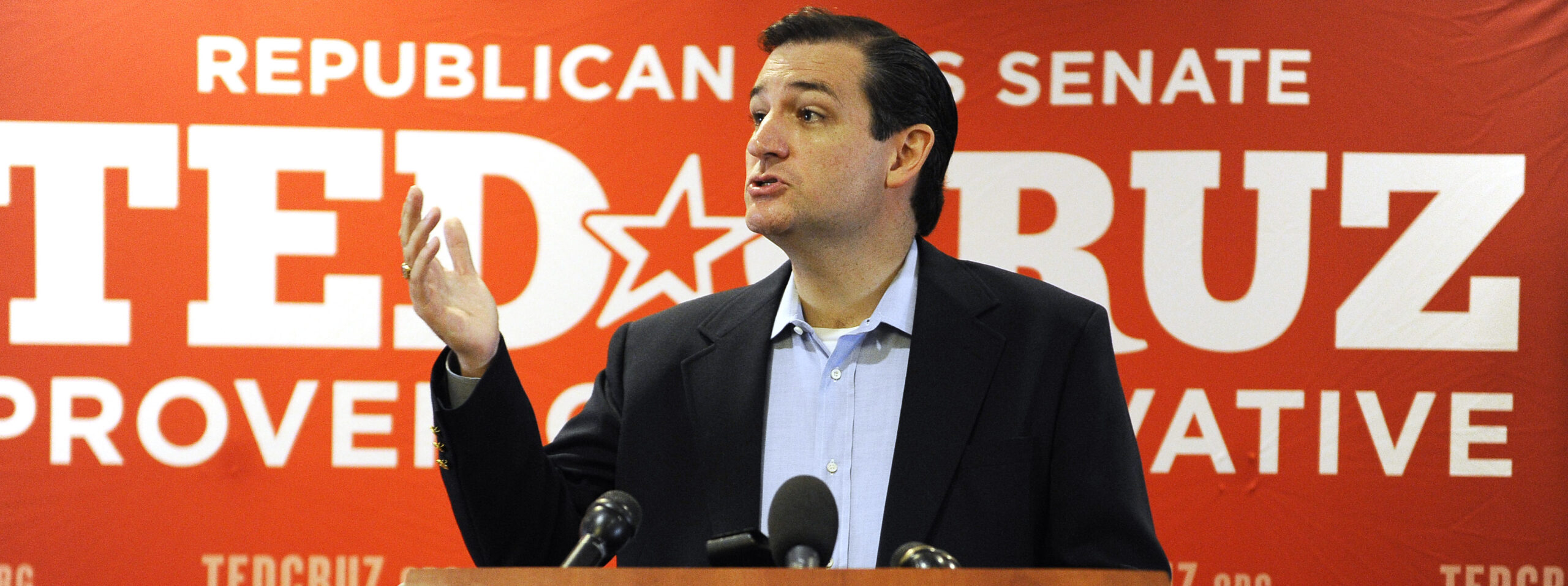
Another Republican primary, another victory for grassroots conservatives and the Tea Party.
Yesterday in Texas, former state Solicitor General Ted Cruz came from behind to stun Lt. Gov. David Dewhurst, 57 percent to 43 percent in the runoff election for the Republican nomination for U.S. Senate. Dewhurst had both the endorsement of Texas Gov. Rick Perry and a lobbyist-funded 3-to-1 spending advantage. Back in May, Dewhurst had easily topped Cruz in a four-way first-round ballot, 45 percent to 34 percent. Many expected him to pick up the last 6 points he needed to move on to the general election.
Recommended Stories


But Cruz, who memorized the Constitution as a teenager and has since argued nine cases before the U.S. Supreme Court, proved too good a conservative for Texans to pass up.
Dewhurst was not nearly as moderate as the last Tea Party victim, Sen. Dick Lugar, R-Ind. He did not go down defending federal corn ethanol subsidies. But he was a little too cozy with the state political establishment, and he ran a relentlessly false and negative campaign against Cruz.
For his part, Cruz is the ideal grassroots conservative candidate — a true believer. His father immigrated from Cuba with just $100 to his name, worked his way through college washing dishes and founded a data processing company that serves oil producers. As a high school student, Cruz won debating championships before going on to study the Constitution under conservative stalwart Professor Robert George at Princeton. He then became the founding editor of the Harvard Latino Law Review and the first Hispanic clerk for Supreme Court Chief Justice William Rehnquist.
It is no accident that Sens. Jim DeMint, R-S.C., Mike Lee, R-Utah, and Rand Paul, R-Ky., all traveled to Texas to campaign alongside Cruz in the campaign’s final weeks. They know a true limited-government conservative when they see one. From their perches in Congress’ upper chamber, each of them has been essential to limiting President Obama’s rapid expansion of the federal welfare state. Cruz will now likely join their ranks, provided he wins in November.
But as valuable as he would be in resisting Obama’s plans, Cruz will be even more valuable to conservatives should Mitt Romney win this fall. The last time Republicans controlled the White House and both chambers of Congress was no golden age for limited government. Under President George W. Bush and a Republican Congress, federal spending soared from $1.86 trillion in 2001 to $2.65 trillion in 2006. Instead of reforming entitlements, Bush expanded them, creating a Medicare prescription-drug law that paved the way for Obamacare.
This all happened because too many Republicans, including conservatives, viewed it as their role to serve as Bush’s doormat. As a result, conservative initiative dried up — Bush never even had to veto anything until his second term. By the end of his second term, the Republican Party was as close to permanent death as it has been in a lifetime.
To avoid a repeat of the Bush years, and to preserve the life of the party, the GOP needs a critical mass of stubborn members who will not cooperate with the next Republican president merely on the basis of a shared party label. That is why men like Cruz, Richard Mourdock, of Indiana, and Jeff Flake, of Arizona — as well as other so-called “Tea Party” candidates running for Senate this year SEmD are exactly what the Republican Party needs.
