

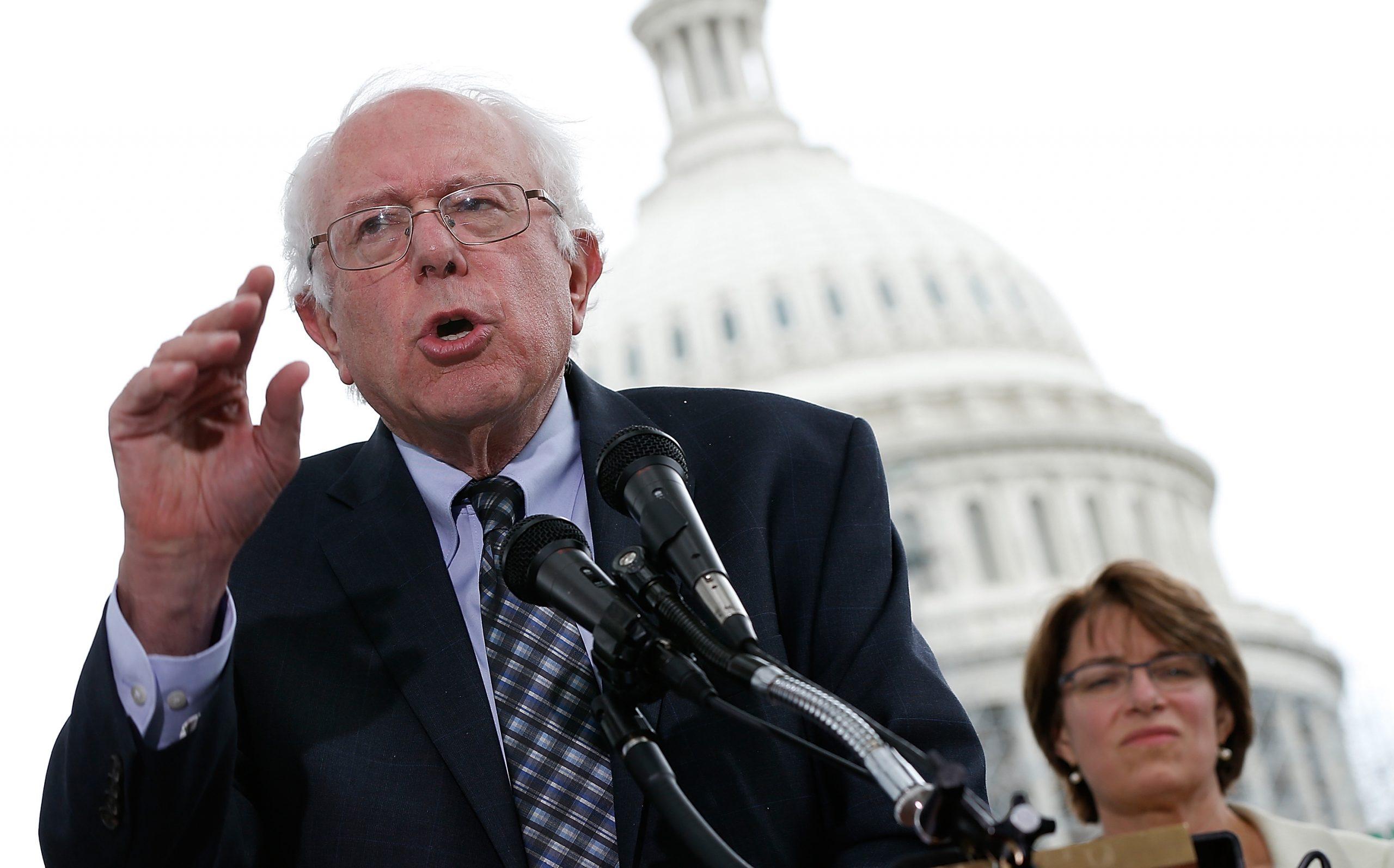
Environmental groups now have the coveted candidate they think will push Democratic front-runner Hillary Clinton to the left on climate change while elevating the issue in the national dialogue in the 2016 presidential campaign.
Sen. Bernie Sanders, I-Vt., is expected to officially announce his bid as a Democratic presidential candidate Thursday. And it’s clear that environmental groups are pleased with his presence in the race.
Recommended Stories


“He has the best climate policies out of anybody in the field and we think that only raises the profile of climate,” Karthik Ganapathy, spokesman with 350.org, told the Washington Examiner.
Sanders is a darling among progressives, and environmental campaigners are hoping his presence can prod Clinton on climate much like Sen. Elizabeth Warren’s policies on income inequality and Wall Street have altered Clinton’s tone on those issues.
“Bernie Sanders has a strong track record, especially in recent years, with very strong, specific proposals,” said Julian Boggs, global warming director with Environment America. “We’re ready for a conversation that moves forward from a circular debate about whether global warming is real or not and discusses what the future of America would look like.”
Sanders has pushed numerous environmental initiatives. He has sponsored a carbon fee bill and spearheaded an effort to get Sunday political talk shows to give airtime to climate change. Sanders was also one of just a handful of lawmakers to join a massive climate change march in New York City in September, and is one of the most vocal opponents of the Keystone XL oil sands pipeline.
Some environmental groups have wondered whether Clinton would go beyond boilerplate endorsements of President Obama’s climate policies, such as proposed limits on power plant emissions, if left unchallenged. The addition of Sanders to the Democratic field increases the odds that the former secretary of state might have to offer something bolder than she would have otherwise, they said.
In that sense, Sanders doesn’t even need to necessarily run a successful campaign with all the trappings of a 21st-century effort, such as masses of field organizers, million-dollar advertising budgets and the like. All he has to do is be on the scene.
“As long as it reaches a threshold where he attracts a significant portion of the base, then he can accomplish the goal of pulling Hillary to the left,” said Ganapathy, who urged Clinton to go further than Obama’s climate policies by advocating banning fossil-fuel development on both offshore and onshore federal lands.
While climate change ranks at or near the bottom of voters’ priorities, it still registers as a significant concern for 61 percent of Democratic voters, according to an October 2014 Gallup poll of registered voters. Nineteen percent of registered Republican voters viewed climate change as a major issue.
“Given Senator Sanders’ long history of environmental leadership, we expect he will make the need to act on climate change a priority on the campaign trail,” Seth Stein, spokesman with the League of Conservation Voters, told the Examiner in an email.
Environmental groups are planning to spend big on the election to turn climate change into a wedge between the eventual Republican and Democratic presidential candidates and also in Senate races, where the map favors Democrats in 2016. Their goal is to ensure that a candidate who denies humans cause climate change, as most scientists say is the case, won’t win the White House.
“We urge every presidential candidate — Republican, Democrat or independent — to embrace early on the need for assertive action on the central environmental challenges of our time. Chief among those is our obligation to protect current and future generations from the widening dangers of climate change,” League of Conservation Voters President Gene Karpinski and Natural Resources Defense Council President Rhea Suh wrote Tuesday for Huffington Post.
Sanders is Capitol Hill’s strongest climate advocate, according to an annual scorecard released Wednesday by Climate Hawks Vote, a political action committee dedicated to electing candidates who embrace policies to reduce greenhouse gas emissions. He sponsored two of the seven key bills the group highlighted, one to implement carbon emissions fees and another to offer rebates to install 10 million rooftop solar systems.
“You don’t advocate for solar in a state like Vermont if you don’t believe in it,” R.L. Miller, co-founder of Climate Hawks Vote, told the Examiner while joking about the Green Mountain State’s typically overcast skies.
Still, the environmental groups were reluctant to say whether they would endorse Sanders, whose chances to win the White House are considered a long shot. He’s not Warren, a potential heavyweight contender the Democratic Party’s progressive wing really wants to challenge Clinton.
And some are less convinced that Sanders can get Clinton to become more detailed on how she would address climate change.
“Hillary is going to do what Hillary is going to do, Bernie is going to do what Bernie is going to do,” Boggs said. “We’re just looking forward to having a forward-looking conversation about clean energy and climate.”
No one thinks Sanders, a staunch opponent of the Keystone XL oil sands pipeline, could get Clinton to weigh in on whether she supports or opposes the proposed Canada-to-Texas project. Sanders and environmental groups contend building the pipeline would lock in fossil-fuel development and exacerbate climate change, but supporters of the project say those fears are overblown and that it would create jobs.
Clinton oversaw TransCanada Corp.’s application for the 1,700-mile pipeline when she headed the State Department and has consistently said she wouldn’t speak about Keystone XL until it’s approved or rejected. The project has been under federal review for more than six years.
“I don’t think anything is going to force her on that particular one,” Miller said.
