

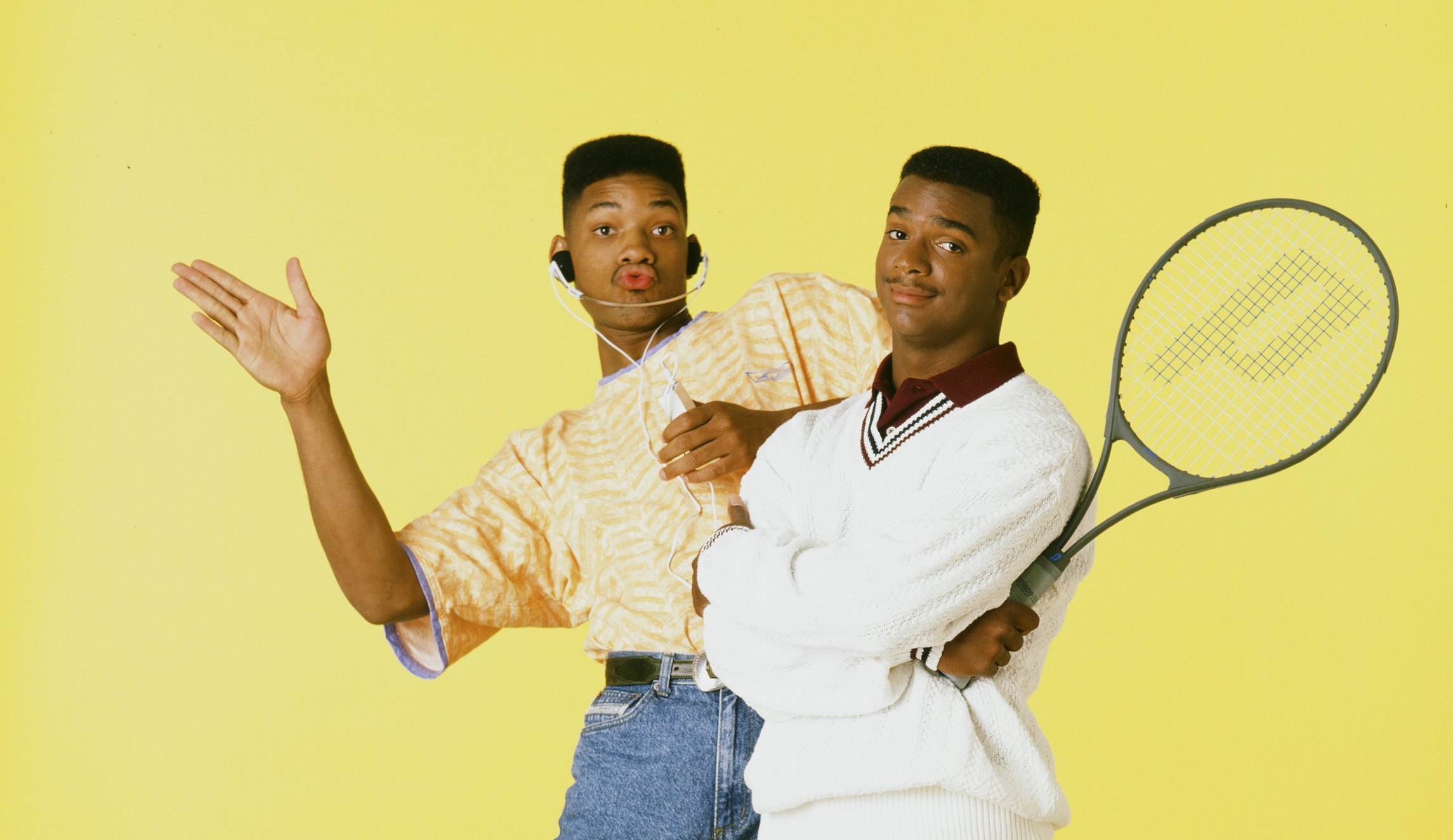
To those brainwashed in postmodern critical theory, the television characters Carlton Banks and Steve Urkel are viewed as constructs of white supremacy.
Banks was a character in The Fresh Prince of Bel-Air. Urkel was a cultural sensation on the show Family Matters. Both were big sitcom hits in the 1990s.
Recommended Stories


The idea that these two black characters are essentially caricatures of white supremacy is the latest preposterous assertion by mediocre former quarterback-turned-deranged radical Colin Kaepernick in his Netflix series Colin in Black & White.
“Over the years, there have been some very popular TV shows starring black people,” Kaepernick says. “These shows share archetypal black characters, including social outcasts who assimilate or conform, like Carlton Banks or Steve Urkel. White people love these dudes. From the way they dress, the way they talk, even the way they dance. It’s all so nonthreatening.”
Doing his best to bring back the Jim Crow era of the 20th century, Kaepernick even dubbed these characters with a peculiar name.
“These characters have come to be known by the term ‘acceptable negro,’ Kaepernick says. “The acceptable negro is a black character who inhabits white characteristics, who makes white people feel comfortable. The acceptable negro is a white man’s creation.”
Is it any shock that people voted Tuesday to reject this type of racially divisive nonsense?
How disappointing it must be for Kaepernick to realize that Carlton Banks, one of the most beloved fictional characters on television in the 1990s, was very popular with the nonwhite television creators who put him on the screen. That includes Benny Medina, who originally came up with the idea for the show, and legendary producer Quincy Jones.
The character of Carlton Banks was protagonist Will Smith’s rich cousin who lived in the mansion of Will’s uncle, Philip Banks, a successful judge. Smith, who exemplified stereotypical inner-city black male traits on the show, was always the star of the show and its most popular character. Banks was written not as some “acceptable” black person but as a hilariously contrasting figure — Smith’s polar opposite and pseudo-sidekick.
Smith was a product of West Philly, whereas Banks was the product of affluence in Bel-Air. His cheesiness on the show was a running gag — a core element in its comedic value.
Perhaps even more ironic is that there was an episode of The Fresh Prince of Bel-Air that tackled the very same bigotry about Carlton Banks that Kaepernick is displaying today. It happened all the way back in 1993. In “Blood is Thicker than Mud,” Smith and Banks are pledging to a fraternity. The fraternity leader likes Smith but thinks Banks acts too “white.” He refers to Carlton as a sellout. One of the most exemplary dialogues of the entire series occurs when Carlton confronts the fraternity leader.
“You think I’m a sellout. Why, because I live in a big house or dress a certain way?” Banks says. “Being black isn’t what I’m trying to be, it’s what I am. I’m running the same race and jumping the same hurdles you are, so why are you tripping me up? You said we need to stick together, but you don’t even know what that means. If you ask me, you’re the real sellout.”
This was said in 1993, but Kaepernick really needs to hear it in 2021.
Kaepernick has proven himself to be an extremist black supremacist whose beliefs have no place in 21st century America. His fallacious reasoning and inflammatory rhetoric achieve absolutely nothing. The Fresh Prince, on the other hand, put a friendly face on inner-city black teenagers in the form of protagonist Will Smith. Kaepernick attacks a show that upheld core family values and highlighted empowered and successful black Americans.
It is ridiculous, comical, and should not be taken seriously. Just like Kaepernick himself.
