
ANOTHER SIDE OF DYLAN
SEAN CURNYN writes that “while the music of peers like Young and Springsteen is probably destined for artifact status as the decades pass by, [Bob] Dylan’s seems likely to continue provoking consideration well into the future” (“What Dylan Is Not,” Oct. 2). I remain unconvinced.
Recommended Stories
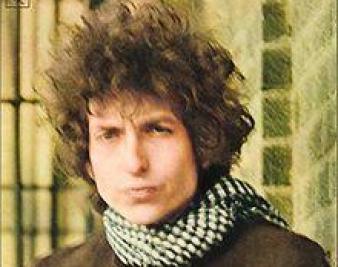
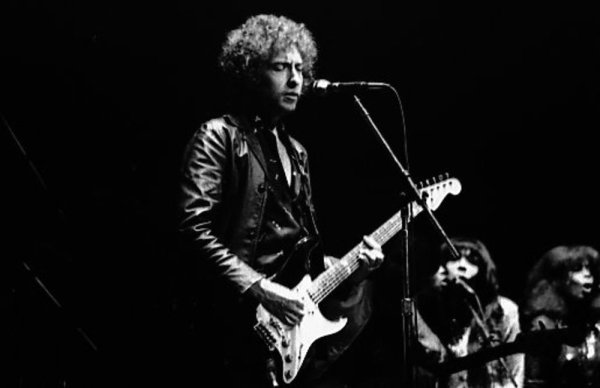
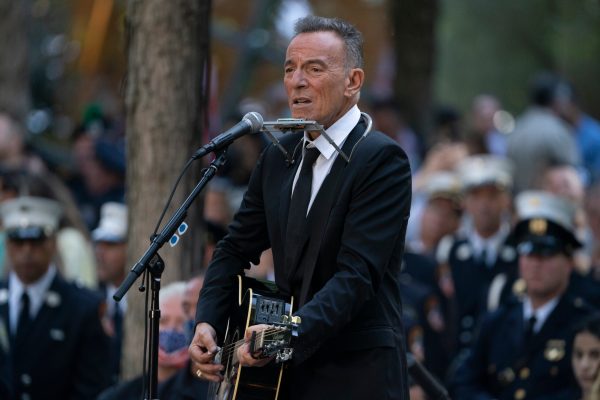
Some of Young’s and Springsteen’s songs are, indeed, time capsules–and so are many of Dylan’s. In general, Dylan’s moldiest stuff is his early protest material and his many lapses into musical and lyrical laziness down through the years since his famous motorcycle accident.
Springsteen has become an ideologue and a shill, granted, but so far his politics haven’t turned up in his songwriting. And he’s still a perfectionist craftsman: Hemingway to Dylan’s Kerouac.
Five hundred years from now an anthropologist could listen carefully to the six-album song cycle from Born to Run through Tunnel of Love and not only prepare a deep and nuanced snapshot of the American heart, but also Exhibit A demonstrating the timelessness of the human condition. Certainly Dylan has dealt with eye-on-eternity themes all along, but so much of what he’s written has been incomprehensible stream-of-consciousness Beat writing that it won’t offer many clues to what the hell was going on in his mind, much less in his time and place.
Not all of it, mind you. But a lot of it.
In fact, I’ll take it one step further. A good gob of Dylan’s oeuvre shows how far an artistically minded individual with a restless and fluid imagination can go on an outsider’s sense of being equal parts alienated and above it all. Add in an audacious attitude, a rhyming dictionary, and a singing voice that’s so un-singerly and anti-melodic that it cannot be categorized, and, evidently, you can persuade people you must be saying something terribly urgent, prophetic, and profound every time you open your mouth.
Don’t get me wrong. I love Dylan. He’s a singular talent and a wizard of wordplay. But I detest his canonization. For there’s as much the crafty medicine man in Bob Dylan as there is the dogged blue-collar poseur in Bruce Springsteen. Every popular-music star has an act; every one has a shtick or at least a performance persona. These two are no exceptions. This doesn’t mean either hasn’t composed brilliant works. Both have. Neil Young, too. But in the pop cosmos, Dylan alone, that sly shape-changing manipulator of perceptions and misperceptions–a man and an artist who, by the genius of his evasions, abstractions, and obfuscations, forced us to define him precisely by “what he is not”–has worked his way into being seen in the same literary league as Dante, Shakespeare, and Dostoyevsky.
And into being claimed by both political conservatives and liberals as, underneath it all, “one of ours.” I think both those notions are ridiculous. I think Dylan would agree.
DAVID PEARSON
North Branford, Conn.
TERROR AND THE LAW
I AM UNIMPRESSED by Richard Posner’s recent efforts, particularly those emphasized in Peter Berkowitz’s review of his latest book (“Freedom at War,” Sept. 18). I see nothing novel in Posner’s balancing test for assessing responses to a terrorist threat. Who would argue with the idea that evaluating the constitutionality of such responses must involve balancing the severity of the threat and the competing liberties at stake?
I object most strongly to the notions, implicit or explicit, that: (1) the jihadist threat is so novel as to warrant rethinking our most cherished principles; (2) arcane distinctions about whether terrorists wear uniforms, carry weapons openly, or sound their approach with bugles should influence how we treat them when captured; (3) where suspected terrorists are captured or held should determine whether we can torture suspected terrorists or not; and (4) less codification of interrogation procedures, and not clearer guidance, is the answer to the horrors wrought at Abu Ghraib and Guantánamo Bay. Cloak these judgments however you like, in constitutional rhetoric or otherwise, but I will continue to find them horrendously mistaken.
MARK SOLOMON
New York, N.Y.