

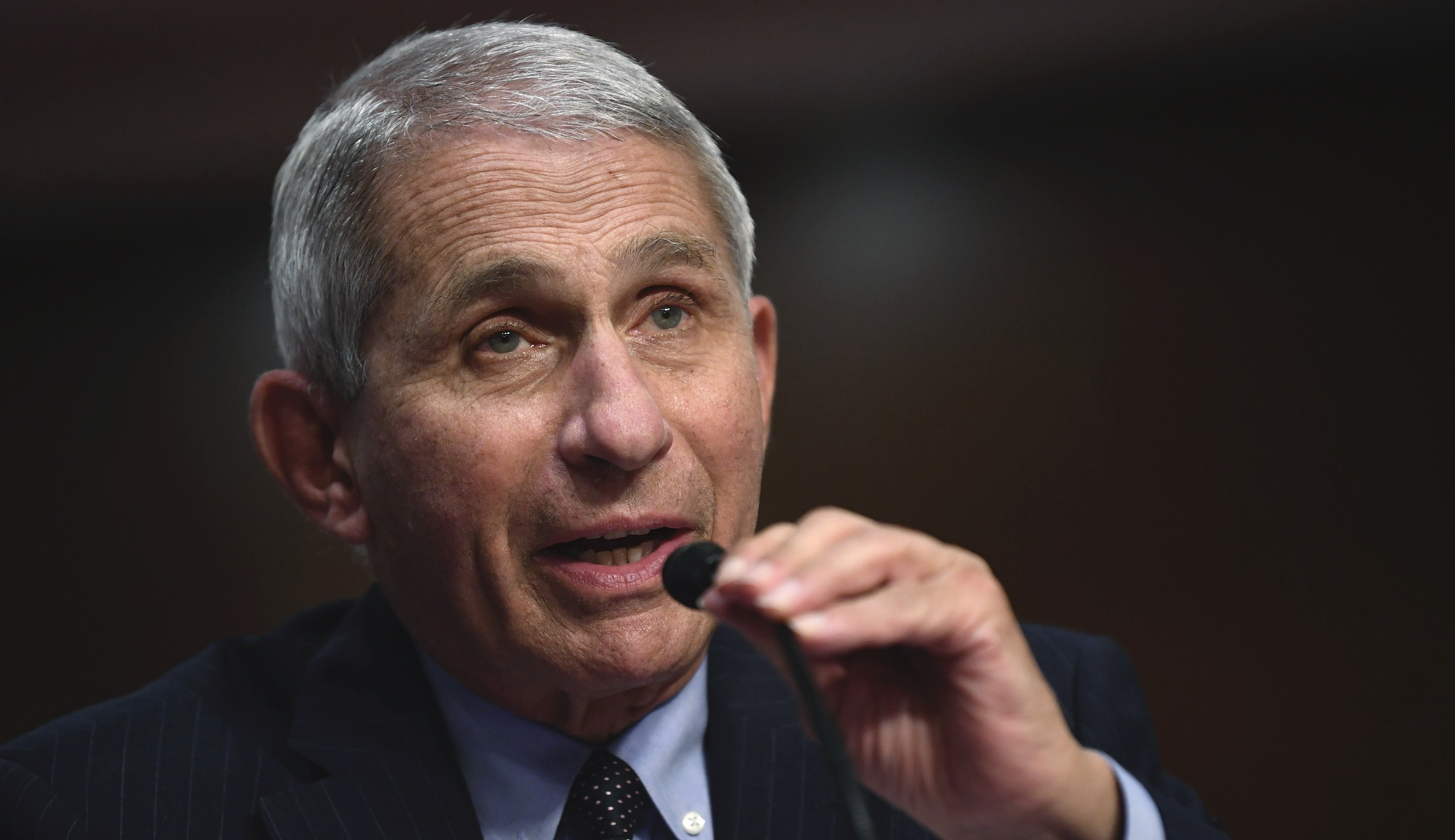
As more cities and states discuss reentering coronavirus lockdowns, many people, from media commentators to President-elect Joe Biden, are calling for policy responses that defer to “the scientists.” This desire, well-intentioned as it may be, ignores not only the role of public health experts in the first place but also the difficult work that policymaking actually entails.
There are many ways to dress up the role of government — “serving the people,” “being your voice in Washington” — but the best metaphor is that of a scale. Governments determine how best to weigh competing claims for finite resources to provide the greatest good. The current pandemic, unique as it is, doesn’t change that simple and central calculation.
Recommended Stories


This balancing act is never simply a binary choice, despite what some have claimed. The human impact of a policy is inherently multifaceted, even under normal circumstances. This is increasingly true during a pandemic, where both the disease and the remedy have major physical, mental, and emotional tolls.
For those whose lives have transitioned more or less seamlessly into lockdown, where the main inconvenience may be whether or not you remembered to mute your Zoom conference call, it can seem like the consequences of the shutdown are minimal.
This isn’t the case. Fully one-quarter of U.S. adults reported that either they or someone in their household has been laid off since the crisis began. Businesses that took one or many lifetimes to build are dying, withering under an inability to open. People in cities across the country are waiting in mile-long lines to collect food. It shouldn’t surprise us when those on the front lines of the economic devastation aren’t interested in genuflecting before the cult of Dr. Anthony Fauci.
The lockdown has had crippling health consequences, too. Loneliness has been shown to be as dangerous to one’s health as smoking or diabetes. Countless Americans have missed routine checkups and other screenings as nonessential procedures are placed on the back burner, particularly as millions have lost health insurance. The mental health toll of a lockdown is enormous, with negative psychological effects including post-traumatic stress symptoms, depression, and emotional exhaustion. These outcomes get worse the longer a quarantine continues. It shouldn’t surprise us that both suicides and drug overdose deaths have spiked.
Supporters of a more aggressive approach shouldn’t nitpick the most insipient arguments and tactics opposing the lockdown and imagine, convenient though it may be, that anyone concerned about the shutdown is behaving sophomorically or willing to just let grandma die to reinvigorate the right animal spirits of the market.
Beyond the philosophical, the harsh reality is that waiting until the world is entirely safe to restart the machinery of everyday life is to wait forever. Normal life as it existed prior to the coronavirus won’t soon return, if it ever does.
Health and well-being — particularly among vulnerable populations such as the elderly, the immunocompromised, medical professionals, and essential employees — must take priority. But it’s both foolhardy and dangerous to pretend that there is no solution but reentering an indefinite lockdown. Particularly for a political party that thinks highly of technical, bureaucratic solutions to pressing problems, it is also an ideologically curious stance for blue-state governors and mayors to imagine that no options beyond a total shutdown exist.
Many of the same experts that some want to see dictate policy have offered thoughtful approaches to address this balancing act. Sharing guidance helps the balancing act required by a government that, unlike medical experts, is accountable to the people. It ensures that policymakers have the best available information and thinking from a knowledgeable group of stakeholders on a complicated issue.
But we live in a country governed by certain democratic instincts that demand a responsiveness to the wants of the civilian population and the wisdom of the everyman that is incongruent with a ruling panel of experts. Any response to the present crisis that ignores that simple truth is unlikely to succeed.
With the holidays approaching, millions of Americans are chafing against restrictions to a family reprieve from the year that 2020 has been. This shouldn’t come as a surprise. There is an incorrigible aspect of the human spirit that will simply not tolerate an indefinite lockdown. Rather than wishing away this reality, policymakers would be better served to build it into their calculus when determining a path forward.
And they should do it soon, while there’s still time to create a new normal in a controlled, orderly way, before what good will the experts have amassed, and public willingness to live in isolation, evaporates.
Drew Holden is a public affairs consultant in Washington, D.C., and a former Republican congressional staffer in the U.S. House of Representatives.
